
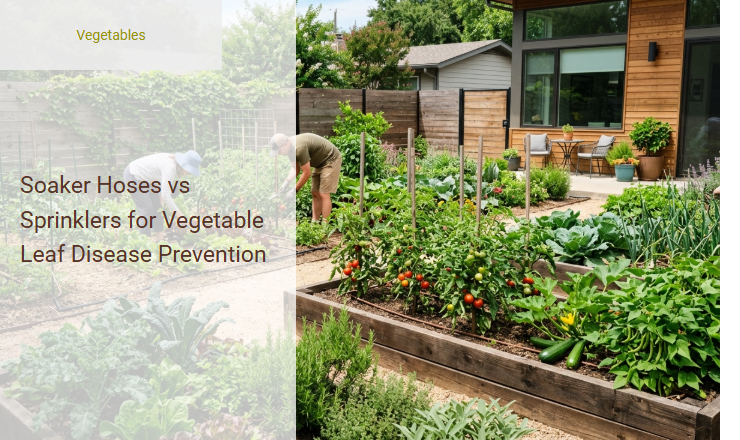
Many dedicated gardeners watch in frustration as healthy, thriving vegetable patches suddenly succumb to devastating fungal infections just as the harvest nears. Before comparing watering tools, we must first recognize that prolonged leaf wetness is the primary catalyst for pathogen germination. Transitioning to a precise irrigation method grants you a healthier crop yield and peace of mind, virtually eliminating the damp conditions that soil-borne fungi thrive on.
As an educational stipulation, please note that while proper watering is a powerful preventative shield, it functions as part of an integrated management plan rather than a cure-all for already infected soil. For example, keeping foliage dry is the single most effective way to prevent septoria leaf spot on tomatoes and powdery mildew on zucchini.
Below, we will compare soaker hoses and overhead sprinklers, evaluating their direct impact on canopy moisture, water efficiency, and overall leaf health to help you select the optimal system for your garden.
The Link Between Watering Methods and Vegetable Plant Health
The vitality of a home vegetable garden relies heavily on irrigation practices, which do far more than merely quench a plant's thirst. The specific method chosen to deliver moisture can directly dictate whether crops flourish or succumb to devastating foliar illnesses. Common vegetable leaf diseases, such as powdery mildew and destructive blight, rely on specific environmental triggers to colonize and destroy plant tissue. While overhead sprinklers cast water broadly, mimicking natural rainfall, they often create conditions highly favorable to these pathogens. In contrast, target-oriented systems like soaker hoses offer an alternative approach that focuses on root-level delivery. Understanding this fundamental tension between overhead spraying and ground-level irrigation is essential for maintaining a resilient, disease-free garden.
How Sprinklers Encourage Foliar Pathogens
Overhead sprinkler systems distribute water across the entire garden canopy, saturating the leaves of vegetable plants in the process. This direct application leaves a persistent film of water on the foliage, establishing a damp, stagnant environment where fungal spores and bacterial cells can rapidly germinate. Pathogens like late blight and septoria leaf spot require several hours of continuous moisture to infect a host leaf successfully. As sprinkler droplets strike infected surfaces, they also physically splash bacteria and fungal spores to neighboring healthy leaves, causing diseases to spread unchecked throughout the entire crop.
Soaker Hoses: Direct-to-Root Moisture Delivery
In contrast to overhead systems, soaker hoses are designed to apply moisture precisely where the plant can utilize it most efficiently. Constructed from porous materials, these hoses sit directly on the ground and weep water slowly along their entire length. This slow-release method allows water to sweat directly into the surrounding soil, penetrating deep into the root zone without ever contacting the upper foliage.
By maintaining a completely dry leaf canopy, soaker hoses deprive pathogens of the liquid water film they require to initiate infection, securing the garden against preventable foliar outbreaks.
Foliage vs. Soil: Where Water Belongs
Vegetable plants have evolved to absorb water primarily through their root systems, not their leaves. When water is sprayed onto foliage via sprinklers, the leaves remain wet for extended periods, which does not benefit the plant's hydration and instead invites physiological stress. Wet leaves can suffer from reduced gas exchange and are far more susceptible to solar scorching if watered during peak daylight hours.
Direct Soil Hydration Benefits
Applying water directly to the soil via soaker hoses aligns perfectly with natural plant physiology. It ensures that the root system receives a steady, reliable supply of moisture while the upper vegetative growth remains dry and functional. This targeted delivery promotes deep root exploration, stronger plant anchoring, and overall robust health, enabling the plant's natural immune systems to better resist airborne pathogens.
Microclimate Humidity and Disease Proliferation
Overhead spraying significantly alters the microclimate surrounding vegetable crops by elevating the relative humidity within the plant canopy. As water evaporates from wet leaves and damp paths, it creates a pocket of heavy, humid air that lingers around the plants, especially in densely planted beds. This high-humidity zone acts as an incubator for fungal spores, allowing them to multiply even after the actual watering cycle has ended.
Efficiency, Evaporation, and Soil Splashing
The physical force of water droplets falling from overhead sprinklers can have destructive secondary consequences for vegetable health. Heavy droplets strike the bare earth with enough velocity to displace soil particles, creating a splashback effect. This splashing is a primary transmission vector for soil-borne pathogens, lifting dormant fungal spores from the dirt directly onto the vulnerable lower leaves of the plants. Soaker hoses prevent this hazard through several key mechanisms:
- Gentle weeping action that delivers water at low pressure, avoiding any soil disruption.
- Elimination of high-velocity droplets, preventing splashback of dirt onto low-hanging foliage.
- Significant reduction in water waste through evaporation, as water goes directly into the ground rather than misting into the air.
Installation, Cost, and Usability Comparison
| Irrigation Factor | Overhead Sprinklers | Ground-Laid Soaker Hoses |
|---|---|---|
| Installation Complexity | High; requires pipe trenching, precise nozzle placement, and zone planning. | Low; simply lay the hose along the planting rows and pin it in place. |
| Initial Financial Cost | Moderate to high; costs include valves, timers, spray heads, and fittings. | Low; economical hoses and basic pressure regulators are highly affordable. |
| Ongoing Maintenance | Frequent; requires cleaning clogged nozzles, adjusting spray angles, and winterizing. | Minimal; seasonal flushing and occasional pinhole repairs are the only main tasks. |
Best Practices for Optimizing Soaker Hoses
- Bury hoses under a thick layer of organic mulch to minimize evaporation, protect the hose material from UV degradation, and ensure even moisture distribution.
- Monitor run times carefully to deliver deep, thorough watering sessions rather than frequent, shallow hydration, allowing the topsoil to dry slightly between cycles.
- Maintain proper spacing between hose runs (typically 12 to 18 inches apart) to ensure uniform root zone coverage and prevent localized waterlogging.
- Install a pressure regulator at the water source to maintain low water pressure, protecting the porous hose from rupturing or uneven weeping.
Are Sprinklers Ever Appropriate for Vegetables?
While target-oriented soil irrigation is generally superior, certain horticultural situations may justify the temporary use of overhead sprinkler systems. For instance, when establishing direct-sown seeds, a fine overhead mist is highly effective at keeping the top layer of soil evenly moist until germination occurs. Additionally, a brief overhead watering cycle during periods of extreme heat can help cool down heat-stressed crops by reducing ambient temperatures through evaporative cooling.
To mitigate the associated disease risks during these exceptions, gardeners should water exclusively in the early morning. This timing allows the rising sun to dry the foliage rapidly, minimizing the duration of leaf wetness and preventing pathogens from taking hold.
The Ultimate Verdict for Disease Prevention
Selecting the right irrigation method is a cornerstone of proactive garden management and disease prevention. By delivering moisture directly to the soil, soaker hoses bypass the biological vulnerabilities associated with wet foliage, high canopy humidity, and soil splashback. This single adjustment drastically curtails the occurrence of powdery mildew, blight, and other devastating leaf pathogens, allowing crops to thrive with minimal chemical intervention.
Transitioning to ground-laid soaker hoses represents one of the most impactful upgrades a home gardener can make. Prioritizing root-zone irrigation secures a healthier, more productive harvest while conserving water and reducing overall garden maintenance.
| Prevention Factor | Soaker Hoses | Sprinklers |
|---|---|---|
| Water Target | Direct to soil and roots; bypasses foliage. | Overhead spray; saturates leaves and stems. |
| Foliage Moisture | Keeps leaves dry, depriving fungi of needed water. | Prolonged wetness; triggers spore germination. |
| Spore Splattering | Zero splash; soil-borne pathogens remain in dirt. | High impact; splashes soil microbes onto lower leaves. |
| Canopy Humidity | Low; maintains dry microclimate around plant. | High; creates humid zone favoring mold/mildew. |
| Disease Risk Rating | Minimal (Prevents rust, black spot, blight). | High (Encourages foliar and fungal infections). |
Leave a comment