
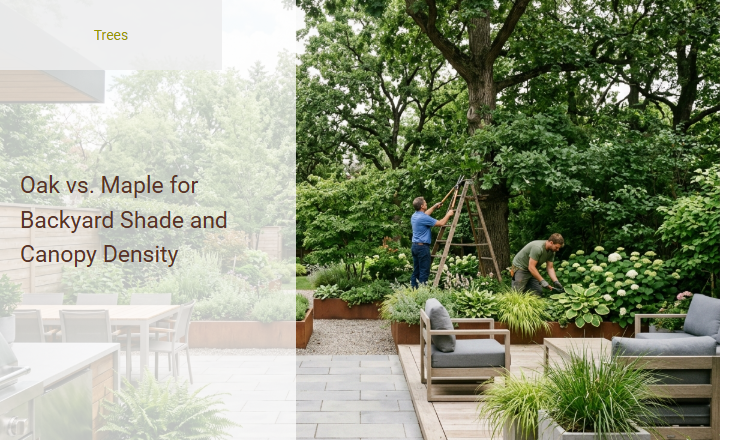
Many homeowners struggle to find the perfect balance between refreshing backyard shade and usable lawn space, often regretting tree selections that yield either patchy, disappointing canopies or invasive root systems. Before comparing specific species, however, it is essential to first evaluate your property's soil depth and wind exposure, as these foundational site conditions dictate how any tree will mature.
Making the right selection grants you decades of natural home cooling and an elevated, private microclimate for outdoor living. Note our stipulation, however: while genetic canopy density is predictable, local moisture levels and structural pruning will ultimately govern the tree's final shape. For example, the robust, horizontal branching of a Northern Red Oak provides a structurally distinct shade pattern compared to the intensely dense, dome-like crown of a Sugar Maple.
This analysis compares these two iconic genera across growth rates, canopy density, root architecture, and seasonal debris to help you choose the ideal shade provider for your landscape.
Choosing the Perfect Shade Tree: Oak vs. Maple
For suburban homeowners, selecting the right tree is one of the most impactful decisions for long-term landscaping. A tree does not merely decorate a yard; it acts as a living piece of architecture. When looking to escape the summer heat, understanding the differences in canopy density is vital. The right choice will directly influence how much sun filters down to your patio and lawn, altering the entire outdoor experience.
Beyond simple aesthetics, the physical tree structure determines how wind, light, and rain interact with your property. A carefully selected tree creates a comfortable microclimate, lowering local temperatures and reducing home cooling costs. In the classic debate between the sturdy Oak and the vibrant Maple, homeowners must weigh how these unique canopy qualities align with their backyard goals.
Growth Rate and Longevity: Planning Your Backyard Shade
When planting a shade tree, timing is everything. Homeowners must balance immediate desires for relief from the sun with the long-term legacy they wish to leave for future generations.
Oak Tree Growth and Longevity
Oaks are the marathon runners of the arbor world. They generally grow at a slow-to-moderate rate, often adding only 12 to 24 inches of height per year. However, what they lack in early speed, they make up for in endurance. An Oak tree can easily live for centuries, meaning the tree you plant today will become a majestic landmark for your grandchildren many decades from now.
Maple Tree Growth and Longevity
Maples, by contrast, offer a much faster payoff. Fast-growing varieties like the Red Maple or Silver Maple can shoot up by 2 to 3 feet annually, establishing a functional shade canopy in a fraction of the time. While their lifespan is shorter-typically lasting between 80 to 150 years depending on the species-they are the superior choice for immediate, short-term landscaping transformations.
The Majestic Oak: Broad Canopies and Dappled Light
The structural silhouette of a mature Oak is iconic, characterized by massive, horizontal branching networks that reach far out from a sturdy central trunk. This sprawling architecture creates an expansive, umbrella-like ceiling of shade that covers vast areas of a yard without feeling oppressive.
Rather than blocking out the sky completely, the unique leaf shape and branching of the Oak produce a beautifully filtered light environment. This dappled shade offers several distinct benefits for your backyard landscape:
- Allows subtle beams of sunlight to penetrate, preventing the yard from feeling dark or gloomy.
- Creates a dynamic, shifting pattern of light and shadow throughout the afternoon.
- Reduces ground-level heat while preserving enough ambient light for outdoor activities.
- Minimizes heavy wind resistance by letting air currents flow naturally through the open branches.
The Dense Maple: Thick Foliage and Complete Shade
If your primary goal is to block out the sun entirely and create a cool sanctuary during the hottest summer afternoons, the Maple tree is an exceptional candidate. Maples are famous for their tight, compact branching structures and large, broad leaves that overlap like shingles on a roof.
This dense arrangement of foliage acts as a natural barrier against solar radiation. Under a mature Maple, you will find a deeply shaded footprint where direct sunlight rarely penetrates. This extreme coverage results in a noticeable drop in ambient ground temperature, turning a sweltering backyard into a refreshing retreat when the summer sun is at its peak.
Canopy Density Compared: Deep Shade vs. Filtered Sunlight
Choosing between an Oak and a Maple often comes down to how much light you want reaching the ground. While deep shade keeps things cool, filtered sunlight is highly beneficial for maintaining a diverse under-canopy garden.
| Feature | Oak Tree | Maple Tree |
|---|---|---|
| Shade Quality | Dappled & Filtered | Deep & Complete |
| Light Penetration | Moderate to High | Very Low |
| Under-Canopy Growth | Supports grass and understory shrubs | Challenging for sun-loving plants |
| Cooling Effect | Gentle cooling | Maximum temperature reduction |
As shown above, the Oak's filtered light is ideal if you plan to cultivate a vibrant garden bed or a green lawn directly beneath the branches, whereas the Maple offers maximum relief from intense summer heatwaves.
Root Systems and Under-Canopy Landscaping Compatibility
What happens below the surface is just as important as the canopy above. A tree's root architecture dictates what else can successfully grow in your backyard.
Oak Root Systems
Oaks typically grow deep taproots in their youth, followed by a deep lateral root system. Because they draw nutrients and water from deep within the soil profile, they do not aggressively compete with surface plants. This deep-rooting habit makes them highly compatible with lawn grasses and shade-tolerant perennials.
Maple Root Systems
Maples are notorious for their shallow, highly competitive root systems. Large roots often grow right at or just below the soil surface, sometimes lifting mower decks or cracking nearby walkways. These shallow roots actively consume surface moisture and nutrients, leaving very little for surrounding turf.
"When planting under a Maple, you aren't just fighting the lack of light; you are competing with an incredibly aggressive root network that siphons away soil moisture before lawn grass can ever reach it."
- Marcus Vance, Suburban Landscape Architect
Seasonal Transitions: From Summer Canopy to Autumn Color
As the seasons shift, both of these deciduous giants undergo dramatic transformations, changing the aesthetic of your property.
Maples are the undisputed royalty of autumn foliage. When the autumn air cools, they ignite into brilliant displays of fiery reds, glowing oranges, and bright yellows. This seasonal show is brief but intense, with leaves dropping relatively quickly once they reach peak color. Oaks, on the other hand, transition much later in the season. Their leaves turn to rich, earthy shades of copper, bronze, and deep brown, often clinging to the branches well into winter-a botanical phenomenon known as marcescence.
Environmental Tolerance: Soil, Wind, and Climate Adaptability
A shade tree must be tough enough to withstand local weather extremes, urban soils, and heavy winds without becoming a hazard to your home.
Oaks are structurally renowned for their wood strength and deep root anchoring, making them highly resilient. Maples are highly adaptable to various soil types but can suffer branch breakage in severe storms due to softer wood structures. Here is a look at how they stack up against common environmental stressors:
- Wind Resistance: Oak trees excel here due to their dense, strong wood fibers and deep root stabilization. Maples, especially fast-growing varieties, are more prone to limb breakage in high winds.
- Drought Tolerance: Mature Oaks have a high tolerance for dry spells thanks to their deep root networks, whereas Maples prefer consistent moisture and may scorch during hot, dry summers.
- Soil Compaction: Maples handle clay and compacted suburban soils slightly better than Oaks, though both prefer well-drained, loose earth.
Maintenance and Cleanup: Acorns, Samaras, and Leaf Drop
Owning a shade tree comes with seasonal responsibilities. The debris a tree drops can determine how much time you spend on yard work throughout the year.
Oaks drop acorns in the fall, which can accumulate heavily on lawns and driveways. These hard nuts require a sturdy lawn sweeper or a heavy-duty rake to clear before they damage lawn mowers. Their leaves are thick and leathery, taking much longer to decompose in compost piles, demanding a high-powered leaf blower for efficient cleanup. Maples produce winged seeds called samaras (often called "helicopters") in the spring, which clog gutters and sprout everywhere. In autumn, Maples drop a massive volume of soft leaves all at once, requiring intensive seasonal raking over a short, concentrated period.
The Ultimate Verdict: Which Tree Belongs in Your Yard?
Deciding between an Oak and a Maple requires aligning the physical characteristics of these trees with your yard's specific layout and your personal lifestyle goals.
Choose an Oak If:
You have a spacious yard, value long-term structural durability, and want to maintain a healthy green lawn or a diverse garden bed directly beneath the branches. The Oak is a legacy tree that demands patience but rewards you with unmatched strength and beautiful, filtered light.
Choose a Maple If:
You desire rapid shade relief within a few short years, want maximum relief from hot summer days, and look forward to a breathtaking burst of brilliant red and orange foliage every autumn. The Maple is perfect for high-impact visual appeal and immediate cooling comfort.
| Feature | Oak (Quercus spp.) | Maple (Acer spp.) |
|---|---|---|
| Shade Density | Moderate to dense; filters light, allowing lawn and undergrowth to survive. | Extremely dense canopy; blocks most sunlight, suppressing grass growth beneath. |
| Growth Rate | Slow to moderate (1 to 1.5 feet per year); takes longer to establish canopy. | Moderate to fast (1.5 to 2+ feet per year); provides quick shade relief. |
| Root System | Deep taproot; minimally invasive to lawns, patios, and foundations. | Shallow, aggressive surface roots; can crack concrete and complicate mowing. |
| Durability & Lifespan | High storm/wind resistance; exceptionally long-lived (100–300+ years). | Susceptible to wind and ice damage due to softer wood; shorter lifespan (60–100 years). |
| Seasonal Cleanup | Acorns drop in autumn; tough leaves decompose slowly. | Winged seeds ("helicopters") in spring; massive drop of fast-decaying leaves in fall. |
Leave a comment