
Gardening in dense, poorly draining heavy clay soil often feels like an uphill battle, especially when trying to cultivate Mediterranean herbs that notoriously demand "dry feet." Before addressing soil modifications, however, one must understand the distinct botanical habits within the genus Satureja. Aligning your species selection with your specific microclimate grants an abundant, aromatic harvest that elevates your culinary endeavors.
To manage expectations, success is strictly stipulated on active soil management; neither savory variety will survive in compacted, waterlogged silt. Incorporating concrete amendments like sharp horticultural grit and matured organic compost is essential to mimic their native rocky terrains.
Below, we examine the perennial resilience of Winter Savory (Satureja montana) versus the rapid, annual lifecycle of Summer Savory (Satureja hortensis), detailing exactly how to adapt your heavy clay soil to support both crops.
Introduction: The Tale of Two Savories in Clay Soil
In the rich tapestry of culinary herbs, the savory genus holds a legendary status. Two distinct characters dominate this family: Winter Savory (Satureja montana) and Summer Savory (Satureja hortensis). While both offer an exceptional peppery kick to culinary dishes, their growth habits and survival strategies are vastly different. When faced with the formidable challenge of heavy clay soil, these differences become a matter of life and death.
Clay soil, infamous for its dense structure and poor drainage, acts as an unforgiving host for Mediterranean herbs. For the delicate, fast-growing Summer Savory and the robust, woody Winter Savory, adapting to this heavy substrate requires careful intervention. Understanding how each variety interacts with clay's unique physical properties is the first step toward a successful harvest.
Demystifying Heavy Clay: The Ultimate Garden Challenge
Heavy clay soil is composed of microscopic mineral particles that pack tightly together. This dense physical makeup results in extremely small pore spaces, which presents three primary threats to herb cultivation:
- High Water Retention: Clay holds onto moisture with incredible tenacity, leading to prolonged waterlogging.
- Severe Compaction: The tiny particles easily compress, creating a physical barrier that restricts root expansion and limits oxygen access.
- Lack of Aeration: Without adequate air pockets, roots literally suffocate, preventing the cellular respiration required for nutrient uptake.
For herbs accustomed to the loose, rocky slopes of the Mediterranean, this environment is hostile. Without proper modification, clay soil turns into a dense, cold sponge in the winter and a concrete-like block in the summer, making it nearly impossible for delicate root networks to survive.
Summer Savory: Quick Growth vs. Clay Soil Constraints
The Annual Challenge
Summer Savory (Satureja hortensis) is a fast-growing annual known for its delicate, sweet-peppery leaves and tender stems. Because it must complete its entire life cycle in a single season, it possesses a highly sensitive, shallow root system. When planted in heavy clay, these fine roots struggle to penetrate the compacted earth, severely limiting the plant's access to nutrients.
To thrive, Summer Savory requires warm, loose, and highly aerated soil with excellent drainage. In unmodified clay, the roots remain trapped near the waterlogged surface, making them highly susceptible to dampening-off and stunted growth during heavy spring rains.
Winter Savory: A Hardy Perennial's Battle with Clay
The Woody Warrior
Unlike its annual cousin, Winter Savory (Satureja montana) is a tough, semi-evergreen perennial that develops a low, woody growth habit over time. It produces a much deeper, permanent root system designed to anchor the plant and search for moisture deep within the earth. However, this deep-reaching nature presents its own set of challenges when encountering heavy clay.
During wet winters, clay soil retains cold water deep within its profile. Winter Savory roots sitting in this freezing, saturated zone face a high risk of root rot (Phytophthora). While the top of the plant is exceptionally hardy against frost, its underground network is highly vulnerable to prolonged winter wetness, which can easily kill an otherwise healthy specimen.
Prepping the Bed: Amending Clay Soil for Savories
To successfully cultivate both savory varieties, you must transform your heavy clay into a hospitable, free-draining medium. Amending the soil structure is essential to create lasting air channels and improve drainage.
- Incorporate Coarse Sand: Add a generous layer of coarse horticultural sand (do not use fine play sand, which creates
concrete-like mixtures) to physically separate clay particles. - Integrate Organic Matter: Mix in well-rotted compost to introduce beneficial microbes and build stable soil aggregates.
- Apply Aged Leaf Mold: Work in leaf mold to increase the soil's organic content, helping to loosen the dense matrix of clay.
- Broadfork the Area: Use a broadfork or garden fork to loosen the subsoil down to
12 incheswithout flipping the soil layers, allowing amendments to penetrate deeply.
Planting Techniques: Raised Beds and Mound Planting
Elevating the Root Zone
When dealing with unmodified clay subsoil, physical elevation is your best defense. By raising the growing zone, you allow gravity to assist in pulling excess water away from the sensitive crown of the plants.
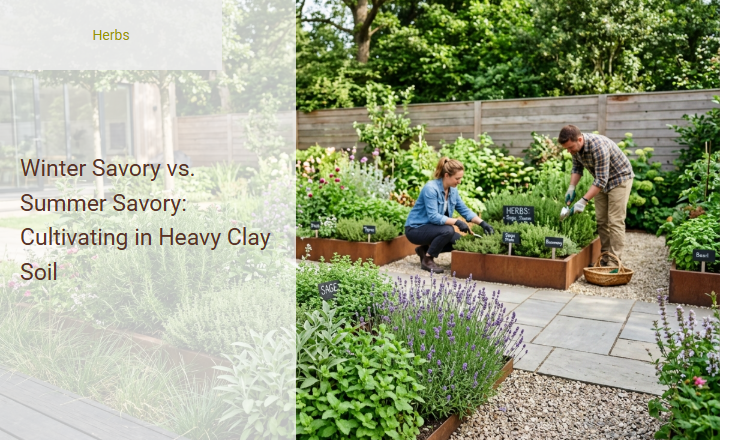
- Raised Beds: Building wooden or stone raised beds filled with a custom soil mix completely bypasses the drainage issues of heavy clay, offering absolute control over the growing medium.
- Mound Planting: If planting directly in the ground, shape amended soil into mounds that are six to eight inches high. Plant the savories at the peak of these mounds so water sheds off the shoulders away from the main stems.
- Double-Digging: This labor-intensive technique involves fracturing the deep clay layer beneath the planting trench, creating a temporary escape route for excess water.
Watering Wisdom: Balancing Hydration in Retentive Soil
Watering herbs in clay requires a strategic shift in perspective. Because clay retains moisture far longer than sandy soils, conventional watering schedules will quickly lead to disaster. You must carefully monitor the moisture levels beneath the surface before reaching for the hose.
The key to success in clay is the "soak and dry" method: water the soil deeply to encourage deep root growth, then allow the top two inches of soil to dry out completely before watering again.
Keep a close eye out for warning signs of overwatering in your savories. Yellowing lower leaves, drooping stems that do not recover after watering, and a faint, sour smell from the soil all indicate that oxygen is lacking and root decay may have already begun. If you observe these symptoms, withhold water immediately and aerate the surrounding soil.
Seasonal Care: Pruning and Overwintering in Clay
Maintenance for Long-Term Health
Proper seasonal maintenance ensures that your savories remain productive and resilient against the structural challenges of clay soil throughout the entire year.
- Pruning Summer Savory: Regularly pinch back the soft growing tips of Summer Savory to promote bushy growth and prevent the plant from becoming top-heavy and falling onto the damp clay surface.
- Pruning Winter Savory: Cut back Winter Savory by one-third in late spring to stimulate fresh, woody growth. Avoid heavy pruning in autumn, as open cuts can harbor fungal pathogens during wet winters.
- Mulching in Clay: Use a thin layer of pea gravel or coarse grit mulch around the base of Winter Savory. Avoid organic mulches like wood chips, which retain excess moisture directly against the plant's crown.
- Winter Protection: In areas with heavy winter rainfall, erect simple plastic rain covers over Winter Savory to prevent the clay bed from becoming completely saturated.
From Soil to Plate: Culinary Profiles and Harvesting
The stress of growing in amended clay can actually work in your favor when it comes to flavor. Slight environmental challenges often stimulate herbs to produce higher concentrations of essential oils, resulting in a more potent, aromatic harvest.
| Savory Variety | Flavor Profile | Best Harvesting Window | Clay Stress Impact |
|---|---|---|---|
| Summer Savory | Sweet, peppery, delicate, reminiscent of thyme and marjoram. | Just before flowering in mid-summer. | Increases the sweetness and intensity of carvacrol oils. |
| Winter Savory | Sharp, pungent, strongly medicinal, spicy and resinous. | Year-round, but best in spring and summer. | Heightens the fiery, peppery heat of the leaves. |
The Verdict: Which Savory Reigns Supreme in Clay?
When choosing between these two aromatic herbs for a clay-heavy garden, the victor depends entirely on your gardening style and preparation level. Summer Savory is highly successful in amended clay beds or raised boxes because its short life cycle means it never has to endure the waterlogged torment of a cold clay winter. It grows rapidly, delivers its harvest, and exits before the soil compacts again.
Conversely, Winter Savory presents a greater long-term challenge but offers a rewarding, permanent presence if you invest the time to build raised mounds or gravel-rich beds. With the right drainage-boosting techniques, this woody perennial will comfortably withstand the winter dampness. Start amending your garden beds today, choose the planting method that fits your landscape, and enjoy the robust, peppery bounty of these exceptional savories!
| Heavy Soil Aspect | Winter Savory (Perennial) | Summer Savory (Annual) |
|---|---|---|
| Root Rot & Wet Tolerance | Extremely vulnerable. Standing winter moisture in heavy clay causes fatal root rot. | Moderately vulnerable. Higher moisture tolerance during warm growth phase, avoids winter wetness. |
| Root Development & Lifespan | Deep, woody root system. Struggles to penetrate compacted clay; requires permanent, well-drained site. | Shallow, fibrous roots. Easier to establish in topsoil layers; completes lifecycle before clay compacts in winter. |
| Soil Modification Required | Critical. Must be grown in raised beds or heavily amended with grit/gravel to ensure perennial survival. | Minimal to moderate. Needs basic organic matter to loosen top layer; works well in temporary seasonal plots. |
Leave a comment