
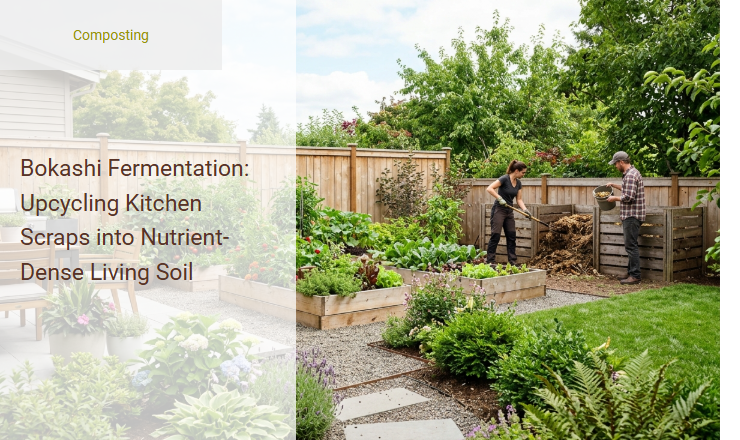
For many urban gardeners and eco-conscious households, traditional composting feels like a losing battle against foul odors, pests, and restrictive sorting rules. Before we can cultivate thriving garden beds, we must first confront the limitations of standard backyard bins, which frequently reject common household food waste.
Bokashi fermentation offers a transformative solution, granting growers the ability to safely upcycle 100% of their organic waste. Unlike traditional methods, this system easily processes difficult items such as cheese, citrus rinds, and meat scraps, preserving vital nutrients that would otherwise be lost. However, as an educational stipulation, it is important to note that Bokashi is an anaerobic pickled pre-compost; it requires a brief, secondary soil-contact phase to fully integrate into your garden.
In this guide, we will examine the microbial science of Bokashi, outline the step-by-step fermentation process, and demonstrate how to successfully transition this nutrient-dense material into living soil.
Read also: Vermicomposting vs Bokashi for Apartment Dwellers
Rethinking Food Waste: The Power of Bokashi Fermentation
Global food waste has reached staggering proportions, with research indicating that nearly one-third of all food produced for human consumption is lost or wasted annually. When these organic materials end up in landfills, they decompose under anaerobic conditions to produce methane, a greenhouse gas significantly more potent than carbon dioxide. Bokashi fermentation offers a clean, efficient, indoor solution to this ecological crisis. By utilizing a specialized fermentation process, households can easily upcycle kitchen scraps-including dairy and meat-into nutrient-dense, living soil right from their countertops, eliminating odors and reducing their carbon footprint.
The Science Behind the Scraps: How Anaerobic Fermentation Works
Unlike traditional aerobic composting, which requires oxygen and heat to break down organic matter, Bokashi relies on anaerobic fermentation. This process occurs in an oxygen-deprived environment, facilitated by a specific consortia of beneficial microbes known as Effective Microorganisms. The primary inoculant consists of Lactobacillus plantarum, Saccharomyces cerevisiae, and Rhodopseudomonas palustris. These microbes ferment the food scraps by producing lactic acid, which rapidly drops the pH of the system, preserving the nutrients and preventing the putrefaction that typically causes foul odors in rotting food.
Setting Up Your System: Essential Bokashi Equipment
To successfully begin your indoor composting journey, you will need a specialized kit designed to maintain anaerobic conditions and manage moisture levels.
- Airtight Double-Bucket System: A nesting bucket system where the inner bucket features a perforated bottom to allow liquids to drain into the outer reservoir.
- Spigot: Integrated at the base of the outer bucket to easily drain the liquid byproduct (Bokashi tea).
- Bokashi Bran: An inoculant medium, usually wheat bran or sawdust, infused with Effective Microorganisms and molasses.
- Compressor Tool: A flat-surfaced tool or tamper used to pack down food scraps and expel trapped oxygen pockets.
Step-by-Step Guide to Your First Fermentation Batch
Starting your first batch of Bokashi is a straightforward process of layering and compressing your kitchen scraps to ensure optimal microbial activity.
- Prep your kitchen scraps by cutting them into small, uniform pieces to maximize the surface area for microbial colonization.
- Add a thin layer of Bokashi bran to the bottom of the inner bucket before adding your first layer of scraps.
- Place your fresh kitchen scraps into the bucket, keeping the layer to about one or two inches deep.
- Sprinkle a generous handful of Bokashi bran over the top of the newly added scraps.
- Use your compressor tool to firmly press down on the mixture, forcing out any pockets of air to maintain anaerobic conditions.
- Seal the airtight lid tightly immediately after compressing to prevent oxygen from entering the system.
What Goes in the Bucket: Approved Scraps and Exclusions
Because Bokashi is an acidic fermentation process rather than decay, it can handle a wider variety of organic inputs than standard compost piles. Use the guide below to sort your kitchen waste.
| Approved Inputs | Excluded Materials |
|---|---|
| Fruit and vegetable peels | Large bones (bovine or pork) |
| Meat, poultry, and fish scraps | Excessive liquids (soup, milk, juice) |
| Cheese, yogurt, and other dairy | Deeply rotten or heavily molded food |
| Small bones and seafood shells | Synthetic materials or plastic packaging |
| Coffee grounds and tea bags | Paper towels soaked in chemical cleaners |
Harvesting Bokashi Tea: Liquid Gold for Your Plants
As the food scraps ferment, a nutrient-rich liquid known as Bokashi tea accumulates at the bottom of the bucket. This liquid must be drained every few days to keep the environment from becoming too soggy for the beneficial microbes.
Warning: Never apply undiluted Bokashi tea directly to living plants, as its high acidity will scorch their roots. Always dilute the liquid at a ratio of 1:100 (approximately one tablespoon per gallon of water) before watering indoor or outdoor plants.
In addition to feeding your garden, undiluted Bokashi tea can be poured directly down sink and shower drains. The active microbes work to clean plumbing systems and suppress bad odors naturally.
From Ferment to Fertilizer: Integrating Bokashi into the Soil
Once your bucket is full, it must remain sealed for two weeks to complete the fermentation process. At this stage, the scraps will look largely unchanged, but their cellular structure is pre-digested and ready for rapid soil integration.
To complete the transformation, bury the fermented pre-compost in a garden trench covered by at least six inches of soil, or mix it into an outdoor "soil factory" container filled with spent potting soil. Within two to four weeks, soil organisms will completely break down the pre-compost, turning it into rich, dark humus.
The Living Soil: How Bokashi Feeds the Soil Food Web
Microbial Diversity and Disease Suppression
Introducing Bokashi-amended organic matter to your garden infuses the soil with billions of lactic acid bacteria, yeasts, and photosynthetic microbes. These organisms actively outcompete soil-borne pathogens, naturally suppressing plant diseases without chemical fungicides.
Nutrient Retention and Soil Structure
The organic acids produced during fermentation help chelate essential minerals, making nutrients like phosphorus, calcium, and trace minerals highly bioavailable to plant roots. This microbial activity also stimulates mycorrhizal fungi, which build stable soil aggregates to improve water retention and root aeration.
Troubleshooting: Resolving Odors and Mold Issues
A healthy Bokashi bucket should smell sweet, yeasty, or slightly vinegary. If your bucket begins to smell putrid or rancid, it is a sign that the system has failed, usually due to oxygen exposure, excess moisture, or insufficient bran inoculation.
During the process, you may notice mold growing on the surface of the scraps. White, fuzzy mold is completely normal and indicates beneficial fungal activity. However, if you observe black, green, or blue spore-forming molds accompanied by a putrid rot smell, the batch has spoiled. To fix minor odor issues, add a generous extra layer of Bokashi bran, ensure the lid is sealed tightly, and drain the liquid more frequently.
Closing the Loop: Cultivating a Sustainable, Regenerative Garden
Adopting Bokashi fermentation is more than just a method for managing household waste; it is a direct investment in the health of our planet. By transforming everyday kitchen scraps into a potent soil amendment, we bypass the destructive lifecycle of landfill waste and actively rebuild the organic matter depleted by modern urbanization.
"To feed the soil is to feed the future. By returning our organic waste to the earth through fermentation, we participate directly in the regenerative cycle of nature, cultivating nutrient-dense food and a healthier biosphere."
Summary
Bokashi fermentation is a highly efficient, anaerobic method of upcycling kitchen scraps into nutrient-dense living soil. Unlike traditional composting, which relies on aerobic decomposition and restricts certain food waste, the Bokashi method uses specialized inoculated bran containing Effective Microorganisms (EM) to ferment all organic matter-including meat, dairy, and bones-in an airtight environment. This acidic fermentation process rapidly breaks down waste without unpleasant odors or attracting pests.
Within just two weeks, the fermented pre-compost is ready to be buried directly in garden beds or added to a traditional compost bin. There, it quickly integrates with the soil food web, boosting microbial diversity, improving soil structure, and delivering vital nutrients directly to plant roots. Ultimately, Bokashi fermentation offers an accessible, eco-friendly solution for urban dwellers and gardeners alike to reduce household waste while actively regenerating local soils.
Leave a comment