
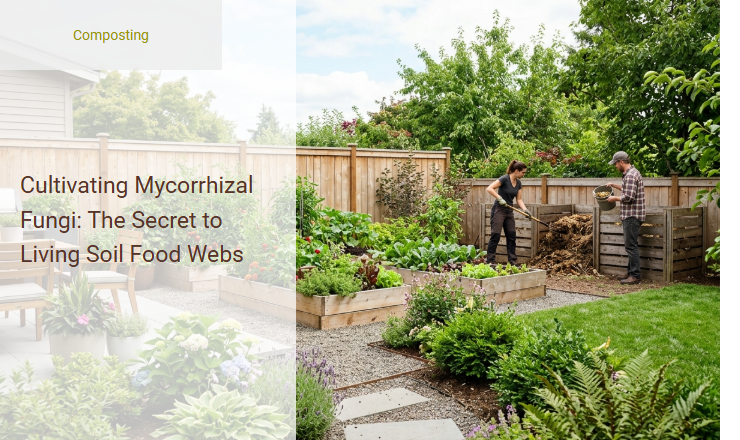
Many growers face the persistent frustration of stagnant crop yields and chronic nutrient deficiencies, despite applying expensive synthetic fertilizers year after year. To resolve this limitation, we must look beyond chemical inputs and examine the biological infrastructure of the rhizosphere. Transitioning to a living soil food web grants plants an autonomous, self-sustaining nutrient delivery network that drastically reduces external inputs and management costs.
However, establishing this system requires a shift in perspective: it is not a quick-fix additive, but a long-term biological partnership. Cultivating mycorrhizal fungi introduces specialized hyphal networks that unlock insoluble phosphorus and secrete glomalin to stabilize soil structure. In this article, we will examine the science of fungal symbiosis, practical inoculation strategies, and the essential cultural practices needed to sustain a thriving, subterranean ecosystem.
Read also: Coffee Grounds vs Eggshells for Tomato Plants
Introduction: The Invisible Wood Wide Web
Beneath our feet lies a bustling, ancient metropolis that predates humanity by hundreds of millions of years. This underground empire is forged by mycorrhizal fungi, a complex web of microscopic threads that weave through the dirt to connect the root systems of different plants. Far from being isolated organisms, plants are active participants in a vast, subterranean biological internet often referred to as the "Wood Wide Web."
At the heart of this network is a profound biological symbiosis. By linking plant roots together, these fungi form the foundational infrastructure of a living soil food web. Through this connection, nutrients, water, and even biochemical warnings are shared across entire plant communities, transforming individual flora into a highly integrated, cooperative ecosystem.
Understanding the Giants: Endomycorrhizae vs. Ectomycorrhizae
While thousands of fungal species exist, agricultural and ecological conversations focus primarily on two major classifications: Endomycorrhizae and Ectomycorrhizae. These groups differ fundamentally in how they physically interface with plant roots and the specific hosts they choose to partner with.
- Endomycorrhizae (Arbuscular Mycorrhizae): These fungi physically penetrate the cortical cell walls of the host plant's roots, forming highly branched structures called arbuscules. They do not damage the cell membrane, but rather nestle closely inside to facilitate direct nutrient transfer. They partner with approximately 80 to 90 percent of all land plants, including most vegetables, fruit trees, grasses, and ornamentals. Common species used in agriculture include those from the genus Glomus.
- Ectomycorrhizae: These fungi do not penetrate the cell walls. Instead, they form a dense sheath, or mantle, around the outside of the root tips and grow into the intercellular spaces, forming a network known as the Hartig net. They primarily partner with woody trees and shrubs, including pines (Pinaceae), oaks (Quercus), birches (Betula), and beech trees (Fagus).
The Underground Economy: Carbon-for-Nutrient Exchange
The relationship between plants and mycorrhizal fungi is built on a highly sophisticated trade agreement. Plants are master solar-powered factories, utilizing photosynthesis to generate carbon-rich sugars. Fungi, living in the darkness of the soil, cannot photosynthesize, but they are exceptionally skilled miners of the earth.
In this biological marketplace, plants trade up to 20 to 30 percent of their photosynthesized liquid carbon (sugars) to the fungi. In exchange, the expansive fungal hyphae absorb and transport water, phosphorus, nitrogen, and essential micronutrients back to the plant root cells. Phosphorus, which is highly immobile in soil, is made readily available to the plant through this fungal pathway.
"This underground commerce is not merely a passive byproduct of proximity; it is a highly regulated, active trade agreement where both partners adjust resources based on supply, demand, and environmental conditions."
The Silent Crisis: Why Our Soils Are Fungi-Depleted
Despite the vital role of these ancient organisms, modern agricultural and gardening practices have inadvertently waged war on the soil microbiome. Mechanical tilling acts like an earthquake, physically shredding the delicate, expansive networks of fungal hyphae that take months to establish. When these networks are fractured, the biological bridge is broken, leaving plants isolated.
This physical destruction is compounded by the heavy use of synthetic chemical fertilizers and fungicides. High concentrations of synthetic phosphorus trick plants into shutting down their carbon pathways to fungi, effectively starving the network. Fungicides applied to target plant pathogens frequently act as broad-spectrum killers, wiping out beneficial mycorrhizal populations and leaving the soil sterile, compacted, and entirely dependent on chemical life support.
Supercharging Plant Defense and Drought Resilience
A well-established mycorrhizal network extends the functional surface area of a plant's root system by up to several hundred times. This massive underground reach allows plants to tap into deep, micro-pore water reserves that are completely inaccessible to standard root hairs, drastically increasing drought tolerance and survival rates during hot summers.
Furthermore, these fungal networks act as an early-warning communication system. When a plant is attacked by pests, it can transmit chemical distress signals through the hyphal network to warn neighboring plants, allowing them to proactively produce defensive chemical compounds before the pests arrive.
Inoculation: How to Bring Mycorrhizae into Your Garden
If your garden soil has been subjected to tilling, chemical fertilizers, or left bare for long periods, you can reintroduce these beneficial fungi using commercial inoculants. To ensure maximum colonization success, the living fungal spores must make direct physical contact with active plant roots.
- Seed Treatment: Dust seeds with a dry powder inoculant before planting, or coat them using a small amount of non-chlorinated water to help the powder adhere to the seed coat.
- Transplanting: Sprinkle mycorrhizal powder or granular inoculant directly into the planting hole, or press the exposed root ball of your transplant directly into the powder so the roots are thoroughly coated before being placed in the soil.
- Root Dipping: For bare-root trees or shrubs, mix a soluble mycorrhizal powder with non-chlorinated water to form a gel slurry, and dip the root systems into the mixture prior to planting.
Feeding the Network: Organic Matter and Cover Crops
Once you have introduced mycorrhizal fungi to your soil, you must sustain them. Unlike plants, fungi cannot feed themselves on sunlight; they require organic matter, carbon, and living roots to survive and thrive throughout the changing seasons.
Using organic mulches like wood chips, straw, or fallen leaves provides a slow-release source of food for the wider soil food web. Applying finished compost and aerated compost teas introduces beneficial microbes that work in tandem with the fungi. Crucially, keeping living roots in the ground year-round by planting diverse cover crops ensures that the mycorrhizae always have a steady supply of photosynthetic carbon sugars, even during the winter months.
Fungal-Friendly Gardening: Practices to Avoid
Restoring your soil is as much about what you stop doing as what you start doing. To protect the delicate fungal filaments you have worked to establish, keep the following destructive habits out of your gardening routine:
- Frequent Tilling and Rototilling: Avoid turning over the soil, which mechanically tears apart the established fungal networks and degrades soil structure.
- High-Phosphorus Synthetic Fertilizers: Refrain from using quick-release chemical fertilizers, particularly those high in phosphorus, as they discourage plants from forming symbiotic bonds with fungi.
- Broad-Spectrum Chemical Fungicides: Avoid drenching the soil with synthetic fungicides, which decimate beneficial mycorrhizal communities alongside pathogenic fungi.
- Leaving Soil Bare in Winter: Do not leave garden beds empty and exposed to the elements; without living roots to feed them, mycorrhizal populations will starve and decline over the winter.
Signs of Success: Monitoring Your Living Soil
Because mycorrhizal hyphae are microscopic, you cannot easily see the network with the naked eye. However, you can monitor the health of your underground ecosystem by observing the clear physiological signs of your plants and the structural changes in your soil.
A thriving fungal network manifests as increased plant vigor, deep green leaf color, and a remarkable resistance to heat stress and temporary drought. When you dig gently into the soil, you should notice the formation of stable, crumbly soil aggregates-a direct result of glomalin production. Occasionally, during damp autumn or spring mornings, you may even see beneficial fruiting bodies, such as small mushrooms, popping up near the root zones of your plants, indicating a mature, active fungal network below.
The Long-Term Legacy of Living Soil
Nurturing mycorrhizal networks is not a quick fix for a single growing season; it is a commitment to rebuilding the natural biological systems of our planet. By stepping away from disruptive chemical-heavy practices and embracing the natural synergy of the soil food web, we foster a self-sustaining cycle of fertility, hydration, and resilience.
Every handful of living, fungal-rich soil we nurture becomes a resilient habitat capable of sequestering carbon, purifying water, and producing nutrient-dense food. Working in partnership with these ancient fungal allies allows us to pass down a rich legacy of living, fertile soil to the generations of growers who will follow us.
Summary
Mycorrhizal fungi serve as the backbone of a thriving, living soil food web by forming vital symbiotic relationships with plant roots. These beneficial fungi extend a vast network of thread-like hyphae far into the soil, drastically increasing a plant's capacity to absorb water and essential nutrients, particularly phosphorus. In return, plants supply the fungi with carbon-rich sugars produced during photosynthesis.
Beyond nourishing plants, mycorrhizal networks play a crucial role in soil health by producing glomalin, a compound that glues soil particles together to improve structure and sequester carbon. To cultivate these powerful organisms, growers must adopt regenerative practices such as minimizing tillage, eliminating synthetic fertilizers and fungicides, and maintaining continuous living roots. Nurturing this underground alliance allows gardeners and farmers to transition away from chemical inputs toward a self-sustaining, resilient, and highly productive ecosystem.
Leave a comment