
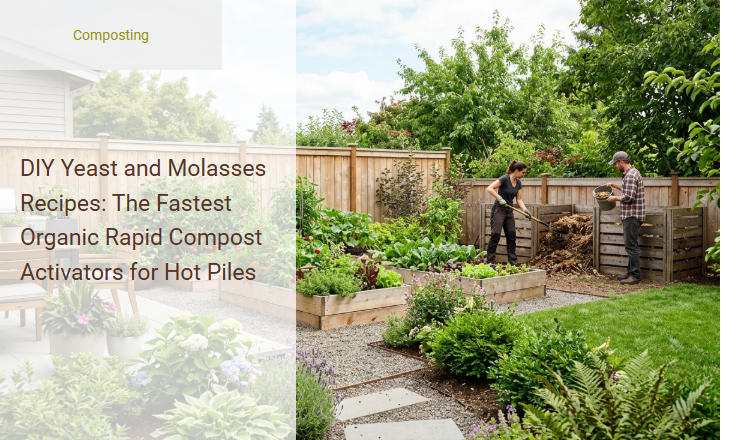
Waiting months for a sluggish compost pile to decompose is a frustrating bottleneck for organic growers eager to enrich their soil. While traditional thermal composting eventually succeeds, achieving the sustained high temperatures required to sanitize weed seeds and pathogens demands a precise biological balance that is often difficult to initiate naturally.
Fortunately, you can dramatically accelerate this timeline, unlocking rapid microbial activity and thermal spikes in as little as 24 hours. However, it is important to stipulate that these starters are not magic fixes; they require a properly aerated, moist pile with the correct carbon-to-nitrogen ratio to sustain the reaction. By utilizing simple, cost-effective inputs like active dry yeast and unsulphured blackstrap molasses, you introduce a powerful combination of active fungi and readily available sugars that immediately fuel the decomposition process.
Below, we will analyze the science behind these organic activators, provide step-by-step DIY recipes, and outline the application protocols necessary to keep your hot pile burning efficiently.
Read also: Alfalfa Meal vs Kelp Meal for Compost Activation
Introduction to Rapid Hot Composting and Organic Activators
Transforming raw organic waste into nutrient-rich soil amendment doesn't have to take months of waiting. Through hot composting, gardeners can accelerate the natural decomposition process by fostering a high-temperature environment. Maintaining an elevated temperature within the heap is vital because it optimizes the metabolic rates of heat-loving microorganisms, which rapidly break down tough organic matter while neutralizing weed seeds and pathogens. To jumpstart this transition into the thermophilic phase, gardeners use DIY organic activators-potent, nutrient-rich liquid mixtures that introduce highly active microbes and readily available energy sources directly into the compost pile.
The Science Behind Yeast and Molasses in Compost
The combination of yeast and molasses creates a biological catalyst inside a compost pile. When mixed, these two ingredients work in perfect synergy to rapidly multiply beneficial microbial populations, driving the decomposition process forward at an unprecedented rate.
The Role of Active Dry Yeast
Active dry yeast consists of dormant single-celled fungi. When rehydrated in warm water, these fungi wake up and seek nutrition. Once introduced to the compost pile, they secrete enzymes that break down complex carbohydrates and cellulose, making nutrients more accessible to native soil bacteria.
The Power of Unsulfured Molasses
Unsulfured molasses is rich in simple sugars, iron, carbon, and trace minerals. Unlike sulfured molasses, which contains preservatives that can kill microbes, unsulfured molasses acts as an immediate energy source. This sugar rush fuels a massive population boom among indigenous aerobic bacteria, triggering a rapid thermophilic reaction that generates significant internal heat.
Essential Ingredients and Equipment Checklist
- Active dry yeast (at least 2 to 3 standard packets or bulk equivalent)
- Unsulfured molasses (organic, dark variety preferred for highest mineral content)
- Warm water (chlorine-free or declorinated, ideally between 90°F and 105°F)
- White granulated sugar (a small pinch to activate the yeast)
- 5-gallon bucket (clean and dedicated to garden use)
- Watering can (equipped with a rose rose-head nozzle for even distribution)
- Compost thermometer (with a long probe to monitor internal pile temperatures)
Recipe 1: The Fast-Acting Yeast Brew
This quick yeast-based brew focuses on populating your pile with active fungi to kickstart the breakdown of woody carbon materials.
- Fill a clean 5-gallon bucket with 3 gallons of lukewarm water (ideally around 95°F). If using tap water, let it sit out for 24 hours to dissipate any chlorine.
- Stir in two packets (approximately 4.5 teaspoons) of active dry yeast.
- Add a single tablespoon of white sugar to serve as an immediate starter food for the yeast.
- Stir the mixture thoroughly until the yeast and sugar are fully dissolved.
- Allow the brew to sit and ferment for 20 to 30 minutes until a thick, frothy layer of foam forms on the surface.
- Pour the fermented mixture into your watering can and apply immediately to your compost pile.
Recipe 2: The High-Energy Molasses Booster
This liquid activator focuses on delivering a concentrated dose of simple sugars and trace minerals to energize the bacteria already resident in your compost pile.
- Pour 4 gallons of lukewarm, chlorine-free water into your 5-gallon bucket.
- Measure out 1 cup of unsulfured molasses.
- Slowly pour the molasses into the warm water, stirring continuously to prevent the dense syrup from settling at the bottom.
- Keep stirring until the liquid is uniform in color and the molasses is completely dissolved.
- Let the mixture rest for 10 minutes to stabilize before transferring it to your watering can for immediate application.
Recipe 3: The Ultimate Yeast and Molasses Hybrid Activator
By blending the fungal power of active yeast with the high-energy fuel of unsulfured molasses, you create a dual-action biological kickstarter designed to send compost pile temperatures soaring into the active thermophilic range within 24 to 48 hours.
How to Properly Apply Activators to Your Hot Pile
Simply pouring your liquid activator over the top of a dry, compacted pile will not yield the desired results. To maximize the impact, construct your pile using the lasagna layering method. Alternating layers of nitrogen-rich green materials and carbon-heavy brown materials ensures a balanced diet for the microbes. As you build each 6-inch layer, use your watering can to evenly sprinkle the liquid activator over the surface. Check the moisture level frequently by performing the wrung-out sponge test: squeeze a handful of compost; it should feel damp and yield only a drop or two of water under pressure, indicating optimal moisture distribution.
Monitoring the Thermophilic Phase and Turning the Pile
Once you apply your activator, monitor the core temperature of your pile daily using a compost thermometer. The goal is to reach and sustain the thermophilic phase to ensure rapid breakdown and sanitization of the organic material.
"To safely destroy weed seeds and plant pathogens while accelerating decomposition, keep your compost pile at a steady temperature between 130°F and 160°F for at least three consecutive days."
When the temperature begins to dip below 130°F, or after 3 to 4 days of peak heat, turn the pile. Move the outer, cooler materials into the center and the hot core materials to the outside. This introduces vital oxygen to the hard-working aerobic microbes, allowing them to continue their rapid metabolic activity.
Troubleshooting Common Hot Compost Issues
The Pile Won't Heat Up
If your pile remains cool even after adding the activator, it may lack sufficient nitrogen (greens) or moisture. Add more fresh grass clippings or kitchen scraps, verify the moisture level matches a damp sponge, and apply another half-strength dose of the yeast brew.
Unpleasant Odors (Anaerobic Conditions)
A rotten-egg smell indicates your pile has become too wet or compacted, cutting off oxygen. Correct this anaerobic state immediately by turning the pile to introduce air and mixing in dry, carbon-rich browns like shredded cardboard or dry leaves to absorb excess moisture.
Excessive Dryness
If the pile is dry, microbial activity will grind to a halt. Turn the pile while thoroughly soaking the dry pockets with dechlorinated water or additional molasses booster until the pile is evenly damp throughout.
Long-Term Maintenance and Harvesting Your Rapid Compost
After several cycles of heating and turning, the intensive decomposition phase will naturally draw to a close. The pile will no longer heat up when turned, signaling that it is time to let the compost cure. Allow the heap to rest undisturbed for two to three weeks to let beneficial earthworms and mycorrhizal fungi colonize the material. You will know your compost is ready when it exhibits a dark, crumbly texture, a sweet, earthy smell, and none of the original organic components are recognizable. Spread this rich organic amendment directly onto your garden beds or mix it into potting soils to feed your plants.
Summary
This article explores how DIY yeast and molasses recipes serve as highly effective, organic rapid compost activators to kickstart hot compost piles. While standard composting relies on gradual microbial colonization, these simple kitchen staples can dramatically accelerate the decomposition process. Yeast introduces millions of active fungi and beneficial microorganisms, while molasses provides an easily digestible source of simple sugars, giving these microbes an immediate energy boost.
Together, this powerful combination rapidly raises the compost pile's internal temperature, allowing it to break down tough organic matter like wood chips and straw in record time. The guide offers step-by-step instructions for brewing these cost-effective, chemical-free liquid activators. By utilizing these simple recipes, gardeners can transform backyard waste into nutrient-rich humus much faster than traditional passive methods, ensuring a highly efficient and sustainable composting cycle.
Leave a comment