
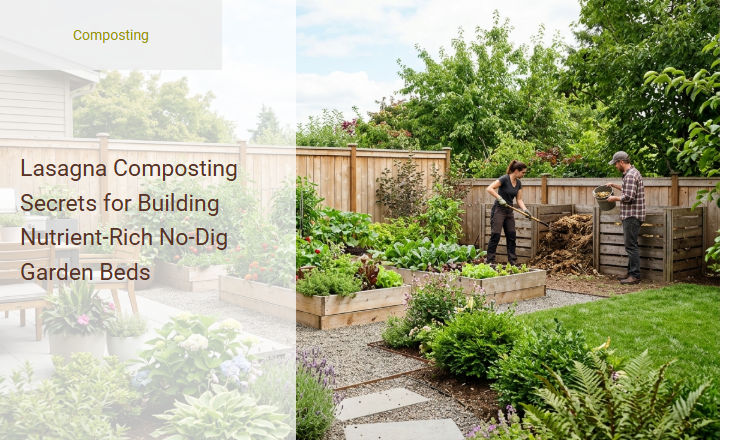
Many home gardeners struggle with the exhausting, back-breaking labor of traditional tilling, only to find themselves battling persistent weeds and compacted, lifeless soil year after year. While traditional cultivation aims to aerate the earth, modern soil science reveals that disruptive digging actually destroys the delicate fungal networks essential for plant health.
Transitioning to a sheet-mulching approach grants you a highly productive, self-fertilizing ecosystem that virtually eliminates weeding and drastically reduces watering needs. However, achieving these results requires a systematic understanding of organic ratios; successful lasagna composting is not merely piling debris, but a deliberate biological recipe that requires time and correct moisture levels to decompose effectively.
By layering specific carbon sources like recycled cardboard and shredded straw with nitrogen-rich green waste like kitchen scraps, you kickstart a rapid, aerobic decomposition process. In this guide, we will detail the precise layering formulas, material selections, and seasonal maintenance schedules needed to establish your own thriving, no-dig garden beds.
Read also: Open Piles vs Closed Bins for Pest Control
Introduction to Lasagna Gardening and No-Dig Benefits
Imagine building a flourishing garden with zero tilling, minimal weeding, and far less physical strain. Lasagna gardening, also known as sheet mulching, is a highly effective no-dig gardening method that allows you to build incredibly nutrient-rich soil from the ground up. By layering organic materials directly on top of the soil, you mimic nature's own decomposition process, turning garden waste into black gold. This method completely eliminates the backbreaking labor of digging and tilling, preserving the delicate underground ecosystem. Furthermore, the thick layers of organic material act as a massive sponge, dramatically improving moisture retention and reducing the need for frequent watering.
The Science of Sheet Mulching and Soil Biology
The magic of a lasagna bed lies in its biological activity. When you stack organic materials, you create a perfect habitat for a diverse web of soil organisms. Earthworms, beneficial fungi, and microscopic bacteria quickly colonize the damp, protected layers. As these organisms consume the organic matter, they break it down into readily available nutrients for plant roots, while their movement creates micro-channels that aerate the soil naturally.
A healthy soil food web does the tilling for you, converting raw carbon and nitrogen into a highly structured, fertile growing medium.
Instead of disrupting this fragile biological network through tilling, sheet mulching nurtures it, allowing beneficial mycorrhizal networks to thrive undisturbed.
Gathering Your Materials: Balancing Nitrogen and Carbon
To build a successful lasagna bed, you need a balanced ratio of carbon-rich and nitrogen-rich materials. In sheet mulching terminology, these are referred to as "browns" (carbon) and "greens" (nitrogen). Having a generous supply of both before you begin ensures a steady decomposition rate without unwanted odors.
Here are the primary materials you should gather for your layers:
- Green Materials (Nitrogen-Rich): Fresh grass clippings, raw fruit and vegetable kitchen scraps, coffee grounds, green garden waste, and fresh manure.
- Brown Materials (Carbon-Rich): Shredded dry leaves, straw, clean cardboard, newspaper, pine needles, wood chips, and shredded paper.
Site Selection and Preparing the Ground
Choosing the right location is key to the success of your no-dig bed. Look for a spot that receives adequate sunlight for the specific crops you plan to grow, with convenient access to a water source. The beauty of lasagna gardening is that you do not need to clear away existing grass or dig up the turf. You only need to prepare the surface by knocking down exceptionally tall weeds, removing woody brush, and clearing away large rocks or debris, leaving the native soil structure completely intact.
Layer One: The Biodegradable Weed Barrier
The foundation of your lasagna bed is a thick, protective barrier designed to smother existing weeds and grass. By blocking light, this layer prevents unwanted plants from growing up through your new garden bed while slowly decomposing to feed local earthworms.
- Lay down thick cardboard or five to six layers of black-and-white newspaper directly over the designated area, overlapping the edges by at least six inches to prevent weeds from sneaking through the seams.
- Wet the barrier thoroughly with a garden hose until it is completely saturated, which jumpstarts the decomposition process and attracts beneficial decomposers.
Stacking the Layers: The Alternating Method
Once your weed barrier is wet and secure, you can begin stacking your alternating green and brown layers. The secret to a highly productive bed is maintaining the correct thickness for each layer, which optimizes airflow and retains moisture.
- Apply a two-inch layer of nitrogen-rich greens directly over your cardboard base to feed the soil microbes.
- Follow with a four-inch layer of carbon-rich browns, such as straw or shredded leaves, to provide structural aeration and carbon.
- Repeat this alternating pattern until your bed reaches a total height of about eighteen to twenty-four inches, keeping in mind that the pile will shrink significantly as it decomposes.
The Finishing Touch: The Top Planting Layer
To make your new lasagna bed ready for immediate use, you must apply a final, highly fertile top layer. Spread approximately two to three inches of finished compost or high-quality organic topsoil over the very top of your pile. This final layer serves as the perfect growing medium for young plants and seeds, while simultaneously acting as a protective blanket that keeps the lower, decomposing layers moist and insulated from harsh sun and wind.
Watering and Maintaining Moisture Balance
Water is the catalyst for the entire decomposition process. Without consistent moisture, the microbes and earthworms cannot efficiently break down the organic matter. You must water each layer thoroughly as you build it, ensuring the entire pile is evenly damp throughout.
The ideal moisture level of your lasagna bed should resemble a wrung-out sponge-damp to the touch, but not waterlogged or dripping wet.
Check the bed periodically by digging your hand a few inches into the layers to make sure the core remains warm and moist.
Planting Directly Into Your New Lasagna Bed
You can plant directly into your lasagna bed the very same day you build it, or let it break down over a season before planting. When you are ready to grow, use these simple steps to plant successfully:
- For transplants, pull back the top mulched layers until you reach the soil or compost layer, dig a small hole, place your plant, and gently tuck the organic matter back around the stem.
- For deep-rooted crops, cut a small slit directly through the cardboard base layer if it has not yet fully decomposed, allowing the roots to penetrate into the native soil beneath.
Long-Term Care and Seasonal Bed Regeneration
Over the course of the growing season, your lasagna bed will naturally break down, shrinking into a rich, dark, and highly fertile soil. Maintaining this productivity requires very little effort. Each autumn or early spring, simply add a fresh top-up layer of organic compost, shredded leaves, or straw to replenish lost nutrients. By consistently feeding the soil from the top down, you preserve the structural integrity of your no-dig bed and guarantee healthy, nutrient-rich crops year after year.
Summary
Lasagna composting, also known as sheet mulching, is a highly effective, no-dig gardening method that builds nutrient-rich soil by layering organic materials directly on the ground. This technique begins with a base layer of cardboard or newspaper to suppress weeds, followed by alternating layers of "browns" (carbon-rich materials like straw, dry leaves, and shredded paper) and "greens" (nitrogen-rich materials like kitchen scraps, fresh grass clippings, and manure). Over time, these layers decompose naturally into a dark, crumbly compost teeming with beneficial soil microbes and earthworms.
By eliminating the need for tilling, lasagna gardening preserves the delicate soil structure and vital mycorrhizal networks. This results in superior moisture retention, excellent aeration, and fewer weeds. Ultimately, it offers an eco-friendly, low-maintenance strategy to recycle organic waste and establish highly productive garden beds that foster vibrant, healthy plant growth.
Leave a comment