
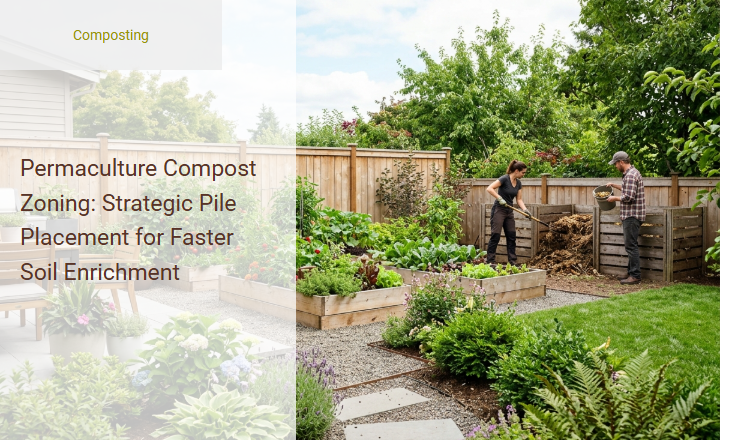
Many dedicated growers struggle with compost piles that feel more like a chore than a benefit, enduring frustratingly slow decomposition rates and the exhausting task of hauling heavy organic waste back and forth across the property. This inefficiency often stems not from your biological mix, but from poor spatial design. By applying permaculture zoning principles, you can strategically align your pile placement with daily foot traffic, granting you rapid, effortless soil enrichment and minimized labor.
However, successful zoning requires careful observation of your site's unique energy flows; a high-maintenance kitchen tumbler in Zone 1 serves a fundamentally different purpose than a slow-burn woody debris pile in Zone 4.
In this article, we will examine how to map your landscape, match specific composting methods to their ideal zones, and permanently optimize your nutrient cycles for peak efficiency.
Read also: Sun vs Shade for Pile Location
The Synergy of Permaculture Zoning and Composting
Permaculture design relies heavily on the efficient placement of elements to minimize energy expenditure. By strategically distributing compost piles across permaculture zones (0 to 5), homesteaders can dramatically reduce the daily labor of transporting waste and applying finished organic matter. This spatial arrangement ensures that nutrients are cycled exactly where they are needed most, accelerating soil enrichment. Integrating composting with zoning turns waste management into a passive, highly productive energy loop.
Zone 1: High-Frequency Kitchen and Seedling Compost
Convenient Waste Management
Zone 1 is the area closest to the home, receiving daily foot traffic. Placing compact composting systems here ensures that kitchen scraps are processed immediately without requiring long walks in inclement weather. This zone is ideal for small-scale, intensive systems that require close monitoring and frequent input.
- Vermicomposting bins for rapid processing of soft kitchen scraps.
- Tumbling composters that keep pests away and allow for quick turning.
- Seedling soil mixes enriched with fresh worm castings for propagation.
Zone 2: Semi-Intensive Garden Piles and Poultry Integration
Moving outward, Zone 2 contains the main kitchen garden and small livestock like poultry. This is the perfect location for larger, multi-bin compost systems that can handle a mix of garden refuse and animal bedding. Integrating poultry into this zone creates a highly collaborative cycle where chickens shred garden waste and add high-nitrogen manure while scratching for insects. This active biological interaction accelerates decomposition rates while producing premium soil amendments with minimal manual labor.
Zone 3: Broadscale Sheet Mulching and Livestock Manure
Zone 3 typically encompasses commercial crops, main pastures, and larger livestock. Composting at this scale requires bulk management techniques rather than small, high-maintenance bins. Large windrows are utilized here to process massive quantities of manure, bedding, and cover crop residues directly in the field.
In-situ sheet mulching and pasture-based composting deposit nutrients directly into the soil food web, eliminating the transportation costs associated with moving heavy organic fertility across large acreage.
Zone 4 and 5: Passive Leaf Mold and Fungal Dominant Piles
Slow Decomposition in Wild Zones
Zones 4 and 5 represent managed forests and wild, unmanaged spaces. These areas require very little human intervention and are ideal for long-term, passive composting techniques that rely on fungal networks rather than heat-loving bacteria.
- Corral piles dedicated entirely to collecting falling leaves for rich, moisture-retaining leaf mold.
- Wood chip piles left over several years to decompose into fungal-dominant humus.
- Inoculation of wild woody debris with native mycorrhizal fungi to benefit outer orchard borders.
Harnessing Gravity: Topographical Placement for Nutrient Runoff
Using the natural topography of your land can amplify the benefits of composting. When compost piles are placed on high ground or uphill from cultivated gardens, rainwater naturally filters through the decomposing pile. This process creates a passive compost tea that flows downslope, distributing liquid nutrients into the lower zones. Positioning your piles uphill transforms natural precipitation into an automated, gravity-fed fertilization system.
Microclimate Selection: Managing Sun, Shade, and Wind
To optimize the rate of decomposition, compost systems must be placed in harmony with local microclimates. Exposure to harsh elements can either freeze the biological activity of your pile or dry out the vital moisture needed for microorganisms to thrive.
- Deciduous tree shade provides cooling summer shelter and warm winter sunlight.
- Windbreaks protect the pile from drying winds that evaporate core moisture.
- Sunlit areas help kickstart thermophilic bacteria in cold-climate spring seasons.
Water Source Proximity: Maintaining the Perfect Moisture Balance
A successful compost pile requires consistent moisture, equivalent to a wrung-out sponge, to keep microbial activity at its peak. Placing compost piles far from water sources creates a heavy physical burden when dry periods occur. Positioning systems near rainwater harvest tanks, swales, or greywater outlets makes hydration effortless. Keeping water access close by ensures your decomposers never stop working due to dehydration.
Pest Prevention and Aesthetic Integration
Active compost piles can attract unwanted scavengers if they are not properly sited and managed. By utilizing physical barriers and positioning food-heavy systems away from wild property edges, you keep pests at bay. Planting aromatic herbs or decorative shrubs around the composting area screens the sight and scent from main living spaces. Smart aesthetic integration makes the composting process invisible while remaining highly functional.
Designing Your Closed-Loop Nutrient Network
A thoughtful, multi-zoned composting strategy transforms waste from a chore into a highly efficient asset. By pairing specific waste streams with the appropriate permaculture zone, you reduce unnecessary physical labor and maximize the return of fertility to the landscape. This decentralized approach creates a self-sustaining network that feeds your soil, plants, and animals for long-term ecological resilience.
Summary
The article "Permaculture Compost Zoning: Strategic Pile Placement for Faster Soil Enrichment" explores how applying permaculture zoning principles to composting optimizes waste management and accelerates soil health. By placing compost systems in specific zones based on frequency of use and labor requirements, gardeners can drastically reduce energy expenditure while streamlining nutrient cycling.
Under this framework, high-maintenance systems like worm farms and kitchen scrap bins belong in Zone 1 for daily access and rapid kitchen-to-garden cycling. Larger, mid-scale thermophilic (hot) compost piles fit perfectly in Zone 2 near active vegetable beds, minimizing the labor of moving finished compost. Finally, slow-release, passive systems like leaf mold and wood chip piles are relegated to the outer Zones 3 and 4. Ultimately, this strategic spatial planning ensures that organic waste is processed efficiently and fertile soil is delivered exactly where it is needed most.
Leave a comment