
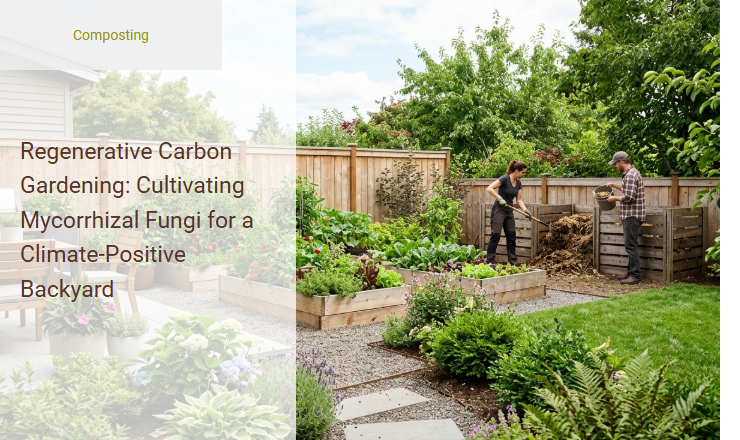
Many dedicated home gardeners invest significant time and resources into composting and watering, yet still struggle with depleted soil structure, weak yields, and climate-stressed plants. Before turning to synthetic fertilizers, it is crucial to understand the soil's natural underground economy-the foundational biological network that has sustained terrestrial life for millennia.
By shifting your focus to this natural system, you gain the ability to foster unparalleled plant resilience while actively transforming your backyard into a high-performance carbon sink. This approach requires a fundamental stipulation: regenerative gardening is not about immediate chemical feeding, but rather cultivating long-term biological partnerships.
Specifically, nurturing symbiotic mycorrhizal fungi allows their microscopic hyphae to bind soil particles with glomalin, a durable glycoprotein that locks carbon in place and dramatically improves water retention. In this guide, we will examine the science of these subterranean networks and provide actionable strategies to inoculate, protect, and sustain a thriving, climate-positive backyard ecosystem.
Read also: Biochar vs Compost for Carbon Sequestration
Introduction to Carbon Gardening: The Secret Beneath Your Feet
Many gardeners focus on what grows upward toward the sun, yet the true engine of ecological restoration lies hidden in the dark. Regenerative carbon gardening shifting our perspective from the surface down into the earth, turning ordinary backyard plots into powerful carbon sinks. By partnering with subterranean mycorrhizal fungi, everyday growers can play an active role in global cooling. Through this partnership, plants capture atmospheric carbon dioxide and channel it underground, where these specialized fungi stabilize it, turning your soil into a reservoir for long-term carbon sequestration.
Understanding Mycorrhizal Fungi: The Underground Wood Wide Web
To cultivate a healthy underground ecosystem, we must understand the intricate biological relationship between plant roots and mycorrhizal fungi. This ancient symbiosis bridges kingdoms; plants provide the fungi with carbon-rich sugars produced through photosynthesis, while the fungi deliver water and vital nutrients like phosphorus and nitrogen back to the plant. This network is made of microscopic, thread-like structures called hyphae, which collectively form a vast underground web known as a mycelium. Extending far beyond the reach of plant roots, this living grid acts as a biological superhighway, optimizing nutrient delivery and strengthening plant defenses.
The Climate Connection: How Fungi Lock Carbon in the Soil
The climate benefits of carbon gardening depend heavily on how fungi process and store carbon. When mycorrhizal fungi receive liquid carbon from plant roots, they do not just consume it; they utilize it to construct their physical networks and produce a unique, sticky glycoprotein called glomalin. This compound acts as a natural soil glue, binding mineral particles and organic matter together to form stable soil aggregates. Within these aggregates, carbon is shielded from microbial breakdown, preventing it from returning to the atmosphere as carbon dioxide.
"Glomalin, a highly stable glycoprotein produced by arbuscular mycorrhizal fungi, keeps carbon locked in the soil matrix for decades, serving as one of the most significant biological sinks for carbon on the planet."
Assessing Your Soil: Is Your Backyard Ready for Fungi?
Before introducing new plants or inoculants, you must evaluate the current health of your soil food web. Undisturbed, living soil naturally supports fungi, but areas subjected to heavy landscaping may need preparation. Here is a simple, step-by-step method to assess your backyard soil's fungal readiness:
- The Squeeze Test: Scoop up a handful of moist soil and squeeze it. Healthy, aggregate-rich soil should form a loose clump that crumbles easily under light pressure, indicating structured air spaces where fungal hyphae can breathe.
- The Smell Test: Dig down a few inches and inhale. A rich, sweet, earthy scent (caused by geosmin) points to active microbial and fungal life, whereas a sour or metallic smell indicates anaerobic conditions.
- Root Inspection: Carefully pull up a weed or sacrificial plant. If the roots are clean and white with no clinging soil, the biological activity is low. If the roots are covered in a sheath of soil particles (a rhizosheath), mycorrhizae are actively at work.
Breaking Bad Habits: Practices to Stop Immediately
Building a thriving mycorrhizal network requires a shift in how we manage the land. Many traditional gardening methods inadvertently destroy the delicate mycelial structures we aim to cultivate. To protect these underground allies, transition away from these destructive habits:
- Rototilling and Double-Digging: Mechanical tilling physically tears apart the delicate fungal hyphae, instantly shattering the complex network built over months or years.
- Synthetic Chemical Fertilizers: High-analysis synthetic fertilizers, especially soluble phosphorus, disrupt plant-fungal relationships. When plants are flooded with easy chemical nutrients, they stop feeding the fungi, causing the network to starve and wither.
- Chemical Pesticides and Fungicides: Broad-spectrum chemical applications kill beneficial soil organisms, disrupting the biological balance and leaving plants vulnerable to pests.
Choosing the Right Host Plants: Species that Foster Fungal Networks
Not all plants interact with mycorrhizal fungi in the same way. Selecting compatible species is essential for building a robust underground network. The table below highlights excellent host choices for your carbon garden:
| Plant Type | Recommended Species | Fungal Compatibility Type |
|---|---|---|
| Cover Crops | Crimson Clover, Oats, Hairy Vetch | Arbuscular Mycorrhizae (AM) |
| Perennial Flowers | Echinacea (Coneflower), Yarrow, Milkweed | Arbuscular Mycorrhizae (AM) |
| Native Trees | Oak, Beech, Birch | Ectomycorrhizae (ECM) |
Soil Inoculation: Activating the Fungal Force
If your soil has been degraded by tilling or chemical use, you can jumpstart the recovery process by introducing live mycorrhizal spores. Use these three practical methods to apply inoculants directly to your garden:
- Seed Dusting: Dampen your seeds slightly before planting, then toss them with mycorrhizal powder until they are evenly coated. This ensures immediate fungal contact as soon as the first root emerges.
- Root Dipping: When transplanting seedlings or bare-root trees, mix your inoculant with water to create a slurry. Dip the root systems directly into the mixture before placing them in the planting hole.
- Soil Drenching: Dissolve water-soluble inoculants into a watering can and apply the solution directly to the root zones of established plants, allowing the spores to wash down into the root system.
Feeding the Network: Organic Mulches and Cover Crops
Once established, your underground fungal network requires a steady supply of carbon to survive and expand. You can maintain this living system by providing organic mulches and keeping living roots in the soil year-round. Use the following carbon-rich materials to feed your soil food web:
- Arborist Wood Chips: Decaying wood feeds wood-decay fungi, which work alongside mycorrhizae to build rich, humus-dense soil.
- Living Cover Crops: Keeping living plants in the ground ensures that roots are constantly exuding carbon to feed the fungi, even during the off-season.
- Deciduous Leaf Mold: Shredded autumn leaves serve as a gentle, nutrient-rich mulch that mimics the natural forest floor, encouraging fungal growth.
Monitoring Success: Indicators of a Thriving Underground Ecosystem
Because mycorrhizal networks are largely invisible, tracking your progress requires looking for subtle physical changes in your garden. Watch for these positive indicators of a thriving underground ecosystem:
- Enhanced Soil Aggregation: Your soil develops a crumbly, coffee-ground-like texture that retains moisture well and resists erosion.
- Spontaneous Mushroom Fruiting: The appearance of mushrooms on the surface indicates that the underground mycelium has matured and is reproducing.
- Improved Drought Tolerance: Plants require less frequent watering, as the vast fungal network efficiently draws moisture from deep within the soil profile.
The Ripple Effect: Scaling Backyard Regeneration to Global Impact
By shifting our perspective to the life beneath our feet, we discover that we are not passive observers of environmental decline. Every square foot of living, fungi-rich soil we cultivate helps pull excess carbon from the sky and lock it safely away in the earth. Through these small, daily acts of stewardship, we build a collective movement that restores local water cycles, revives biodiversity, and cools the climate. Your backyard is a vital sanctuary of life, and by nurturing the fungal web, you become an active partner in healing our shared planet.
Summary
"Regenerative Carbon Gardening: Cultivating Mycorrhizal Fungi for a Climate-Positive Backyard" explores how everyday gardeners can combat climate change by fostering underground fungal networks. Mycorrhizal fungi form crucial symbiotic relationships with plant roots, exchanging vital nutrients for carbon drawn from the atmosphere. By capturing and storing this carbon deep within the soil, these fungi act as a natural carbon sink while dramatically improving soil structure, biodiversity, and water retention.
The article outlines practical steps to cultivate these beneficial networks, such as practicing no-till gardening, avoiding synthetic fertilizers and pesticides, and maintaining living roots year-round through cover cropping. Ultimately, transitioning to regenerative practices transforms home gardens into active participants in global climate mitigation, proving that nurturing soil biology is key to a resilient, sustainable future.
Leave a comment