
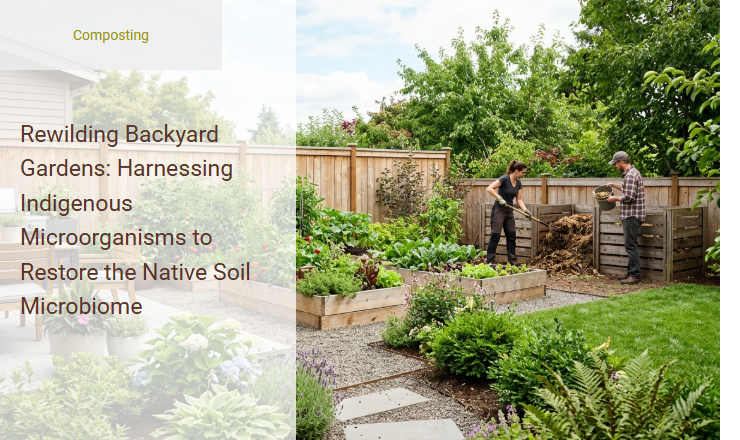
Many passionate gardeners face the frustrating reality of lifeless, compacted soil and vulnerable plants, despite investing heavily in synthetic fertilizers and bagged compost. Before reaching for another chemical quick-fix, we must recognize that true soil fertility depends on the invisible, native biological networks already adapted to your local climate.
Harnessing these systems grants your backyard a self-sustaining ecosystem that naturally suppresses pests and cycles nutrients. However, this ecological transition stipulates a fundamental shift: moving away from sterilized, store-bought inputs and toward cultivating living biology. Utilizing local forest leaf mold and indigenous compost starters provides concrete proof of how site-specific microbes can rapidly revitalize depleted earth.
In this article, we will examine the science of Indigenous Microorganisms (IMO), outline practical collection methods, and detail how to integrate these native biological powerhouses into your backyard to permanently restore your soil food web.
Read also: Fish Emulsion vs Compost Tea for Organic Gardens
The Invisible Wilderness Beneath Our Feet
When we think of rewilding our outdoor spaces, our minds often drift to planting towering native oaks, sowing wildflower meadows, or welcoming songbirds and butterflies back to the garden. Yet, the true engine of ecological restoration remains completely hidden from view. Beneath the soles of our shoes lies a vast, complex, and highly active underground frontier that dictates the health of our entire visible landscape.
The native soil microbiome is a complex community of billions of local fungi, bacteria, protozoa, and nematodes that have co-evolved alongside regional flora for millennia. Restoring these ancient underground communities is not merely an optional step in organic gardening; it is the foundational key to true ecological restoration, unlocking the soil's self-sustaining power.
The Silent Devastation of Suburban Soils
Modern suburban development treats soil as little more than sterile dirt designed to hold plants upright. Conventional landscaping relies heavily on routine tilling, synthetic fertilizers, and chemical pesticides. These aggressive practices act as an ecological eraser, tearing apart delicate fungal networks and poisoning the beneficial organisms that process nutrients naturally.
Without its living biological engine, the soil becomes completely sterilized and compacted. This systematic destruction leaves plants highly vulnerable to diseases and pests, trapping gardeners in a destructive cycle of dependency on chemical inputs to keep a failing landscape artificially alive.
Understanding Indigenous Microorganisms (IMOs)
To heal this damage, we must look to Indigenous Microorganisms (IMOs). These are the native, locally-adapted bacteria, yeasts, and fungi that inhabit undisturbed natural ecosystems. Because they have spent thousands of years adapting to your specific regional climate, soil chemistry, and native plant species, they possess unmatched resilience compared to any laboratory-grown alternative.
"Generic, store-bought soil inoculants are often cultured from isolated strains that struggle to survive in local conditions. Indigenous microorganisms, harvested directly from nearby wild spaces, are already perfectly calibrated to thrive in your bioregion."
The Symbiotic Dance of the Soil Food Web
The relationship between native plants and indigenous soil microbes is a highly organized biological exchange program. Rather than passively absorbing nutrients, plants actively manage and feed the ecosystem surrounding their root zones to ensure their own survival.
The Liquid Carbon Pathway
Through photosynthesis, plants pump carbon-rich sugars and proteins, known as exudates, out of their roots. This acts as a primary food source to attract specific beneficial bacteria and fungi directly to the root zone.
Mycorrhizal Networks and Nutrient Exchange
In exchange for these carbon sugars, mycorrhizal fungi extend their thread-like hyphae far beyond the reach of plant roots, transporting distant water, phosphorus, and essential minerals back to the host plant. This subterranean partnership vastly improves plant hydration, nutrient uptake, and overall immune defense.
Hunting for Microbes: Harvesting Wild IMOs
To bring these powerful organisms into your backyard, you can easily harvest them from a healthy, undisturbed local ecosystem like a nearby native forest or wild grassland.
- Locate an undisturbed area dominated by healthy native plants or old-growth trees, looking for areas with a thick layer of decomposing leaf litter.
- Prepare a wooden box or a breathable container filled with half-cooked white rice, which serves as an ideal, starch-rich bait for wild microbes.
- Clear away the top layer of dry leaves, place the container directly on the rich forest floor, and gently cover it back up with the damp leaf mold.
- Leave the bait undisturbed for three to five days, allowing wild fungal mycelium and beneficial bacteria to colonize the rice.
- Retrieve the container once the rice is covered in a healthy, white, sweet-smelling microbial mold.
Culturing and Multiplying Your Forest Harvest
Once you have captured these wild microbes, you must stabilize and multiply them to create a shelf-stable concentrate that can be easily integrated into your home garden.
The Fermentation Stage
Mix your colonized rice immediately with equal parts raw brown sugar. This process halts the active growth of the microbes through osmotic pressure, puting them into a stable, dormant state. The resulting rich, dark syrup can be stored at room temperature for months.
The Bran Multiplication Phase
To expand this liquid culture into a solid inoculant, dilute the syrup in chlorine-free water and mix it into agricultural bran or clean sawdust. Keep the mixture moist and aerated until the entire pile warms up and becomes densely covered in rich, active microbial growth.
Rewilding Application: Inoculating Your Garden Soil
With a thriving, stable batch of indigenous microorganisms ready, you can easily introduce this biological life back into your degraded suburban yard using several highly effective application methods:
- Soil Drenches: Dilute your liquid IMO syrup in clean, aerated rainwater and apply it directly to the soil surface to jumpstart microbial activity.
- Actively Aerated Compost Teas: Brew the cultured microbes with compost and molasses in an aerated bubbler to multiply the organisms before watering.
- Root Zone Inoculation: Dust the solid bran inoculant directly onto the roots of native plants during transplanting to establish immediate symbiotic connections.
- Microbe-Rich Mulching: Mix the fermented bran directly into a thick layer of organic woodchips or leaf mold to create a self-sustaining decomposition cycle.
The Visible Transformation: Ecological Benefits of Rewilding
As the newly introduced indigenous microorganisms colonize your garden, they begin to repair the damaged soil structure from the inside out. Fungal hyphae bind tiny soil particles into stable aggregates, creating a spongy, aerated soil matrix that allows roots to breathe and grow effortlessly.
This biological transformation quickly manifests above ground. Plants develop a natural resilience to extreme weather, requiring less manual watering and easily resisting common pests and diseases without any chemical interventions.
Guardian of the Underground: Long-Term Microbiome Stewardship
Inoculating your soil is only the first step. To ensure these fragile biological networks survive and continue to protect your garden for years to come, you must adopt sustainable, protective management practices.
Eliminate Soil Disturbance
Avoid tilling or aggressive digging. Mechanical tilling physically shreds the delicate networks of mycorrhizal fungi, reversing months of natural biological development in a single afternoon.
Keep the Soil Covered
Never leave soil bare and exposed to the elements. Maintain a thick, protective layer of organic mulch, leaves, or living cover crops to protect the fragile underground community from harsh solar radiation and extreme temperature swings.
From Backyards to Bioregions: The Bigger Picture of Micro-Rewilding
Rewilding your garden's soil is much more than a localized gardening strategy; it is a profound act of environmental stewardship. By restoring the native microbial foundations beneath our feet, we rebuild the critical ecological networks that support insects, birds, and larger wildlife across entire urban landscapes.
"Every patch of restored, living soil serves as a vital biological sanctuary, transforming fragmented suburban neighborhoods into a continuous, resilient corridor of regional biodiversity."
Summary
The article "Rewilding Backyard Gardens: Harnessing Indigenous Microorganisms to Restore the Native Soil Microbiome" explores sustainable ecological restoration at a residential scale. It highlights how conventional gardening practices-such as synthetic chemical applications and over-tilling-degrade vital soil ecosystems, stripping them of essential microbial diversity. To combat this, the author advocates for "rewilding" through the cultivation and application of Indigenous Microorganisms (IMOs).
Gathered from local, undisturbed ecosystems, these native bacteria and fungi are introduced into backyard soils to revive biological activity, improve nutrient cycling, and strengthen plant resilience against pests and climate stress. By transitioning from sterile management to microbial partnership, suburban gardeners can transform their plots into self-sustaining, biodiverse havens. This practical approach democratizes conservation, proving that restoring soil health at a hyper-local level is a critical step in addressing global ecological degradation.
Leave a comment