
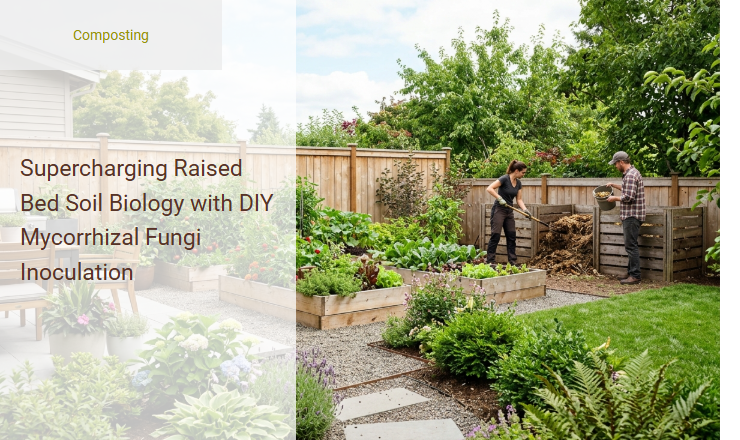
Many raised bed gardeners watch their carefully built soil grow lifeless over time, resulting in stunted plant growth and underwhelming yields despite rigorous watering and expensive inputs. While traditional NPK fertilizers offer a temporary chemistry boost, they fail to address the underlying biological architecture. True, sustainable soil productivity relies on a functioning underground ecosystem.
Activating this biology with mycorrhizal fungi grants plants an extended, living root network, which dramatically improves nutrient absorption and drought resilience. However, successful inoculation is not an instant chemical cure-all; this biological approach requires a basic understanding that these symbiotic fungi must physically colonize living host roots-such as those of tomatoes, peppers, or squash-to function.
In this guide, we will explore the science of soil symbiosis, detail a step-by-step method for cultivating your own DIY mycorrhizal inoculant, and explain how to properly integrate it into your raised beds for maximum biological vitality.
Read also: Sheet Composting vs Hugelkultur for Raised Beds
Introduction: The Hidden World Beneath Your Raised Bed
Behind every thriving raised bed garden lies a complex, invisible ecosystem working tirelessly beneath the soil surface. While many gardeners focus solely on N-P-K ratios and watering schedules, the true secret to lush, productive vegetables is thriving soil biology. By fostering a diverse community of microscopic organisms, you unlock your soil's full potential, transforming a simple wooden box into a self-sustaining powerhouse of fertility. At the center of this underground revolution are mycorrhizal fungi, the absolute biological supercharger for plant roots.
Harnessing these ancient organisms can expand your plants' root surface area by up to several hundred times, optimizing nutrient delivery naturally.Understanding Mycorrhizal Fungi: Nature's Underground Network
Mycorrhizal fungi form a mutualistic partnership with plant roots that dates back hundreds of millions of years. In this symbiotic exchange, the plant shares its surplus sugars produced through photosynthesis, while the fungal network retrieves water and essential nutrients from deep within the soil pores that plant roots cannot physically reach.
Endomycorrhizae vs. Ectomycorrhizae
Endomycorrhizae physically penetrate the cell walls of the host plant's roots, forming a highly integrated exchange system common in vegetables, herbs, and fruit trees. In contrast, ectomycorrhizae wrap around the outer root cells without penetrating them, typically partnering with woody shrubs and forest trees.
Understanding these biological distinctions helps you target the right fungal partners for your specific raised bed crops.The Power of Inoculation: Key Benefits for Raised Bed Gardens
Introducing native mycorrhizae to your raised beds completely shifts how your garden functions. Instead of relying heavily on synthetic inputs, you allow biology to do the heavy lifting, resulting in a resilient and low-maintenance growing space.
- Supercharged Nutrient Uptake: The fungal hyphae solubilize locked-up phosphorus, iron, and trace minerals, funneling them directly into your crops.
- Drought and Water Stress Resistance: Fungal threads hold moisture like a sponge, keeping plants hydrated during intense summer heatwaves.
- Natural Disease Suppression: A physical barrier of beneficial fungi shields tender roots from soil-borne pathogens and harmful nematodes.
The DIY Advantage: Why Home-Harvested Fungi Beats Store-Bought
While commercial powders are convenient, they often contain generic, mass-produced strains cultivated in laboratories far from your home. Harvesting wild, local fungi ensures that your inoculant is perfectly adapted to your regional climate, soil pH, and native plant communities.
"Locally sourced microorganisms carry the genetic intelligence required to thrive in your exact environmental conditions, outperforming imported commercial alternatives."
Gathering Your Gear: Materials for a DIY Fungal Trap Culture
Creating your own fungal inoculant is an easy, rewarding project that requires only a few basic materials. The goal is to capture wild spores from a healthy local ecosystem and multiply them under controlled conditions.
Essential Supplies Checklist
- Healthy forest or meadow soil gathered from the root zones of native perennial plants.
- Host plant seeds, such as bahia grass, clover, or sorghum, which readily form quick mycorrhizal bonds.
- An inert growing medium like clean river sand mixed with vermiculite to encourage robust root growth.
- Clean containers with drainage holes to house your trap culture.
Step-by-Step Guide: Setting Up Your Fungal Trap Culture
- Layer the Media: Fill your container halfway with your inert sand-vermiculite mix, add a generous layer of your wild soil sample, and top it off with more clean media.
- Sow the Host Seeds: Plant your clover or grass seeds thickly on the surface, watering them gently to stimulate germination.
- Nurture the Culture: Place the container in a sunny spot, keeping the medium consistently moist for three to four months to allow the fungal colonization to peak.
Harvesting Your Inoculant: From Roots to Garden Gold
Once your host plants have grown for several months and the mycorrhizal network is fully established, it is time to harvest the concentrated spores and colonized root fragments.
- Withhold water for one to two weeks, allowing the host plants to naturally die back and dry out in their container.
- Chop the dried host plant foliage at the soil line, leaving the dense root mass intact.
- Pull the root ball out of the container and chop it into tiny pieces, blending the root fragments with the surrounding dry soil media to create your finished powder.
Application Methods: Inoculating Your Raised Bed Plants
To get the best results from your homemade inoculant, you must ensure direct contact between the fungal spores and your target plant's roots. Fungal spores do not travel well through the soil on their own; they need to touch emerging roots to establish their symbiosis.
Direct Root and Seed Contact
When transplanting young seedlings, dust a teaspoon of the inoculant directly onto the wet root ball before placing it in the planting hole. For direct-sown seeds, sprinkle a pinch of your harvested mix directly into the planting furrow alongside your seeds to colonize them right at germination.
Sustaining the Biology: How to Keep Your Mycorrhizae Alive
Once you have introduced these beneficial partners to your raised beds, your management practices must support their ongoing survival. Fungal networks are delicate and can easily be destroyed by conventional gardening habits.
- Adopt No-Till Practices: Avoid rototilling your raised beds, as mechanical turning slices through the expansive hyphal networks.
- Grow Living Cover Crops: Keep living roots in the soil year-round to provide a constant source of carbohydrates for the fungi.
- Eliminate Synthetic Fertilizers: Avoid high-phosphorus chemical fertilizers, which cause plants to reject their fungal partners.
Troubleshooting Common Pitfalls in DIY Fungal Cultivation
Cultivating living biology comes with a learning curve. If your trap culture shows signs of stagnation or white fuzzy mold, you may have overwatered the medium, which creates anaerobic conditions that kill off mycorrhizae while inviting root rot.
Summary
This article explores how gardeners can dramatically improve the soil biology of their raised beds through DIY mycorrhizal fungi inoculation. Mycorrhizal fungi establish a vital symbiotic relationship with plant roots, effectively expanding the root system to enhance water absorption and nutrient uptake, particularly phosphorus. While commercial inoculants are widely available, creating a homemade version using local soil samples and host plants is a highly effective, cost-efficient, and biologically diverse alternative.
The guide provides a step-by-step methodology for harvesting indigenous active spores, cultivating them using cover crops, and applying the finished inoculant directly to raised bed soils. By introducing these locally adapted fungi, gardeners can foster a robust subterranean network that improves soil structure, increases drought tolerance, and boosts overall crop yields naturally, ensuring long-term garden health.
Leave a comment