
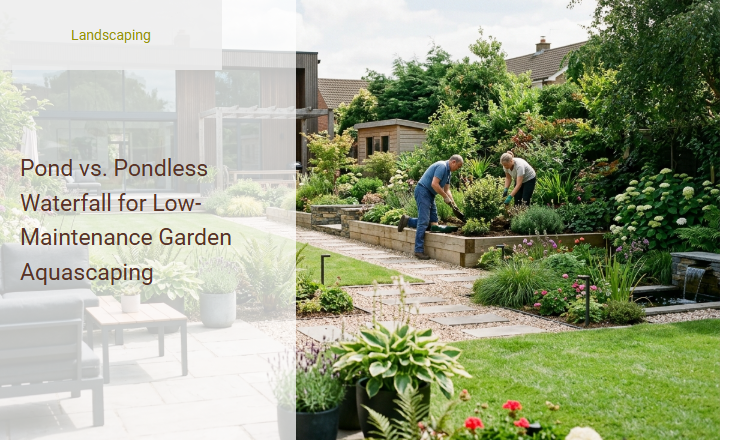
Homeowners often dream of adding the soothing acoustics of running water to their gardens, yet the dread of relentless algae control, debris skimming, and safety liabilities quickly stalls these landscaping plans. Before diving into excavation, it is vital to contextualize how modern aquascaping integrates into your daily lifestyle. Fortunately, selecting the correct design grants you a tranquil, therapeutic outdoor retreat without demanding hours of exhausting weekend upkeep.
It is important to stipulate, however, that "low-maintenance" does not translate to "zero-maintenance." Every water feature requires baseline stewardship, such as managing seasonal leaf debris and ensuring optimal pump performance. To help you make a practical, educated investment, this guide will compare traditional ecosystem ponds against modern pondless waterfalls, analyzing their specific maintenance demands, installation costs, and space requirements so you can confidently choose the ideal feature for your lifestyle.
Introduction: The Ultimate Backyard Water Feature Dilemma
Transforming your backyard into a personal sanctuary often comes down to a single, captivating element: the soothing sound of moving water. For decades, the traditional ecosystem pond reigned supreme, offering a lush, biological haven where fish and lilies dance in harmony. However, a modern rival has emerged to challenge this classic design. The low-maintenance pondless waterfall has rapidly gained popularity among homeowners who crave the sensory benefits of a cascading stream without the commitment of open, standing water. Navigating this choices requires balancing your aesthetic aspirations, budget, and lifestyle to determine which water feature will truly elevate your outdoor living space.
Understanding the Ecosystem Pond: A Living Watercolor
An ecosystem pond is not merely a pool of water; it is a self-sustaining, living work of art that relies on a delicate biological balance. Rather than fighting nature with harsh chemical treatments, this system collaborates with natural processes to keep the water clear and healthy. Every biological element plays a vital role in establishing this natural equilibrium, creating a closed-loop environment where waste is converted into nutrients.
- Biological and Mechanical Filtration: Skimmers sweep the surface of debris, while biological filters house beneficial bacteria that break down organic waste.
- Aquatic Plants: Lilies, marginals, and floating plants absorb excess nutrients, starving out unwanted algae while providing shade and oxygen.
- Fish (Koi and Goldfish): These colorful inhabitants graze on algae and provide essential nutrients to the plants through their natural waste.
- Beneficial Bacteria: Microscopic allies colonize the gravel floor, actively consuming organic matter to prevent muck accumulation.
- Rock and Gravel Recess: Beyond protecting the pond liner from UV rays, rocks provide a massive surface area for colonizing bacteria to thrive.
The Mechanics of a Pondless Waterfall: Flow Without the Depth
If you love the sound of a rushing stream but want to skip the deep basin, the pondless waterfall offers an ingenious mechanical alternative. The magic of this design lies entirely beneath the surface. Instead of emptying into an open pool, the cascading water disappears into a customized, rock-filled basin. Beneath this gravel layer sits a buried reservoir equipped with high-strength structural matrix blocks (often called aqua-blobs) that store a large volume of water. Inside this chamber, a heavy-duty pump housed in a protective vault continuously pushes the water back up to the spillway, creating a closed, recirculating loop of endless motion.

Maintenance Showdown: Daily Care vs. Set-and-Forget
The daily reality of owning a water feature is highly dependent on the system you choose. An ecosystem pond requires a hands-on relationship, mimicking the natural cycles of a wild lake, whereas a pondless system operates more like a home appliance. While pond owners spend their weekends monitoring water parameters and cleaning filter pads, pondless waterfall owners enjoy a nearly automated experience.
| Maintenance Task | Ecosystem Pond | Pondless Waterfall |
|---|---|---|
| Debris Removal | Frequent skimming of surface leaves and organic matter to prevent muck. | Minimal; leaves catch on rocks and are easily blown or swept away. |
| Water Evaporation | Requires careful monitoring to protect fish; automated auto-fill highly recommended. | Requires occasional topping off of the hidden underground basin. |
| Winterization | Requires aerators or de-icers to keep an open hole in the ice for fish respiration. | Simple shutdown; pump can be pulled or left submerged if turned off. |
| Algae Control | Requires balancing fish load, plants, and manual bacterial dosing. | Virtually nonexistent since water is hidden away from sunlight when not running. |
Safety First: Family and Pet Considerations
When designing a landscape, safety must take precedence, especially for households with curious toddlers, elderly family members, or energetic pets. Open water always carries an inherent risk, making the ecosystem pond a feature that requires constant vigilance, fencing, or safety grids. Conversely, pondless waterfalls eliminate the hazard of standing water altogether. Because the reservoir is completely buried beneath a thick layer of river stone, there is no pool in which to fall, making it the premier choice for child-friendly backyards.
"For families with toddlers, a pondless waterfall provides the ultimate peace of mind. You get the therapeutic sound of a multi-tiered stream without ever having to worry about the drowning hazards associated with open, deep-water basins."
- Landscape Safety Council
Biodiversity and Wildlife: Inviting Nature to Your Yard
Both water features act as magnets for local fauna, but they attract entirely different ecosystems. An ecosystem pond is a thriving aquatic sanctuary. It invites amphibians like the Lithobates catesbeianus (American bullfrog) to lay eggs, encourages Anisoptera (dragonflies) to patrol the water's edge, and provides a permanent home for prized koi. A pondless waterfall, on the other hand, serves as a dynamic pitstop. The shallow ripples running over river stones are highly attractive to local songbirds seeking a safe place to bathe, as well as migrating butterflies and honeybees looking for a shallow sip of clean, moving water.
Financial Investment: Installation and Operational Costs
Budgeting for a water feature requires looking at both upfront construction costs and long-term utility bills. Because ecosystem ponds require extensive excavation, heavy-duty filtration, aquatic planting, and fish-safe design elements, they generally carry a higher initial price tag. Pondless systems, requiring smaller footprints and less earthmoving, are typically friendlier on the wallet. To optimize your long-term investment, consider these operational priorities:
- Pump Efficiency: Invest in variable-speed pumps to adjust water flow and drastically cut monthly electricity costs.
- Smart Timers: Unlike ecosystem ponds which must run 24/7 to keep fish alive, pondless waterfalls can be programmed to turn off at night or while you are at work.
- Auto-Fill Valves: Install an automatic fill valve to prevent the pump from running dry due to natural evaporation, protecting your mechanical equipment from burning out.
Sound and Space: Tailoring the Visual and Auditory Experience
Choosing between these two features requires analyzing the physical limits of your property and the exact ambiance you wish to create.
Sound Dynamics: Rushing White Noise vs. Gentle Bubbles
The acoustic output of a pondless waterfall can be customized easily. By increasing the drop height of your spillway, you can generate a powerful, white-noise cascade capable of drowning out highway traffic or noisy neighbors. Ecosystem ponds, because they have a fixed water level, produce a softer, more resonant splash that is ideal for meditative reflection and intimate conversation.
Space Efficiency: Fitting Into Tight Corners
Ecosystem ponds require physical scale; to remain biologically stable, they need adequate depth and surface area, making them difficult to integrate into compact suburban yards. Pondless waterfalls can be squeezed into almost any footprint. They can snake down a tight side-yard hill, wrap around a patio corner, or frame an entryway, offering maximum visual impact with minimal real estate consumption.
The Decision Matrix: Which Feature Fits Your Lifestyle?
If you are still torn between these two incredible features, assessing your daily routine and long-term goals will point you in the correct direction. Below is a helpful profile guide to help map your household lifestyle to the ideal water installation.
- The Avid Hobbyist and Nature Lover
- If you look forward to feeding fish, pruning water lilies, and studying aquatic ecology, the ecosystem pond is your perfect match. It is a rewarding hobby that changes with the seasons.
- The Busy Professional
- If your schedule leaves little time for yard work and you want to enjoy a glass of wine by a soothing stream without a weekend to-do list, the pondless waterfall is customized for your lifestyle.
- The Active Family with Young Kids
- If your backyard is a zone for dogs, sporting gear, and playing children, the zero-depth pondless waterfall offers unparalleled safety and durability.
- The Budget-Conscious Landscaper
- If you want the luxury of running water but need to minimize initial excavation costs and ongoing electricity bills, the highly-efficient pondless waterfall fits the bill.
Final Verdict: Crafting Your Perfect Oasis
The choice between an ecosystem pond and a pondless waterfall is not a matter of finding the superior system, but rather uncovering the one that harmonizes with your lifestyle, yard, and budget. If you crave a thriving, biodiverse environment where you can nurture fish and foster a complex biological lifecycle, the traditional ecosystem pond remains unmatched. If you seek the sensory indulgence of cascading water, absolute safety for your loved ones, and a hassle-free installation that works on your schedule, the pondless waterfall is your ideal solution. Whichever path you choose, dynamic, moving water will breathe new life into your landscape. Take the next step toward your dream yard by contacting our professional aquascaping services today for a custom consultation.
| Feature | Pond (with Waterfall) | Pondless Waterfall |
|---|---|---|
| Water Reservoir | Open, visible, deep pool of standing water. | Subsurface, gravel-filled basin (invisible). |
| Safety Profile | Higher liability; drowning hazard for children/pets. | Virtually zero risk; no open water hazard. |
| Maintenance Needs | High (algae control, debris skimming, filter cleaning). | Minimal (no standing water means minimal algae/debris). |
| Ecosystem Capability | Complete (supports koi, goldfish, and aquatic plants). | Incomplete (attracts birds, cannot support fish). |
| Space Requirement | Large, flat footprint required. | Compact, highly flexible; fits tight or sloped spaces. |
| Operating Costs | Continuous 24/7 pump operation required for oxygenation. | Can run on timers; lower evaporation and power usage. |
Leave a comment