
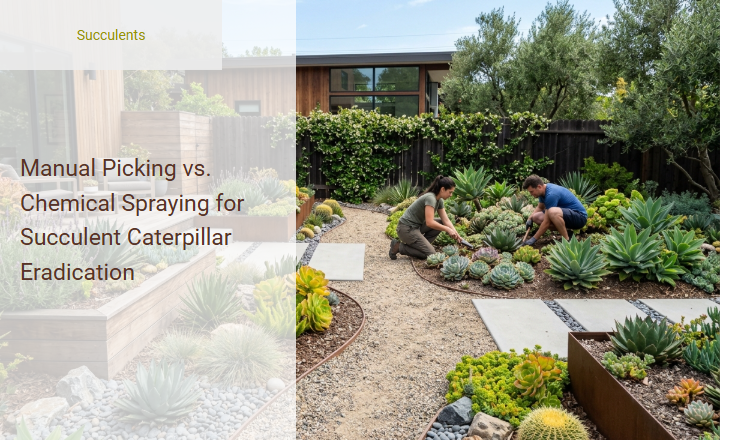
Discovering your prized succulents riddled with unsightly holes is a frustrating setback for any collector or nursery owner. Because of their fleshy, water-storing anatomy, delicate specimens like Echeveria are uniquely vulnerable to devastating infestations of cabbage loopers and other caterpillar species. Selecting the correct intervention not only halts the damage immediately but also preserves the delicate waxy farina that defines the plants' health and aesthetic value.
However, effective pest management requires a nuanced understanding; no single treatment serves as a universal cure, and the ideal approach depends heavily on your collection's scale and environmental constraints. To help you navigate this challenge, this guide provides a comparative analysis of manual picking versus chemical spraying. We will evaluate the labor demands, ecological safety, and long-term efficacy of both methods so you can establish a highly effective eradication protocol for your collection.
Introduction to the Succulent Caterpillar Threat
Succulents are beloved for their fleshy, water-storing leaves and architectural forms, but their plump tissues also make them an incredibly enticing feast for hungry caterpillars. Unlike woody plants that can easily tolerate defoliation, a single caterpillar can cause irreparable disfigurement or even death to a delicate succulent in a matter of days. As these pests chew through growth points and hollow out leaves, choosing the right eradication method becomes a race against time to ensure your plant's survival and aesthetic preservation.
Identifying the Signs of Caterpillar Damage
Catching an infestation early is key to saving your succulents. Because caterpillars are often master mimics, blending in with stems and leaves, you must rely on physical evidence to confirm their presence.
- Irregular bite marks: Jagged chunks missing from leaf margins or deep holes bored directly into the succulent's center.
- Frass: Tiny, dark-colored pellet-like droppings scattered on the leaves or the soil below the plant.
- Webbing: Fine silk threads spun between leaves, which some caterpillar species use for protection or pupation.
- Stunted growth: Sudden decay or collapsing of the inner crown where the caterpillar is actively feeding on new tissue.
The Hands-On Approach: Manual Picking Explained
Manual picking is the most direct way to stop caterpillar damage immediately. To begin, thoroughly inspect your succulents during the early morning or late evening, as many caterpillar species are nocturnal and hide in the soil or under leaves during the day. Carefully check the undersides of leaves, the tight crevices of rosettes, and near the base of the plant where they blend into the potting medium.
Once located, gently grasp the caterpillar with your fingers or a pair of tweezers to avoid damaging the succulent's delicate powdery coating, known as farina. Drop the pests into a bucket of warm, soapy water to humanely and quickly dispose of them, preventing them from crawling back to your garden.
Advantages and Disadvantages of Manual Picking
Before relying solely on hand-picking, it is important to weigh the practical trade-offs of this physical eradication technique.
- Cost-Effective
- This method requires zero financial investment, utilizing basic household items like tweezers and soapy water.
- Eco-Friendly
- It introduces absolutely no chemicals to the environment, keeping beneficial insects and surrounding soil completely safe.
- Labor-Intensive
- Successfully clearing pests requires daily, meticulous inspections, which can become exhausting over time.
- Easy to Miss Hidden Pests
- Tiny newly-hatched larvae and nocturnal feeders are incredibly difficult to spot, allowing the infestation to quietly persist.
Chemical Interventions: Spraying and Systemics
When manual removal is not enough, chemical treatments offer a robust line of defense. Contact sprays, such as those containing pyrethrins or insecticidal soaps, kill caterpillars on contact by disrupting their nervous systems or outer membranes. For long-term protection, systemic insecticides can be applied to the soil; the succulent absorbs these chemicals through its roots, rendering the plant tissue toxic to any pests that take a bite. Another highly effective and targeted option is Bacillus thuringiensis (Bt), a natural soil bacterium that selectively targets caterpillar digestive systems without harming other wildlife.
The Pros and Cons of Chemical Spraying
| Pros of Chemical Spraying | Cons of Chemical Spraying |
|---|---|
| Quick action against severe infestations | Leaves chemical residue on delicate leaves |
| Wide coverage for large plant collections | Risk of phytotoxicity under direct sun |
| Eliminates hidden or microscopic larvae | Can accidentally harm non-target beneficial insects |
Environmental Impact and Plant Safety
Choosing between physical and chemical intervention requires a careful look at the broader ecosystem. Manual picking has a virtually nonexistent ecological footprint, leaving local populations of bees, butterflies, and predatory wasps entirely undisturbed. In contrast, heavy chemical spraying can inadvertently disrupt the local biodiversity by eliminating beneficial insects that provide natural pest control. Furthermore, some chemical formulas can compromise succulent health by stripping away the protective epicuticular wax or causing chemical burns if applied during hot, sunny days.
Efficiency and Cost-Effectiveness Comparison
For a casual hobbyist with a small windowsill collection, manual picking is highly efficient and essentially free, making chemicals an unnecessary expense. However, for large-scale collectors or nursery owners tending to thousands of plants, manual picking is financially unfeasible due to the sheer hours of labor required. In large setups, the upfront cost of systemic treatments or organic sprays is rapidly offset by the time saved and the broad protection provided across the entire inventory.
"While hand-picking saves money for the casual grower, chemical and biological treatments save time and preserve profit margins for the large-scale collector."
A Hybrid Strategy: Integrated Pest Management (IPM)
Instead of relying on just one method, smart growers combine both approaches to build a resilient, long-term defense system that minimizes chemical use while maximizing pest control.
- Inspect plants weekly and manually remove visible caterpillars to immediately reduce population pressure.
- Apply organic Bacillus thuringiensis (Bt) sprays to target newly hatched, hidden larvae without damaging the environment.
- Reserve systemic insecticides for highly vulnerable or rare succulents facing severe recurring attacks.
- Monitor the garden regularly to catch any pest resurgence before it becomes an emergency.
Making the Right Choice for Your Succulents
Protecting your succulents from caterpillars depends on the size of your collection, your budget, and your environmental philosophy. Small collections usually thrive with gentle, chemical-free manual care, while larger infestations benefit from targeted treatments. Assess your current situation to select the strategy that ensures your garden remains vibrant, healthy, and pest-free.
| Comparison Factor | Manual Picking | Chemical Spraying |
|---|---|---|
| Scalability & Speed | Low. Highly labor-intensive; limited to small plots or home gardens. | High. Fast application; ideal for large-scale agricultural fields. |
| Environmental Impact | Zero. No chemical runoff; 100% safe for beneficial pollinators and soil. | High. Risk of soil/water contamination; harms non-target organisms. |
| Cost Structure | High labor time; $0 input/material cost. | Low labor time; high recurring cost for chemical inputs and safety gear. |
| Selectivity & Safety | Perfect. Safe for operators; no crop withholding periods before harvest. | Broad-spectrum. Toxicity risks; requires protective gear and strict harvest delay. |
| Resistance Risk | None. Caterpillars cannot develop resistance to physical removal. | High. Repeated use leads to pest adaptation and chemical immunity. |

Leave a comment