
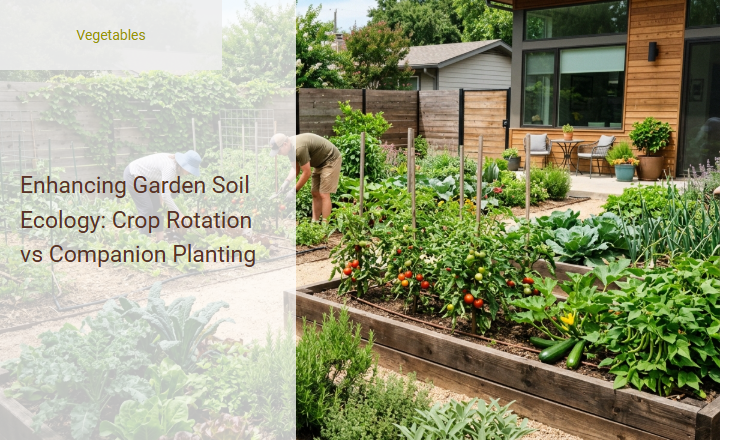
Many growers struggle with declining soil vitality, watching helplessly as pests multiply and crop yields dwindle season after season despite relentless irrigation and physical labor. While chemical fertilizers offer a quick, temporary fix for nutrient deficiencies, they ultimately disrupt the delicate underground microbiome and degrade long-term soil structure.
Transitioning to biological soil management grants cultivators a self-sustaining ecosystem that naturally suppresses disease and unlocks bound nutrients. However, establishing this vibrant underground ecology is a gradual, patient process rather than an overnight miracle. For instance, incorporating nitrogen-fixing clover into a bed rotation or pairing heavy-feeding tomatoes with pest-repelling marigolds demonstrates how targeted plant relationships fortify the rhizosphere.
This article evaluates two primary ecological strategies-crop rotation and companion planting-examining their distinct mechanisms, soil-building benefits, and how to integrate both systems to maximize your garden's natural productivity.
Introduction to Living Soil and Sustainable Gardening
Beneath our feet lies a bustling metropolis teeming with microscopic life. This complex system, known as soil ecology, is fueled by billions of bacteria, fungi, protozoa, and beneficial nematodes working in harmony. At the center of this underground web is the rhizosphere, the narrow zone of soil directly influenced by root secretions and associated soil microorganisms. To cultivate a truly sustainable garden, we must learn to nourish this living soil rather than bypass it with synthetic chemicals.
To achieve this, ecological gardeners rely on two distinct yet complementary strategies: crop rotation and companion planting. Crop rotation serves as a temporal strategy, changing plant families over time to balance nutrient demands and disrupt cycles of decay. Companion planting operates as a spatial strategy, grouping diverse species together in the same bed to create mutual benefits. Together, these systems mimic natural ecosystems, building lasting soil health and producing vibrant, nutrient-dense crops.
Understanding Crop Rotation: The Temporal Strategy
The Evolution of a Time-Tested Practice
Crop rotation is the systematic practice of planting different crop families in a specific sequence over successive seasons. This practice has ancient roots, dating back to Roman and medieval agricultural systems where fields were left fallow or rotated to restore productivity. By rotating crops, growers avoid exhausting the soil and ensure that no single group of plants drains the same pool of nutrients year after year.
Breaking Pest Cycles and Managing Nutrients
Many destructive pests and pathogens are highly host-specific, overwintering in the soil and waiting for their preferred plants to return in spring. When a gardener moves plant families to a different bed each season, these localized pests emerge only to find a non-host crop, effectively starving them out. This systematic movement also manages nutrient depletion, organizing plants by their heavy-feeding or light-feeding characteristics.
- Heavy Feeders: Crops like tomatoes, brassicas, and corn that require high amounts of nitrogen and phosphorus.
- Light Feeders: Root crops and herbs that demand minimal soil nutrition and help balance the ecosystem.
- Soil Builders: Legumes that work with soil bacteria to actively deposit nitrogen back into the earth.
Understanding Companion Planting: The Spatial Strategy
Coexistence in the Plant Kingdom
Unlike the chronological rhythm of crop rotation, companion planting is an immediate, spatial strategy. It involves growing different plant species in close physical proximity to establish mutualistic relationships. By mimicking the layered diversity of natural wild spaces, gardeners can create self-sustaining communities where plants protect and support each other throughout the growing season.
The Functions of Polyculture Guilds
When diverse plant families occupy the same bed simultaneously, they optimize the use of space, light, water, and nutrients. This structural variation creates layers of vegetation that serve multiple ecological functions at once.
- Living Mulch: Broad-leaved plants like squash shade the soil surface, reducing moisture evaporation and suppressing weed growth.
- Insectary Plants: Flowering herbs like dill and alyssum attract predatory insects that naturally control pest populations.
- Resource Partitioning: Deep-rooted plants draw up water and trace minerals from deep underground, sharing them with shallow-rooted neighbors.
How Crop Rotation Alters the Soil Microbiome
The true magic of crop rotation happens out of sight, deep within the microscopic architecture of the soil. Every plant family produces a unique cocktail of carbon-rich compounds known as root exudates. These secretions, consisting of sugars, amino acids, and enzymes, attract specific communities of soil microbes. If the same crop is grown in the same spot continuously, the soil microbiome becomes highly specialized and dangerously unbalanced, giving rise to pathogenic dominance.
When we change plant families seasonally, we completely alter the biochemical landscape of the rhizosphere, preventing monoculture pathogens from establishing a permanent foothold.
By introducing a variety of plant families over a multi-year cycle, gardeners systematically feed different cohorts of beneficial microbes. For example, a season of brassicas releases glucosinolates that naturally sanitize the soil, while a subsequent planting of grain crops stimulates glomalin production by arbuscular mycorrhizal fungi. This rotational variety builds diverse microbial populations, making the entire garden ecosystem highly resistant to disease outbreaks.
Companion Planting and the Underground Network
While crop rotation structures diversity over time, companion planting establishes a thriving, multi-dimensional network underground. When different species grow side by side, their roots occupy different soil depths, creating a complex underground matrix. In this shared environment, plants communicate and share resources through vast mycorrhizal networks. These fungal threads link the root systems of different plants, functioning as a biological highway for exchanging water, phosphorus, and biochemical signals.
This active root interaction stimulates a robust soil food web. The diverse array of root exudates produced by companion plants supports a wider variety of bacteria and fungi than any monoculture could. As these microbes feed on the varied root secretions, they release plant-available nutrients and synthesize organic compounds that promote root growth. This cooperative subterranean synergy ensures that plants are not competing, but are instead actively supporting one another's health and vitality.
Nutrient Dynamics: Nitrogen Fixation vs. Nutrient Mining
Both crop rotation and companion planting are outstanding tools for managing soil fertility, but they approach nutrient dynamics from entirely different angles. Crop rotation relies on a sequential approach to soil fertility, using legume cover crops to fix nitrogen for the following year's heavy feeders. In contrast, companion planting leverages immediate, spatial interactions, combining plants that accumulate nutrients with those that require immediate feeding.
| Strategy | Primary Mechanism | Nutrient Benefit | Timing of Effect |
|---|---|---|---|
| Crop Rotation | Temporal leguminous nitrogen fixation | Replenishes deep nitrogen reserves for future seasons | Long-term, seasonal recovery |
| Companion Planting | Dynamic accumulation and spatial sharing | Mines deep subsoil minerals for immediate neighbor use | Real-time, continuous support |
By understanding these differences, gardeners can optimize their fertilizer use. Rotational legumes like clover draw nitrogen from the atmosphere and lock it into the soil when their roots decompose. Meanwhile, dynamic accumulators like comfrey or dandelion act as nutrient miners, pulling minerals like potassium and calcium from deep subsoil layers and making them accessible to shallow-feeding companions near the surface.
Soil-Borne Disease and Pest Suppression
Disrupting Pathogen Cycles Through Time
Soil-borne pathogens, such as fusarium wilt and clubroot, rely on host plants to survive and multiply. When host plants are absent for several seasons due to strict crop rotation, these disease-causing organisms gradually decline due to a lack of resources. This temporal disruption is one of the most cost-effective ways to maintain a clean, resilient garden without chemical sterilization.
Active Repelling Through Spatial Chemistry
Companion planting tackles pests and diseases from a spatial and chemical perspective. Many plants synthesize volatile compounds that actively repel insects or inhibit harmful pathogens. Marigolds, for example, secrete alpha-terthienyl from their roots, a chemical compound that is highly toxic to destructive root-knot nematodes. Growing marigolds alongside tomatoes or eggplants creates an immediate chemical shield in the rhizosphere, neutralizing pests before they can damage your crops.
Synthesizing Both Systems: The Hybrid Approach
To unlock the maximum potential of your garden, you do not have to choose between temporal and spatial strategies. Instead, you can design a hybrid system where companion guilds are rotated as unified blocks over time. This approach ensures that your soil benefits from continuous root diversity while still enjoying the pest-breaking advantages of seasonal rotation.
- Define your companion guilds: Group compatible plant families together into distinct growing blocks, such as combining solanaceous crops with insect-repelling herbs.
- Map a multi-bed rotation plan: Treat each companion guild as a single unit and rotate them systematically through your garden beds each season.
- Incorporate seasonal cover crops: Use leguminous and deep-rooted cover crops between main crop rotations to keep the living soil nourished during periods of transition.
Practical Steps for the Home Gardener
Step 1: Assess Your Soil and Space
Begin by observing your soil structure, drainage, and current weed patterns. Testing your soil organic matter will help you understand your baseline fertility and identify which beds need immediate nitrogen-building or mineral supplementation.
Step 2: Map Out a Four-Year Rotation Plan
Divide your garden beds into four distinct areas to easily manage the movement of your vegetable families. A classic, simple sequence helps organize crop families by their nutritional needs and growth habits.
- Year 1: Heavy-feeding Brassicas (cabbage, broccoli, kale) and Leafy Greens.
- Year 2: Light-feeding Solanaceae (tomatoes, peppers, potatoes) and root vegetables.
- Year 3: Soil-building Legumes (beans, peas) to rest and restore nitrogen.
- Year 4: Cucurbits (squash, melons, cucumbers) that thrive on newly enriched soil.
Step 3: Interplant Compatible Companion Species
Within each of your rotating beds, plant compatible companions instead of tidy monoculture rows. For instance, plant basil and marigolds directly alongside your tomatoes to repel pests and improve fruit flavor, or plant radishes among your squash to ward off beetles.
Cultivating Long-Term Soil Fertility
Managing a sustainable garden requires looking beyond individual seasons and focusing on the soil as a dynamic, living organism. When we prioritize the biology of the rhizosphere, we move away from the unsustainable cycle of applying chemical fertilizers to feed plants, choosing instead to feed the soil that feeds the plants. By combining crop rotation with companion planting, we establish a robust ecological network both above and below the surface.
The deliberate pairing of temporal and spatial diversity creates a continuous cycle of organic matter decomposition and microbial activity. This balance accelerates the formation of stable organic matter, leading to long-term humic build-up and superb soil structure. Embracing these organic methods ensures that our garden ecosystems remain fertile, resilient, and productive for generations to come.
| Soil Health Aspect | Crop Rotation | Companion Planting |
|---|---|---|
| Execution Dimension | Temporal: Changes crops in the same field over successive growing seasons. | Spatial: Places different crops in close physical proximity at the same time. |
| Nutrient Management | Prevents specific nutrient depletion by alternating heavy feeders with nitrogen-fixing legumes. | Enables real-time nutrient sharing (e.g., legumes fixing nitrogen directly for adjacent plants). |
| Pathogen Control | Starves soil-borne pathogens by removing host plants for multiple seasons. | Suppresses pests and soil pathogens via chemical exudates and biodiverse root environments. |
| Physical Structure | Alternates deep and shallow-rooting crops to break subsoil hardpans and improve aeration. | Creates multi-layered root systems simultaneously to anchor soil and prevent topsoil erosion. |
| Microbial Diversity | Cycles diverse organic matter inputs over time to sustain varied soil microbiomes. | Fosters a highly active and diverse mycorrhizal network concurrently through varied root exudates. |
Leave a comment