
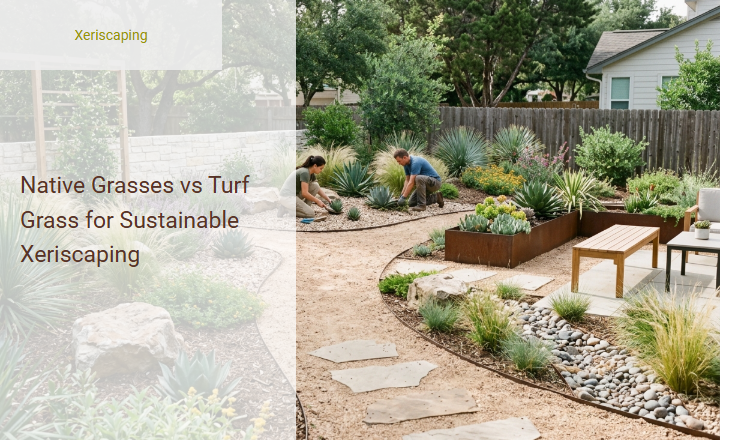
Property owners today face an uphill battle against soaring water utility rates, strict municipal irrigation limits, and the exhausting weekend chore of maintaining a pristine lawn. This frustration stems from a historical reliance on thirsty turf grasses, which were never biologically suited for arid or semi-arid climates.
Embracing sustainable xeriscaping grants homeowners a rare trifecta: significant financial savings, reduced labor, and a thriving local ecosystem. However, a successful transition requires managing expectations; a water-wise landscape requires careful upfront planning and a shift away from the uniform "golf-course" aesthetic. By integrating resilient regional species like Buffalo Grass or Blue Grama, you can achieve a lush, textured landscape without the heavy resource drain of traditional sod.
To help you navigate this transition, this guide will compare native grasses against traditional turf across key metrics, including water consumption, soil health benefits, and long-term maintenance costs.
Rethinking the Lawn: Native Grasses vs. Turf Grass
For decades, the pristine green carpet of turf grass has been the default status symbol of residential homeownership. However, maintaining this manicured monoculture demands an unsustainable amount of resources, creating a pressing environmental need for change. As climate change accelerates and water scarcity worsens, homeowners are searching for ecological alternatives that harmonize with the local environment.
Sustainable xeriscaping offers a powerful solution by replacing high-maintenance turf with native grasses. These indigenous plants are naturally adapted to thrive in local conditions without exhausting valuable resources. Transitioning from traditional lawns to native grasses represents a profound shift in how we view residential landscaping, turning ecological drains into resilient, self-sustaining ecosystems.
The Traditional Standard: Understanding Turf Grass
Traditional turf grass refers to non-native, cultivated sod species meticulously manicured to form a uniform, dense green carpet. Historically popularized in aristocratic European estates, this aesthetic was imported to North America, quickly becoming the default setting for suburban development and municipal parks.
Today, a small handful of non-native grass varieties dominate residential yards, requiring constant intervention to survive outside their natural habitats. The most common varieties include:
- Kentucky Bluegrass: Highly favored for its rich color but requires massive amounts of moisture.
- Bermuda Grass: A warm-season grass that spreads aggressively and requires frequent mowing.
- Fescue: Often utilized in transition zones, though it still struggles during extreme summer heatwaves.
The Hidden Cost of Turf: Water and Chemical Inputs
The perfect suburban lawn is not a product of nature; it is an artificial construct kept alive through intensive chemical life support. Traditional turf grass demands an immense volume of municipal water, accounting for a staggering percentage of residential water consumption during summer months. This constant irrigation drains local reservoirs and places a heavy burden on municipal infrastructure.
These chemical additives do not stay confined to the lawn. Rain and overwatering wash these substances into storm drains, eventually polluting local rivers, lakes, and marine ecosystems. By choosing turf, we inadvertently sacrifice water quality and deplete precious freshwater reserves for a purely cosmetic reward.
Embracing the Wild: What are Native Grasses?
Native grasses are indigenous plant species that have evolved over thousands of years within a specific geographic region. Unlike imported turf varieties, these grasses have adapted to the unique soil compositions, local weather fluctuations, and historical rainfall patterns of their native habitats.
"Native plants have spent millennia adapting to local climates, developing natural defenses that allow them to flourish without human intervention."
Because they are perfectly in sync with their environment, native grasses require no supplemental fertilizers or chemical interventions to stay healthy. They naturally resist local pests and diseases, demonstrating a wild, effortless resilience that traditional turf simply cannot match.
Water Conservation: The Xeriscaping Champion
Water conservation is the cornerstone of sustainable landscaping, and native grasses are the undisputed champions of xeriscaping. Traditional turf lawns require frequent, shallow waterings to avoid browning and dormancy, which leads to massive water waste through evaporation and runoff.
In contrast, native grasses are exceptionally drought-tolerant. Many species can survive entirely on natural rainfall once established, drastically reducing home water bills. When drought restrictions are put in place, native yards remain vibrant and alive while turf lawns wither and die.
By replacing thirst-heavy turf with species like Blue Grama or Buffalograss, homeowners can reduce outdoor water usage by up to 50 to 80 percent, preserving vital drinking water for future generations.
Beneath the Surface: Root Systems and Soil Health
The true magic of native grasses lies hidden beneath the surface. Traditional turf grass possesses a very shallow root system, rarely extending more than a few inches into the dirt. This shallow network fails to bind the soil effectively, leaving yards vulnerable to erosion, nutrient depletion, and severe compaction.
Native grasses feature incredibly deep root systems, often reaching five to fifteen feet into the earth, drawing nutrients and moisture from deep underground while anchoring the topsoil.
These deep root networks act as natural sponges, facilitating water infiltration and reducing stormwater runoff. As older roots naturally decay, they channel organic matter deep into the earth, aerating the soil, fostering beneficial microbial life, and preventing erosion during heavy storms.
Maintenance and Cost Comparison: Time, Money, and Labor
| Resource / Task | Traditional Turf Grass | Native Grasses |
|---|---|---|
| Watering Needs | High (weekly or daily irrigation) | Very Low (mostly natural rainfall) |
| Mowing Frequency | Weekly (spring through autumn) | 1-2 times per year (optional) |
| Chemical Inputs | Heavy fertilizers and pesticides | None required |
| Long-term Cost | Expensive (fuel, water, chemicals) | Very economical after establishment |
Restoring Local Ecosystems and Biodiversity
A manicured turf lawn is an ecological desert, offering zero food or shelter for local fauna. This sterile environment disrupts local food webs and contributes to the decline of essential insect populations. By transitioning to native grasses, you can transform a lifeless yard into a bustling, biodiverse sanctuary.
Native grasses provide crucial nesting materials, seeds, and shelter for local birds and small mammals. They also act as host plants for native butterflies and moths. Our suburban landscapes can become vital wildlife corridors rather than barriers to survival.
By welcoming native plants back into the landscape, we invite pollinators, beneficial insects, and songbirds back into our neighborhoods, restoring the delicate ecological balance that urban development has long disrupted.
Design and Aesthetics: Creating a Modern Xeriscape
Embracing native grasses does not mean your yard must look messy or neglected. Modern xeriscaping celebrates the rich textures, diverse colors, and dynamic movements of native species to create visually stunning, contemporary landscape designs.
To design an eye-catching and structured native landscape, consider utilizing these practical design strategies:
- Layer by height, placing taller ornamental grasses as dramatic backdrops and shorter bunchgrasses in the foreground.
- Incorporate contrasting textures by pairing fine-bladed native grasses with broad-leafed wildflowers and rustic stone pathways.
- Define clear edges using structural borders, gravel pathways, or mulch rings to show that the wild planting is intentional and curated.
Making the Transition: Steps to a Sustainable Yard
Transitioning from a traditional lawn to native grasses is an incredibly rewarding journey that can be achieved in manageable phases. You do not need to tear up your entire yard overnight; starting with a small bed or a neglected corner allows you to learn the ropes and enjoy immediate resource savings.
To begin, first research which species are native to your specific eco-region. Prepare the soil by removing existing turf through sheet mulching or solarization rather than using harsh chemical sprays. Once the ground is clear, plant your chosen native seeds or plugs during their optimal planting season, keeping them moderately watered only until their deep roots are fully established.
| Feature | Native Grasses | Traditional Turf Grass |
|---|---|---|
| Water Requirement | Very low; thrives on natural local rainfall once established. | High; requires regular, scheduled supplemental irrigation. |
| Mowing Frequency | Minimal; 1 to 4 times per year (or left natural). | Frequent; weekly or bi-weekly during the growing season. |
| Root Depth | Deep (3 to 15 feet); improves soil structure and prevents erosion. | Shallow (2 to 6 inches); prone to runoff and drought stress. |
| Chemical Inputs | None; naturally adapted to local soils without fertilizers or pesticides. | High; depends on synthetic fertilizers, herbicides, and pesticides. |
| Ecological Value | High; provides food and habitat for local pollinators and wildlife. | Low; functions as an ecological monoculture. |
| Foot Traffic Tolerance | Low to moderate; best suited for low-impact landscape areas. | High; highly resilient to heavy play and constant foot traffic. |
Leave a comment