
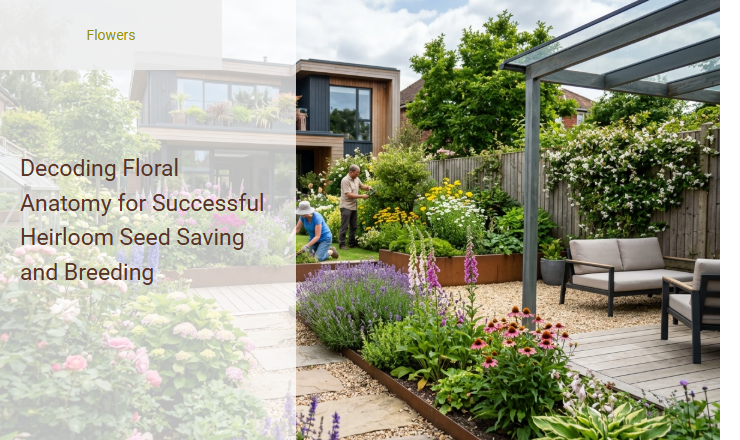
Many dedicated growers face the frustration of harvesting what they believe are heirloom seeds, only to yield unstable, cross-pollinated hybrids the following season. To prevent this costly genetic drift, we must first look beyond basic crop rotation and focus on the fundamental engine of plant reproduction: floral biology.
Mastering this botanical blueprint grants you absolute control over your crop's genetic lineage, securing true-to-type traits and unlocking the potential to breed custom, resilient varieties. While this discipline requires precision-such as understanding why the self-pollinating "perfect" flowers of heirloom tomatoes require vastly different isolation strategies than the insect-dependent, "imperfect" blossoms of squash-it remains a highly systematic and accessible science.
In this guide, we will dissect key floral anatomy, analyze diverse pollination vectors, and outline the practical isolation mechanics required to successfully preserve and breed your heirloom collection.
Read also: Single vs Double Blooms for Attracting Bees
The Gateway to Biodiversity: Understanding Floral Anatomy
For the dedicated gardener, the act of saving seeds is far more than a simple harvest ritual; it is an active preservation of history and genetic resilience. To successfully maintain the purity of cherished heirloom varieties across generations, one must first peer closely into the very heart of the blossom. Floral anatomy serves as the fundamental map for this journey, dictating how plants reproduce, share genetic material, and adapt to their environments.
By mastering the structural blueprint of flowers, seed savers gain the power to prevent accidental hybridization and secure the survival of rare cultivars. Genetic preservation begins at the cellular level, where the physical layout of petals, anthers, and stigmas determines the exact pathway of pollination. Understanding these intricate botanical designs turns guesswork into a precise science, ensuring that the unique flavors, colors, and strengths of heirloom plants are locked safely into every seed you harvest.
Botanical Gender: Perfect vs. Imperfect Flowers
In the kingdom of flowering plants, reproductive structures are organized in diverse and fascinating ways. Seed savers must distinguish between perfect and imperfect flowers to manage their crops effectively. Perfect flowers contain both male and female reproductive organs within the same single blossom. These are often referred to as hermaphroditic, allowing the plant to self-pollinate with ease under the right conditions.
In contrast, imperfect flowers carry only male or only female organs. This separation of the sexes manifests in two primary ways:
- Monoecious plants bear separate male and female flowers on the same individual plant, as seen in squashes and corn.
- Dioecious plants host only male flowers or only female flowers on entirely separate plants, requiring both a male and a female specimen in close proximity for successful reproduction, such as in spinach or asparagus.
For the gardener, recognizing these differences is vital. Perfect flowers can often be isolated using simple physical barriers, whereas imperfect flowers-especially those on dioecious species-require larger population sizes and careful spatial management to avoid inbreeding depression and ensure genetic diversity.
The Male Apparatus: Pollen, Stamens, and Anthers
The Mechanics of Pollen Release
The male reproductive organ of a flower is the stamen, a delicate structure composed of two primary parts: the filament and the anther. The filament is a supportive stalk that positions the anther perfectly to interact with visiting pollinators or passing wind currents. Within the chambers of the anther, microspores undergo division and development to produce mature pollen grains, which carry the male genetic blueprint.
As the flower matures, environmental cues trigger the dehydration and opening of the anther walls, a process known as dehiscence. When these walls rupture, they expose millions of viable pollen grains to the elements, ready to be carried away by wind, rain, or eager insects to fertilize a receptive female counterpart.
The Female Sanctuary: Pistils, Stigmas, and Ovaries
The Path to Seed Development
At the center of the bloom lies the pistil, the protective female sanctuary of the flower. The pistil consists of three essential regions: the sticky stigma at the top, the tube-like style, and the swollen ovary at the base. The stigma acts as a receptive landing pad, often covered in tiny hairs or a sticky fluid designed to capture and hold passing pollen grains.
Once a compatible pollen grain lands on the stigma, it germinates and grows a long pollen tube down through the style to reach the ovary. Inside the ovary, fertilization occurs as the male gamete unites with the ovule. Following successful fertilization, the surrounding ovary walls swell and transform into the flesh or shell of the seed-bearing fruit, safeguarding the maturing embryos inside.
Pollination Pathways: Selfers versus Crossers
Understanding whether a plant is a selfer or a crosser is a cornerstone of genetic preservation. Self-pollinating, or autogamous, plants have evolved to fertilize themselves, often before the flower even opens. This strategy ensures reproduction even in the absence of pollinators and preserves highly stable genetic lines across generations.
"The autogamous strategy minimizes genetic variation, preserving successful traits in stable, predictable lineages."
On the other hand, cross-pollinating, or allogamous, plants rely on pollen from a different individual of the same species. This strategy encourages genetic diversity and resilience, but it presents a major challenge for the heirloom seed saver. Without strict intervention, wind and insects will eagerly mix pollen from different varieties, leading to unintended hybridization and the loss of distinct heirloom characteristics.
Vectors of Life: Wind, Insects, and Evolutionary Design
Flowers are masterworks of evolutionary design, with their physical features carefully tailored to their preferred pollination vectors. Insect-pollinated plants boast bright colors, intricate landing guides, and sweet scents to lure bees, butterflies, or beetles. Their heavy, sticky pollen is built to adhere to fuzzy insect bodies, ensuring efficient transfer from blossom to blossom.
Wind-pollinated plants, conversely, abandon showy displays. They typically feature small, inconspicuous, greenish flowers with large, feathery stigmas exposed to the breeze. Their lightweight pollen is produced in massive quantities to increase the chance of random aerial contact.
Genetic Safeguards: Preventing Unwanted Hybridization
To keep heirloom lines true to type, seed savers must employ proactive isolation techniques that prevent unwanted pollen from reaching receptive stigmas. These physical and spatial barriers are the primary defense against accidental cross-pollination in diverse garden spaces.
- Distance Isolation: Separating different varieties of the same species by recommended distances prevents wind or insects from carrying foreign pollen between crops.
- Blossom Bagging: Covering unopened flower buds with lightweight, spun-bond polyester bags protects the stigma from outside pollen until after fertilization is complete.
- Physical Barriers: Utilizing insect-proof screen cages over entire plant beds blocks insect vectors while allowing sunlight and rain to reach the crop.
The Breeder's Hand: Step-by-Step Hand Pollination
When natural isolation is not possible, or when you wish to select and stabilize specific traits, hand pollination becomes an invaluable skill. This process allows the breeder to control the parentage of the seeds directly.
- Identify and isolate the female flower bud before it opens using
blossom-baggingtechniques to ensure no insect introduces outside pollen. - Locate a mature male flower from the desired parent plant that is actively shedding yellow, powdery pollen from its anthers.
- Gently remove the petals from the male flower to expose the stamens, or use a clean, sterile, fine-tipped
brushto collect the pollen grains. - Carefully open the protective bag of the female flower and apply the collected pollen directly onto the receptive, sticky surface of the stigma.
- Reseal the bag over the pollinated female flower to prevent contamination, and label the stem with a tag detailing the cross and the date.
Signposts of Success: Tracking Fertilization and Seed Development
After pollination occurs, the flower undergoes rapid, highly visible transformations that confirm successful fertilization. Monitoring these changes allows seed savers to track the progress of their genetic crops and prepare for harvest.
- Petal senescence: The colorful petals quickly wither, dry up, or drop off, as they are no longer needed to attract pollinators.
- Ovary swelling: The base of the flower begins to expand, darkening in color as it shifts energy into developing the fruit or seed pod.
- Style collapse: The style and stigma dry out and turn brown, indicating that the pathway for pollen tube growth has closed.
As the days progress, the growing seed pod or fruit will expand, hardening its outer casing to shield the precious genetic cargo developing within.
From Bloom to Bag: Harvesting and Preserving Your Genetic Legacy
The culmination of the seed-saving journey is the careful collection and storage of the matured seeds. Proper handling at this stage is what determines the success of your preservation efforts over the winter and into the coming years.
Harvest seeds only when the seed pods have dried on the vine, or when the fruit has reached full botanical maturity-often well past the stage of culinary readiness. Once harvested, separate the seeds from their chaff or wet pulp. Dry seeds thoroughly in a well-ventilated, shaded area, as residual moisture is the greatest threat to seed longevity.
With these steps complete, you have secured a tangible link to the past, keeping the genetic diversity of your favorite heirloom varieties alive for seasons to come.
Summary
Successful heirloom seed saving and plant breeding begin with a fundamental understanding of floral anatomy. This guide decodes the intricate biological structures of flowers, distinguishing between "perfect" flowers-which contain both male (stamen) and female (pistil) reproductive organs-and "imperfect" flowers, which possess only one. Recognizing these anatomical differences is crucial for determining how different plant species reproduce, whether through self-pollination or wind- and insect-driven cross-pollination.
By mastering these concepts, gardeners and breeders can easily prevent unwanted cross-hybridization, preserve the genetic purity of historical heirloom varieties, and intentionally cross-pollinate to select for desirable traits like disease resistance and superior flavor. Ultimately, demystifying floral biology empowers growers to take control of their seed supply, foster agricultural biodiversity, and ensure the resilience of future harvests.
Leave a comment