
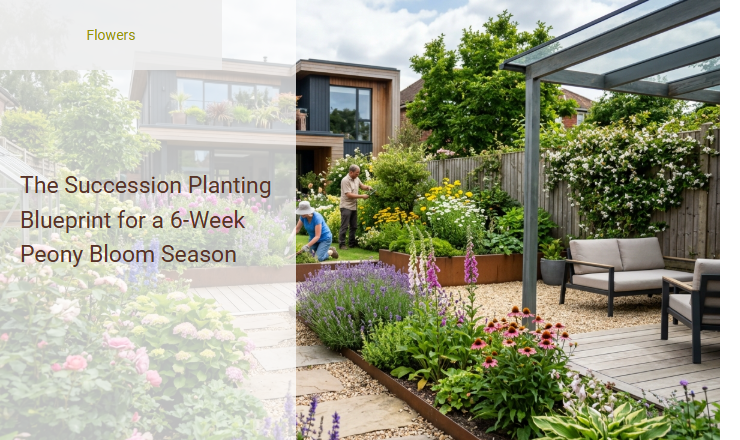
For many gardeners, the peony season is a fleeting heartbreak. These magnificent, pillowy blooms arrive in a rush of color, only to vanish within a brief ten-day window, leaving behind months of plain green foliage. To overcome this limitation, we must look beyond simple aesthetic appeal and first understand the distinct bloom-time classifications of the genus Paeonia.
Strategically leveraging these natural growth phases grants you the ability to extend that brief burst of spring color into a spectacular, six-week continuous exhibition. However, this success is contingent upon a disciplined approach to cultivar selection and an understanding of how regional chill hours influence flowering times. By pairing ultra-early hybrid varieties like 'Coral Charm' with mid-season classics, and finishing the season with late-blooming powerhouses like 'Sarah Bernhardt', you can establish an unbroken chain of blooms.
This blueprint outlines the exact succession planting schedule, categorizing essential varieties by their precise flowering windows to help you engineer a flawless, multi-week peony display.
Read also: Stakes vs Rings for Floppy Peonies
Introduction: The Dream of a Continuous Peony Season
For many gardeners, the peony season is a fleeting romance. Traditional plantings offer a spectacular burst of color and fragrance, only to fade away within a mere fortnight. However, you do not have to settle for such a brief display. By understanding the natural diversity of these beloved perennials and employing strategic succession planting, you can orchestrate a magnificent, continuous 6-week bloom season. This careful curation transforms your spring garden from a temporary spectacle into a prolonged showcase of cascading colors and textures.
Deciphering the Peony Bloom Windows
To successfully stretch your harvest and garden display, you must categorize cultivars by their natural flowering schedules. Peonies are classified into five distinct developmental windows. Selecting varieties from each of these specific classes ensures that as one group begins to fade, the next is primed to take its place.
- Very Early: These pioneers awaken the garden in early spring, often featuring single petals and delicate, wild-type foliage.
- Early: Blooming shortly after the very early types, this group introduces robust herbaceous hybrids with a wider range of colors.
- Midseason: The traditional peak of the peony year, containing many of the most famous, heavily petaled classic varieties.
- Late: As the midseason varieties decline, these cultivars step in with massive, slow-opening blooms that extend the peak display.
- Very Late: The final curtain call, dominated by exceptionally hardy, multi-petaled double varieties that withstand early summer heat.
Site Selection and Soil Optimization
Before introducing any plants to your garden, establishing the right foundation is paramount. Peonies are long-lived perennials that can thrive in the same spot for decades, making initial site preparation critical. They require a location that receives at least six to eight hours of direct sunlight daily to produce strong stems and abundant flowers. Additionally, the planting site must feature fertile, deep, and exceptionally well-draining soil to prevent root rot.
Weeks 1 & 2: The Early Awakenings
The journey begins when the soil first warms. During these opening weeks, the garden welcomes the delicate beauty of species peonies and their immediate hybrids. These plants are incredibly resilient, often shrugging off late spring frosts to deliver the very first splashes of color.
Paeonia tenuifolia (Fernleaf Peony)
Distinguished by its deeply dissected, feathery foliage, this very early bloomer produces brilliant, single crimson flowers that nestle closely among the unique leaves.
'Athena'
An exceptional early hybrid, 'Athena' offers large, single blooms of creamy white, accented by striking pink flares at the base of each petal, creating a glowing effect in the early spring light.
Week 3: The Midseason Crest
By week three, the garden reaches its traditional crescendo. The midseason cultivars represent the classic peony aesthetic: dense foliage, intoxicating fragrances, and massive, pillowy blooms that capture the essence of late spring.
| Cultivar Name | Flower Form | Color Profile |
|---|---|---|
| Festiva Maxima | Double | Pure white with prominent crimson flecks |
| Sarah Bernhardt | Double | Soft, apple-blossom pink with silver edges |
| Red Charm | Bomb Double | Deep, lustrous crimson-red |
Week 4: The Itoh and Intersectional Transition
As the classic herbaceous varieties begin their gradual decline, intersectional peonies-commonly referred to as Itoh hybrids-step forward to bridge the gap. Created by crossing tree peonies with herbaceous types, Itoh peonies offer the best of both worlds. They feature dome-like growth habits, highly dissecting foliage, and incredibly sturdy woody stems that never require staking, despite carrying massive blossoms.
"Itoh peonies are the ultimate bridge in the spring garden. Because their side buds open sequentially over several weeks, a single plant can remain in bloom for up to three times longer than a standard herbaceous variety."
- Master Gardener & Peony Hybridizer
Weeks 5 & 6: The Grand Finale
The final phase of our six-week sequence brings us to the late and very late-blooming varieties. These cultivars have been bred to withstand the rising temperatures of early summer, opening slowly to provide a dramatic and luxurious conclusion to the spring display.
These final performers are dominated by dense, heavy double forms. Because they bloom during warmer weather, placing them in spots that receive dappled afternoon shade can help preserve their delicate petals from sun bleaching.
Late-Season Double Showstoppers
'Karl Rosenfield' is a magnificent late-season double that boasts large, cherry-red blooms on strong stems. Alongside it, 'Duchesse de Nemours' offers dense, crown-shaped white flowers infused with a subtle green-yellow glow and an intense, sweet fragrance.
Very Late-Season Performers
'Elsa Sass' is a highly coveted, very late-blooming cultivar that produces velvety, pure white double flowers resembling giant camellias. It stands as one of the very last herbaceous peonies to bloom, successfully carrying the season into the threshold of summer.
Precision Planting Depth: The Golden Rule
Even with the perfect selection of varieties, success depends heavily on the physical act of planting. Peonies are notoriously sensitive to planting depth. If they are buried too deeply, they will produce lush, beautiful green foliage but will fail to produce flowers.
When working with bare-root divisions, look for the small, pink buds known as "eyes." In USDA zones with cold winters, these eyes must sit exactly two inches below the soil surface. In warmer southern zones, they should be placed shallower-about one inch deep-to ensure they receive enough winter chill to trigger bud development.
- Dig a wide, shallow hole approximately 18 inches deep and 18 inches wide to allow for root expansion.
- Amend the excavated soil with well-rotted compost and a handful of bone meal to encourage strong root establishment.
- Build a firm mound of soil in the center of the hole to support the root division.
- Position the bare-root division on top of the mound, verifying that the pink eyes point upward.
- Use a ruler or a tool handle laid flat across the top of the hole to verify that the eyes sit exactly two inches below the grade.
- Gently backfill with the amended soil, tamping lightly, and water thoroughly to settle any air pockets.
Essential Support and Maintenance
The sheer weight of double peonies, especially when drenched by a sudden spring rain, can easily cause heavy stems to bow to the ground. Implementing physical supports early in the season, before the plants grow taller than a few inches, is crucial for preserving your display.
Watering practices must also adjust as the season warms. During dry spells in late spring, deep weekly soakings are far more beneficial than frequent light sprinkles. Additionally, proper deadheading-removing faded flowers just above the first strong leaf-stops seed production and redirects the plant's valuable energy back down into the root system for next year's growth.
      [========]  <-- Wire Hoop Grid
       \  ||  /
        \ || /    <-- Growing Stems Supported
         \||/
    ================ <-- Soil Level
The Blueprint at a Glance
By mapping out a succession plan that spans from the early fernleaf species to the majestic, late-season double whites, you can transform your spring garden. Rather than a fleeting moment of beauty, your garden becomes a prolonged, evolving landscape of scent, color, and form. With correct planting depths, sturdy supports, and optimized soil, this layout will reward you with reliable, cascading color year after year.
Summary
While individual peony plants typically bloom for only a fleeting week or two, gardeners can extend this spectacular showcase to a full six weeks using a strategic succession planting blueprint. The secret lies in selecting a diverse mix of peony cultivars categorized across five distinct bloom phases: very early, early, midseason, late, and very late.
By thoughtfully combining different peony categories-including early-blooming tree peonies, classic herbaceous varieties, and long-lasting intersectional (Itoh) hybrids-you can create a seamless relay of color. This blueprint explains how careful planning, proper site preparation, and strategic variety selection can transform your garden. As one stunning flower begins to fade, the next is poised to open, ensuring a continuous, fragrant display of magnificent blooms from late spring through early summer.
Leave a comment