
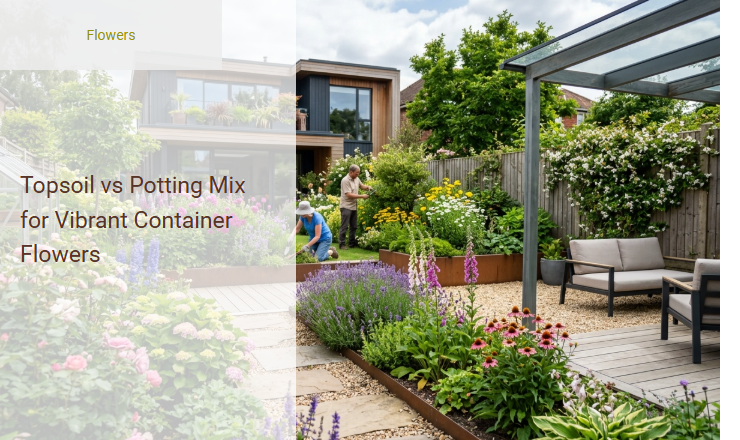
Many gardeners face the frustration of watching vibrant container flowers, like petunias or geraniums, stunt and wither despite attentive watering. Often, the culprit isn't a lack of care, but the suffocating environment beneath the surface.
Before reaching for any bag at the nursery, we must first understand how root biology functions in confined spaces. While both options look like ordinary dirt, they behave entirely differently; natural topsoil is dense and clay-heavy, whereas quality potting mix is a lightweight, engineered blend of peat moss and perlite. Selecting the correct medium grants your plants optimal aeration and moisture control, guaranteeing a prolific, season-long display of blooms.
Below, we will analyze the key differences between topsoil and potting mix-specifically examining drainage capacity, nutrient density, and weight-to help you make the ideal choice for your container garden.
The Container Gardening Dilemma: Topsoil vs. Potting Mix
Stepping into a garden center can feel overwhelming with shelves stacked high with various bags of soil. For beginners eager to plant a vibrant display of container flowers, a very common mistake is choosing the cheapest, heaviest bag labeled "topsoil" thinking that dirt is just dirt. Choosing topsoil instead of potting mix for containers can quietly suffocate your beautiful blooms before they even have a chance to show off their colors. This classic misunderstanding sets up a silent battle underneath the surface where roots struggle to breathe.
Defining Topsoil: Earth's Natural Layer
Topsoil is quite literally the outermost layer of the Earth, scraped directly from the ground and screened to remove large debris. Its natural composition consists of decayed organic matter, minerals, sand, silt, and clay, making it incredibly dense and heavy. Its primary purpose is to bulk up large garden beds, level out uneven lawns, and provide a stable ground base for deep-rooted outdoor landscaping trees and shrubs.
Demystifying Potting Mix: Engineered for Success
Potting mix, often referred to as potting soil, is actually a completely soil-less medium designed specifically for the unique environment of pots, baskets, and window boxes. This medium is manufactured to stay lightweight and fluffy, ensuring that plant roots can easily spread and breathe. It is sterile, meaning it is heated during production to eliminate pathogens, fungal spores, insect larvae, and weed seeds.
- Peat moss for excellent moisture retention.
- Perlite, those tiny white volcanic glass chunks, to create essential air pockets.
- Pine bark or wood fibers to add physical structure and support.
Drainage and Aeration: The Root of the Matter
Containers are closed systems with limited escape routes for water, making drainage the single most important factor for plant health. While potting mix acts like a sponge that holds onto just enough moisture before letting the excess drain freely, topsoil behaves like a heavy sponge that holds water until it turns into a muddy, airless swamp. Without proper airflow, plant roots are starved of oxygen and will quickly succumb to devastating diseases.
A potted plant sitting in poorly draining topsoil will experience root rot, a silent killer that turns healthy white roots into mushy, brown decay.
Weight and Compaction: Why Gravity Wins in Containers
Gravity acts differently on soil inside a confined pot than it does in an open garden bed. Topsoil is incredibly heavy and dense; when squeezed into a container and watered repeatedly, it packs down into a solid, brick-like mass. This severe compaction leaves zero space for delicate flower roots to expand or absorb water. Potting mix, being incredibly lightweight, resists compaction over time, keeping the growing medium fluffy so roots can effortlessly navigate their environment throughout the season.
Nutrients and Sterile Environments: Preventing Disease
Raw topsoil is teeming with natural life, which sounds beneficial, but this includes weed seeds, fungal spores, harmful bacteria, and subterranean pests that thrive in a confined space. When brought into a warm, wet container, these elements can rapidly multiply and overwhelm your flowers. In contrast, sterile potting mix is free from these threats and often comes enriched with slow-release fertilizers that gently feed your plants for months without burning their sensitive root tips.
The Verdict: Why Potting Mix Rules the Container Kingdom
When it comes to growing containerized flowers, potting mix wins the crown without contest. Its engineered balance of high water retention, superior drainage, lightweight structure, and sterile environment makes it the absolute best choice. Using potting mix guarantees that your petunias, geraniums, and begonias have the stress-free environment they need to channel all their energy into producing abundant, eye-catching blooms.
Selecting the Perfect Potting Mix for Flowers
Walking down the garden aisle can be confusing, but looking for specific ingredients on the back of the bag will help you choose the best mix for flowering plants.
- Look for a high percentage of peat moss or coconut coir to keep the roots hydrated between waterings.
- Seek out mixes with moisture-retaining crystals, which act as a safety net during hot summer days.
- Ensure the mix includes a starter fertilizer containing phosphorus, which is the key nutrient responsible for stimulating abundant flower buds.
Hybrid Solutions: When and How to Mix Them
While pure topsoil is terrible for standard pots, there are rare exceptions where a blended approach is highly practical and cost-effective. For massive, deep planters like half whiskey barrels or large raised garden beds, filling the entire volume with premium potting mix can be extremely expensive and make the planter too light to withstand heavy winds. In these specific deep-vessel scenarios, you can safely mix one part topsoil with two parts potting mix for the lower half of the container, leaving the top twelve inches exclusively for pure potting mix.
Flourishing Blooms: Setting Your Planters Up for Success
Achieving a breathtaking container garden bursting with season-long color does not happen by accident. By bypassing the tempting low price of topsoil and investing in a premium, lightweight potting mix, you provide your flowers with the perfect foundation for growth. Your plants will reward your choice with robust root systems, healthy green foliage, and an endless parade of stunning, vibrant blooms all summer long.
| Key Feature | Topsoil | Potting Mix |
|---|---|---|
| Composition | Natural mineral soil, sand, clay, and organic matter. | Soilless blend of peat moss, perlite, vermiculite, and bark. |
| Drainage & Aeration | Poor; compacts heavily in pots, suffocating flower roots. | Excellent; resists compaction, retaining air and moisture. |
| Weight | Heavy; creates dense environment, makes pots hard to move. | Lightweight; encourages rapid root growth and easy transport. |
| Sterility | Non-sterile; may harbor weed seeds, pests, and pathogens. | Sterile; free of weeds, pests, and soil-borne diseases. |
| Nutrient Delivery | Variable; contains natural minerals but lacks sustained release. | Optimized; often pre-mixed with slow-release flower fertilizers. |
| Flower Suitability | Not recommended; high risk of root rot and stunted blooms. | Highly recommended; maximizes blooming potential and plant health. |
Leave a comment