
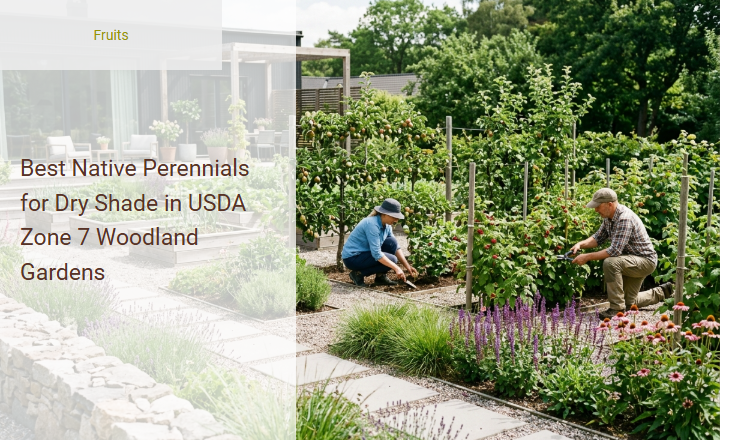
Cultivating a thriving woodland garden in USDA Zone 7 often feels like an uphill battle, especially when confronting the barren, dusty soil of dry shade. Beneath the dense canopy of mature trees, aggressive root systems greedily absorb moisture and nutrients, leaving little sustenance for typical ornamental plants.
However, selecting native species adapted to these exact conditions unlocks a lush, self-sustaining ecosystem that delivers year-round texture and ecological value with minimal intervention. It is important to note that while these indigenous plants are highly resilient, they do require consistent supplemental watering during their first growing season to establish their deep, drought-resistant root systems.
Proven performers like Heuchera americana (American Alumroot) and Polystichum acrostichoides (Christmas Fern) demonstrate that even the most challenging under-canopy sites can support rich, vibrant growth. Below, we examine the premier native perennials for Zone 7 dry shade, detailing their growth habits, ecological benefits, and key planting strategies for long-term success.
Read also: Gooseberry vs Currant for Shady Spots
Embracing the Challenge of Dry Shade in Zone 7
Gardening in USDA Zone 7 presents unique rewards, but few environments test a gardener's resolve quite like the dry shade cast by a mature woodland canopy. Underneath towering oaks, maples, and hickories, plants must contend with a double-edged sword: a dense overhead shield that blocks life-giving sunlight, and a vast network of shallow tree roots that aggressively monopolize soil moisture. This combination of severe light deprivation and extreme root competition creates a microclimate that often leaves standard nursery imports withered and parched.
Yet, this challenging space holds immense ecological and aesthetic potential. Rather than fighting nature with perpetual watering and chemical fertilizers, the most elegant solution lies in looking to our local landscapes. Native perennials, which have co-evolved within Eastern deciduous forests for millennia, are uniquely adapted to thrive in these exact conditions. By choosing the right native species, you can transform a dusty, barren understory into a lush, self-sustaining sanctuary that bursts with seasonal interest and supports local biodiversity.
Why Native Perennials are the Ideal Choice
Native perennials are the undisputed champions of the dry shade garden because they are genetically hardwired to survive the cyclical weather patterns of Zone 7. From humid summers to unpredictable winter freezes, these plants have developed evolutionary strategies to cope with local climate extremes. Their deep, fibrous, or tuberous root systems allow them to access deep-seated moisture reserves that shallow-rooted exotic plants cannot reach. Furthermore, they are perfectly suited to the naturally acidic, clay-heavy, or rocky soils typical of Zone 7 woodland floors, eliminating the need for constant soil amendments.
Beyond their physical durability, native plants form the foundation of our local food webs. By planting native species, you establish vital evolutionary partnerships with local wildlife. These plants provide specialized pollen and nectar for native bees, serve as host plants for essential caterpillar species, and yield nutrient-rich seeds and berries for migrating birds. In a dry shade environment, choosing native flora is not just a practical design choice, but an act of active habitat restoration that breathes life into an otherwise quiet landscape.
Structural Elegance: Christmas Fern (Polystichum acrostichoides)
Evergreen Architecture with Polystichum acrostichoides
The Christmas Fern is a foundational stalwart of the shade garden, beloved for its glossy, deep-green fronds that remain vibrant even during the bleakest winter months. Its common name derives from the historical practice of using its fresh foliage for holiday decorations. In a dry shade setting, this fern offers much-needed architectural stability, forming tidy, arching clumps that do not spread aggressively. Once its root system is established, it exhibits remarkable drought tolerance, surviving dry spells that would leave other ferns shriveled and crisp.
- Common Name: Christmas Fern
- Hardiness Zones: 3 to 9
- Height/Spread: 1 to 2 feet tall and wide
- Soil Preference: Moist to dry, well-drained, acidic soil
- Key Benefit: Excellent winter interest and erosion control on dry slopes
Textural Ground Cover: Wild Ginger (Asarum canadense)
A Soft, Weed-Suppressing Understory Carpet
For areas where lawn grasses refuse to grow, Asarum canadense (commonly known as Wild Ginger) offers an exquisite, low-growing alternative. This native deciduous ground cover is prized for its velvety, heart-shaped leaves that create a dense, interlocking canopy just inches above the forest floor. This tight growth habit is highly effective at blocking sunlight from reaching the soil surface, naturally suppressing weed germination and retaining precious soil moisture.
Though it appreciates consistent moisture early on, Wild Ginger displays incredible resilience to dry shade once established. Its thick, creeping rhizomes store water efficiently, allowing the plant to remain turgid and attractive through hot, dry late-summer stretches in Zone 7. Underneath its lush foliage, curious gardeners will find unusual, cup-shaped, brownish-purple flowers nesting at soil level-a delightful secret designed for pollination by crawling beetles and ants.
Arching Drama: Solomon's Seal (Polygonatum biflorum)
Botanical Profile: Polygonatum biflorum
Solomon's Seal brings unparalleled grace and movement to the woodland understory with its elegantly arching, unbranched stems. Growing up to three feet tall, these stems feature alternating, soft-green leaves that appear to float in the air. In late spring, the plant performs its most enchanting act: a series of small, creamy-white, dangling bell-shaped flowers drip from the undersides of the stems, swaying gently in the woodland breeze. These blooms are later replaced by striking deep blue-black berries that feed local songbirds in autumn.
This perennial is exceptionally tough, thriving directly within the root zones of mature trees. Its thick, knobby rhizomes excel at storing water and nutrients, allowing the plant to shrug off intense root competition. As the season transitions into fall, the foliage takes on a luminous, clear-yellow hue, providing a bright, reflective highlight in the dim recesses of the shade garden.
Foliage and Finesse: American Alumroot (Heuchera americana)
The Rugged Native Alumroot
While many modern coral bells cultivars struggle with the heat and humidity of Zone 7, our native American Alumroot (Heuchera americana) thrives effortlessly. This semi-evergreen perennial forms compact, neat mounds of scalloped foliage adorned with intricate silvery-green veining and deep purple undertones, which intensify during cooler autumn weather. Its deep, woody root system is evolutionarily designed to wedge into rocky crevices and dry woodland soils, making it highly drought-resistant once its roots take hold.
In late spring, American Alumroot sends up slender, wiry stalks holding delicate, tiny greenish-white flowers that hover like a cloud over the foliage, attracting hummingbirds and tiny native bees. It is a designer's dream for adding intricate patterns and fine textures to dry, shady borders.
"Unlike delicate, highly bred cultivars, Heuchera americana brings authentic, rugged durability to the shade border, offering stunning foliage patterns that persist through both summer droughts and winter frosts."
Late-Season Radiance: White Wood Aster (Eurybia divaricata)
Eurybia divaricata: A Burst of Autumn Stars
When most shade gardens begin to wind down and fade in late summer, the White Wood Aster steps into the spotlight. This tough-as-nails native perennial produces a profusion of small, daisy-like white flowers with yellow centers that mature to a rich rose-red. Its dark, contrasting, zig-zag stems and coarse, heart-shaped green leaves form a spreading ground cover that laughs at dry soil and heavy shade. It is one of the few plants that will bloom reliably in dense shade with almost no supplemental water.
The ecological value of White Wood Aster cannot be overstated. Blooming from August through October, it serves as a critical, high-energy nectar source for migrating butterflies, native bees, and other pollinators prepping for the winter months ahead. Its seed heads also provide valuable late-season forage for goldfinches and other small birds.

Designing with Layers: Planting Schemes for Visual Harmony
Designing a visually captivating dry shade garden requires mimicking the layered structure of a natural forest. By combining varying heights, contrasting foliage textures, and staggered bloom times, you can create a dynamic, multi-dimensional display that keeps the eye moving throughout the seasons. The key is to plant in drifts and sweeps rather than isolated specimens, which mimics how these plants naturally colonize the wild forest floor.
- The Canopy & Sub-Canopy: Work around the base of your existing trees, identifying pockets of soil between major roots where plants can be safely tucked in without damaging the tree's health.
- The Arching Structural Layer (Background): Position Solomon's Seal (Polygonatum biflorum) closest to the tree trunks or toward the back of the border. Its height and elegant arching habit provide a dramatic backdrop and excellent vertical structure.
- The Mid-Height Structural and Late-Bloom Layer: Place clumps of Christmas Fern (Polystichum acrostichoides) and White Wood Aster (Eurybia divaricata) in the middle ground. The evergreen fronds of the fern provide solid year-round mass, while the asters bring a late-season burst of white flowers that spill forward into the lower layers.
- The Mounded Accent Layer: Intersperse American Alumroot (Heuchera americana) along the edges of the mid-layer. Its variegated, patterned foliage acts as a brilliant textural contrast against the dark green fern fronds.
- The Living Ground Cover Layer (Foreground): Sweep Wild Ginger (Asarum canadense) across the front borders and empty spaces. Its low, velvety, heart-shaped leaves will knit together over time, forming a lush, green carpet that anchors the entire design while suppressing weeds.
Establishment Secrets: Overcoming Tree Root Competition
The secret to establishing a thriving understory garden lies in helping young plants survive their first year while competing with hungry tree roots. When preparing your planting sites, never use a rototiller, as this can severely damage the feeder roots of your trees. Instead, use a hand trowel to dig small, precise planting pockets. If you encounter a root larger than an inch in diameter, do not cut it; simply move your planting pocket slightly to the side to preserve the tree's vascular health.
To give your native perennials a head start, backfill each hole with a mixture of native soil and organic leaf mold. Leaf mold perfectly mimics the natural forest floor, improving soil structure and water retention without over-fertilizing. After planting, applying a 2-inch layer of shredded leaves or pine needles is crucial to preserve soil moisture. During the first growing season, regular, deep watering is absolutely critical. Water deeply once or twice a week to encourage your new plants to send their roots deep down below the tree's competitive root zone, ensuring their long-term self-sufficiency.
Sustaining the Woodland Ecosystem Over Time
Once established, a native dry shade garden is incredibly low-maintenance, practically taking care of itself. The key to long-term success is to embrace the natural life cycle of the woodland forest. Avoid the urge to tidy up too aggressively in the autumn. Leaving fallen leaves on the ground creates a natural, self-replenishing mulch layer that feeds the soil, insulates plant roots during winter, and provides essential overwintering habitat for beneficial insects and pollinators.
Pruning should be kept to an absolute minimum. Allow your native perennials to self-seed and spread naturally, filling in any remaining bare spots to form a dense, resilient plant community. By working with nature's processes rather than against them, your dry shade garden will evolve into a beautiful, self-sustaining ecosystem that offers year-round beauty and ecological value with minimal human intervention.
Summary
Creating a lush, vibrant woodland garden in USDA Zone 7 can be highly challenging, particularly in dry shade areas beneath mature tree canopies. This article highlights the best native perennials capable of thriving in these difficult conditions, offering both ecological benefits and aesthetic appeal. Key selections include resilient species such as Christmas Fern (Polystichum acrostichoides), Wild Ginger (Asarum canadense), Foamflower (Tiarella cordifolia), and Solomon's Plume (Maianthemum racemosum).
These native plants are uniquely adapted to survive with minimal moisture and low light levels once established. By incorporating these tough, low-maintenance perennials, gardeners can transform dry woodland floors into beautiful, self-sustaining ecosystems. The guide provides essential planting tips, soil preparation advice, and design strategies to ensure these native varieties flourish, ultimately fostering local biodiversity while conserving water in Zone 7 landscapes.
Leave a comment