
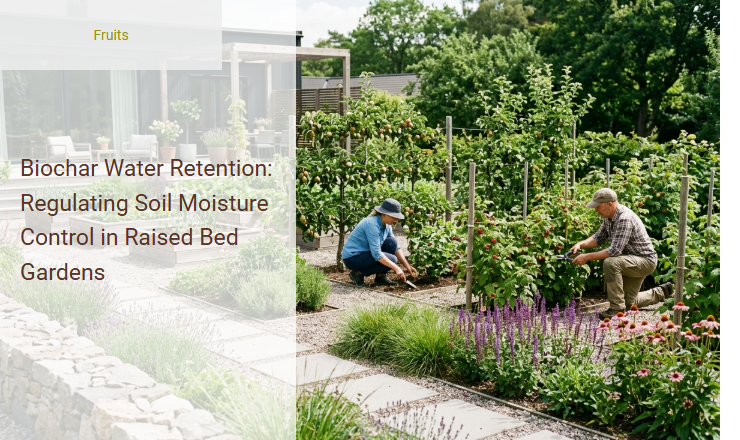
For raised bed gardeners, the relentless battle against rapid soil dehydration can feel like a losing game. Because elevated beds drain quickly and warm up faster than in-ground plots, maintaining consistent moisture levels often requires exhausting, daily watering routines.
To address this, we must look at soil physics. While standard organic matter helps, it decomposes rapidly, losing its structural benefits over time. Biochar offers a permanent solution by dramatically increasing water-holding capacity without compacting the root zone. However, a key caveat is that raw biochar must be "charged" with nutrients and microbes first, ensuring it supports, rather than starves, your plants.
For example, integrating charged biochar into sandy or coarse raised bed mixes can increase water retention by up to 20%, keeping sensitive crops like tomatoes and leafy greens hydrated through summer heatwaves. In this article, we will examine the science of biochar's porous structure, how to properly inoculate it, and step-by-step methods for regulating moisture in your raised garden beds.
Read also: Raised Beds vs In-Ground Planting for Raspberries
Introduction to Biochar in Raised Bed Gardening
Imagine a gardening amendment so powerful that it permanently upgrades your soil's ability to hold water, reducing your watering chore by half while safeguarding plants from drought. This revolutionary material is biochar-a highly porous, carbon-rich charcoal produced by heating biomass in the complete or partial absence of oxygen through a process called pyrolysis. As raised bed gardening continues to surge in popularity, this ancient soil conditioner has emerged as a modern game-changer, addressing the acute moisture-retention challenges unique to elevated growing systems and transforming how we manage soil hydrology.
The Science Behind Biochar and Water Retention
At a microscopic level, biochar is a structural masterpiece. The thermal degradation of wood or agricultural waste leaves behind a highly stable carbon skeleton riddled with millions of micropores, mesopores, and macropores. This intricate cellular architecture yields an astronomical internal surface area-often exceeding several hundred square meters per single gram of material. When integrated into soil, these micro-cavities act like a permanent geological sponge. Water is drawn into these tiny chambers via capillary action, where it is held against the pull of gravity, remaining readily available to plant roots rather than draining uselessly away.
Why Raised Beds Face Unique Moisture Challenges
While raised bed gardening offers exceptional control over soil quality and ergonomics, it fundamentally alters the hydrology of the growing environment. Because these beds sit above the natural grade, they lack the surrounding thermal and moisture buffering of in-ground soil, making them highly vulnerable to extreme moisture fluctuations.
- Rapid Drainage: Gravity pulls moisture downward much faster in elevated structures, frequently leaving the upper root zone parched.
- Accelerated Evaporation: The exposed side walls of raised beds absorb heat from the sun and wind, rapidly baking moisture out of the soil profile.
- Compaction and Hydrophobia: Standard potting mixes rich in peat or organic matter can shrink, compact, and become hydrophobic when dried out, resisting re-wetting during subsequent watering cycles.
The Sponge Effect: How Biochar Regulates Moisture Levels
The true magic of biochar lies in its dynamic, bi-directional relationship with water. Rather than just locking moisture away permanently, biochar acts as a smart, self-regulating hydraulic buffer that responds fluidly to environmental shifts.
Hydraulic Absorption During Wetting Events
When rain falls or an irrigation system runs, gravity and soil pressure force water into biochar's vast network of pores. The material rapidly absorbs this excess water, preventing the surrounding soil from becoming oversaturated or waterlogged, which can suffocate plant roots.
Gradual Desorption During Dry Periods
As the surrounding soil dries due to evaporation and plant transpiration, a moisture gradient is created. Biochar gently releases its stored water back into the soil matrix through desorption, supplying plant root hairs with a steady, reliable supply of moisture over days or even weeks.
Key Benefits of Biochar-Driven Water Conservation
Integrating biochar into your raised bed soil recipe does more than just save water; it radically optimizes the entire growing environment for healthier, more productive plants.
- Reduced Irrigation Frequency: By storing water directly in the root zone, biochar significantly decreases the volume and frequency of watering required to keep plants thriving.
- Minimized Nutrient Leaching: As water drains through unamended soils, it carries dissolved fertilizers with it. Biochar holds onto both water and key nutrients, preventing them from washing away.
- Prevention of Root Rot: By regulating the moisture balance and maintaining structural porosity, biochar ensures that roots are never sitting in stagnant, oxygen-depleted pools of water.
- Enhanced Drought Resilience: Plants grown in biochar-amended beds can easily survive dry spells, heatwaves, or weekend trips without wilting or suffering severe stress.
Charging Your Biochar: The Crucial Inoculation Phase
Freshly manufactured, raw biochar is an empty, highly reactive carbon sponge. If you add it directly to your raised beds without preparation, it will immediately begin stripping moisture, nitrogen, and beneficial soil microbes out of your existing soil to fill its empty cavities. To prevent this, you must "charge" or inoculate your biochar before putting it to work. This is done by blending the raw biochar with a nutrient-rich, biologically active medium-such as high-quality compost, worm castings, manure, or liquid compost tea-and letting it sit for two to four weeks. During this time, the micro-cavities fill up with water, organic nutrients, and billions of beneficial microbes, creating a fully loaded powerhouse ready to support plant life.
Application Ratios and Mixing Methods for Raised Beds
To achieve the perfect balance of aeration and water-holding capacity, you must apply the correct ratio of charged biochar to your raised bed soil. Using too little won't yield noticeable water-saving results, while using too much can overly loosen soil structure.
- Optimal Volumetric Ratio: Aim for a blend of 10% to 20% charged biochar by volume. For a standard raised bed, this translates to roughly 1 to 2 parts biochar for every 8 to 9 parts of your regular soil-compost mix.
- Depth of Integration: Blend the charged biochar thoroughly into the top 6 to 8 inches of soil, which is where the vast majority of active root development and water uptake occurs.
- Method for Established Beds: If you already have established raised beds, carefully scratch the charged biochar into the surface soil around existing plants, or apply it as a deep side-dress along planting rows.
Long-Term Impacts on Soil Structure and Biology
Unlike organic composts that break down and must be replenished year after year, biochar is highly stable and remains virtually unchanged in the soil for hundreds, if not thousands, of years. It represents a permanent investment in the physical and biological health of your raised bed.
A Permanent Sanctuary for Mycorrhizal Fungi
The micro-cavities within biochar shield beneficial soil microbes and mycorrhizal fungi from predators and environmental stress. These fungi extend their hyphae into the surrounding soil, further increasing the root surface area and enhancing the plant's natural ability to access deeply stored water and minerals.
Creation of Stable Soil Aggregates
Over time, the interaction between biochar, root exudates, and soil biology encourages the formation of stable soil aggregates. These aggregates improve the soil's natural crumb structure, creating larger pathways for oxygen flow while simultaneously locking in microscopic pockets of moisture.
Troubleshooting Common Biochar Moisture Issues
While biochar is incredibly resilient and forgiving, improper application or sourcing can occasionally lead to imbalances in your raised bed ecosystem. Use this troubleshooting guide to quickly identify and fix common issues.
| Observed Issue | Root Cause | Immediate Solution |
|---|---|---|
| Stunted plant growth and pale, yellowing leaves. | Using raw, uncharged biochar that is stripping nitrogen and water from the root zone. | Drench the soil with a liquid nitrogen-rich organic fertilizer, like fish emulsion or kelp meal, to quickly saturate the biochar. |
| Soggy, waterlogged soil with an anaerobic (rotten egg) smell. | Over-application of biochar beyond 30% volume, compressing air pockets. | Incorporate coarse compost, perlite, or native garden loam to dilute the biochar concentration and restore oxygen flow. |
| Poor water retention despite high biochar application. | Using poor quality, low-porosity biochar made from contaminated or low-temperature feedstock. | Incorporate a high-quality, third-party certified wood-based biochar or enrich the bed with rich organic compost. |
Cultivating a Self-Regulating Raised Bed Ecosystem
By mimicking the brilliant design of ancient soils, adding biochar to your raised beds bridges the gap between high productivity and ecological resource conservation. It fundamentally solves the irrigation rollercoaster, turning a high-maintenance garden into an elegant, water-wise micro-climate. Embracing this simple carbon amendment empowers you to build a resilient, drought-proof garden patch that thrives on minimal inputs, securing a bountiful and sustainable future for your home food production.
Summary
The article "Biochar Water Retention: Regulating Soil Moisture Control in Raised Bed Gardens" explores the transformative role of biochar in optimizing soil moisture, specifically within raised bed gardening systems. Because raised beds are elevated, they are highly susceptible to rapid drainage and dehydration. Biochar-a highly porous, carbon-rich material produced through pyrolysis-acts as a permanent microscopic sponge when mixed into the soil.
Its unique structure significantly increases the soil's water-holding capacity, absorbing excess moisture and releasing it gradually to plant roots. This regulation reduces the frequency of watering, prevents nutrient leaching, and improves soil aeration. Ultimately, the article demonstrates that integrating biochar into raised beds is a highly effective, sustainable strategy to mitigate drought stress, enhance microbial activity, and boost overall crop yields.
Leave a comment