
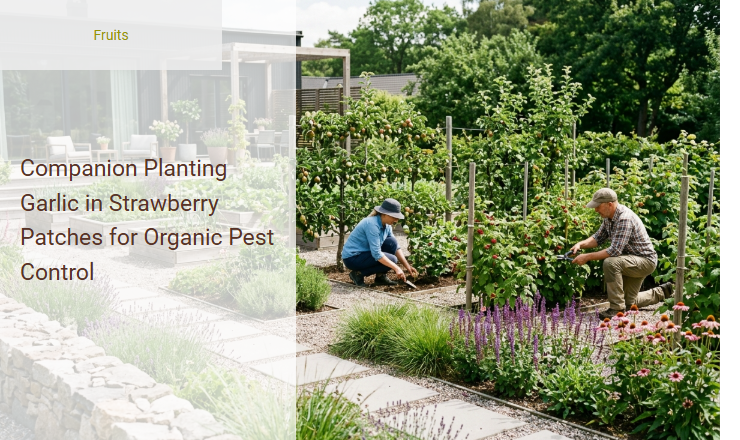
Cultivating sweet, juicy strawberries is a rewarding endeavor, yet growers often battle relentless pests like spider mites, slugs, and aphids that can decimate a harvest overnight. Before turning to harsh synthetic chemicals, it is essential to understand how biodiversity naturally regulates garden ecosystems. Utilizing symbiotic plant relationships offers a powerful, chemical-free shield that protects your berries while maximizing yield and soil health.
However, successful companion planting is not a matter of random scattering; it requires careful spatial planning to ensure crops do not compete for resources. For instance, interplanting garlic-which emits natural sulfur compounds that actively repel destructive insects-safeguards vulnerable strawberry crowns without compromising root development.
In this article, we will examine the science behind this symbiotic pairing, outline optimal planting layouts, and provide a step-by-step roadmap for establishing a self-defending, highly productive organic strawberry patch.
Read also: Pine Needles vs Straw Mulch for Strawberry Beds
Introduction to Garlic and Strawberry Companion Planting
Companion planting is a time-tested organic gardening technique that involves growing different plant species in close proximity to enhance growth, improve flavor, and manage pests naturally. By understanding how plants interact in a shared ecosystem, gardeners can create a self-sustaining environment that minimizes the need for synthetic inputs.
One of the most harmonious and effective pairings in the garden is the combination of garlic and strawberries. This symbiotic relationship utilizes the strong, natural defense mechanisms of garlic to safeguard the delicate, sweet berries, allowing both crops to thrive in a highly efficient and sustainable organic garden system.
Why Garlic and Strawberries are Perfect Partners
The success of the garlic and strawberry partnership lies in their complementary biological designs. Strawberries are shallow-rooted perennial plants that expand horizontally, utilizing the top layers of soil. In contrast, garlic grows from bulbs that push deeper root systems vertically into the earth. This physical differentiation ensures they do not compete for resources in the same soil horizon.
Furthermore, garlic benefits the soil environment by releasing subtle exudates that do not inhibit, but rather support, the active growth of Fragaria × ananassa (the garden strawberry). Their cooperative nature safely demonstrates a core permaculture design ideology.
"Design with patterns of nature in mind, grouping companion plants to build mutually supportive polycultures that enhance biological yield and soil resilience." - Bill Mollison, Permaculture Principles
Organic Pest Control: Pests Deterred by Garlic
Garlic is renowned as a powerhouse of natural pest management. The secret lies in the pungent sulfur compounds synthesized within its tissues, which emit a strong odor when the plant is disturbed or growing actively. This acts as a highly effective, invisible olfactory shield for surrounding strawberries, which are highly susceptible to destructive insects.
- Spider Mites: These tiny arachnids thrive on strawberry leaves, but the strong sulfur vapors emitted by garlic act as a potent deterrent, keeping them away from the foliage.
- Aphids: These sap-sucking insects are easily disoriented by the pungent scent of garlic, preventing them from colonizing the succulent stems of strawberry runners.
- Slugs and Snails: The irritating presence of sulfur compounds in the surrounding soil discourages these slimy pests from crawling near the sweet, low-hanging fruit.
Fungal and Disease Prevention Benefits
Strawberries are exceptionally vulnerable to moisture-related diseases, particularly during damp spring mornings. Planting garlic adjacent to your strawberry rows acts as a biological shield against several systemic infections. Garlic plants naturally produce allicin, an active organosulfur compound renowned for its potent antimicrobial and antifungal activities.
As garlic roots mature, small amounts of these antifungal compounds are released into the root zone, suppressing the germination of fungal spores in the soil. This drastically reduces the incidence of devastating infections like gray mold (caused by Botrytis cinerea), powdery mildew (caused by Podosphaera aphanis), and various forms of root rot (such as those caused by Phytophthora species).
Maximizing Garden Space and Soil Health
Interplanting garlic with strawberries is an excellent strategy for small-space gardeners looking to optimize their harvest per square foot. Because strawberries spread horizontally via runners and form a dense groundcover, they act as a living mulch that keeps the soil cool and moist. Garlic shoots grow straight upward, piercing through the strawberry canopy without blocking necessary sunlight.
Choosing the Right Garlic Varieties for Strawberries
Selecting the appropriate garlic variety is essential to ensure that your garlic and strawberry planting cycles align perfectly. There are two primary classifications of garlic to consider, each with unique growth habits and harvest windows.
Hardneck Garlic (Allium sativum var. ophioscorodon)
Hardneck varieties are excellent for cooler climates and produce delicious edible flower stems called scapes in late spring. Harvesting these scapes redirects energy back into the bulb and provides an early culinary harvest alongside your mid-spring strawberries.
- Pros: Produce flavorful scapes; highly cold-tolerant; easy to peel.
- Cons: Shorter shelf life compared to softneck varieties.
Softneck Garlic (Allium sativum var. sativum)
Softneck varieties thrive in milder climates and do not produce scapes, allowing them to focus energy entirely on bulb development. Their flexible stems make them ideal for braiding after harvest.
- Pros: Long storage potential; high bulb yield; matures slightly earlier.
- Cons: Lacks edible scapes; less tolerant of harsh winter freezes.
Step-by-Step Planting and Spacing Guide
To successfully establish this companion planting layout, timing and spacing are critical. Garlic is typically planted in the autumn, allowing it to establish a strong root system before winter dormancy, while strawberries can be planted in either autumn or early spring.
- Identify the gaps between your established strawberry plants or newly set runners, ensuring a buffer zone of at least
12 inchesbetween the strawberry crowns and the planned garlic planting sites. - Dig a planting hole for each garlic clove to a depth of approximately
2 inchesto3 inches. - Place individual garlic cloves into the holes with the pointed end facing upward and the flat root plate facing downward.
- Space each garlic clove approximately
6 inchesapart within the rows to allow ample room for bulb expansion without crowding the neighboring strawberry roots. - Cover the cloves with loose organic soil and top with a thick layer of straw mulch to insulate the roots through the winter season.
Maintenance, Watering, and Fertilization
Both garlic and strawberries prefer well-draining, loose loam soil rich in organic matter. While they have compatible water needs, their nutritional demands shift slightly as the seasons progress. Managing these inputs collectively ensures both crops achieve their maximum yield potential.
| Season | Watering Requirements | Fertilization Needs |
|---|---|---|
| Spring | Keep soil consistently moist (1 inch of water weekly) as strawberries bloom and garlic shoots rapidly grow. | Apply a balanced organic liquid fertilizer high in nitrogen to support leafy growth in both plants. |
| Summer | Maintain watering for ripening strawberries; reduce watering for garlic 2 weeks before harvest to prevent rot. | Top-dress with composted manure around strawberry plants after garlic is harvested. |
| Autumn | Water moderately to help newly planted garlic cloves and strawberry runners establish roots. | Incorporate bone meal into the soil to promote healthy root development through the winter. |
Managing the Dual Harvest Cycle
Harvesting a combined patch requires careful timing and precision. Strawberry plants yield their sweet berries in late spring through early summer, depending on the variety. During this active strawberry harvest, garlic bulbs are still developing deep beneath the soil. Once the strawberry harvest begins to wind down in mid-to-late summer, the garlic leaves will begin to yellow and dry, indicating that the bulbs are ready to be lifted.
Conclusion: Cultivating a Thriving Organic Patch
Pairing garlic and strawberries in your garden layout is a premier example of utilizing biological synergy to achieve bountiful, chemical-free yields. By leveraging the natural pest-repellent qualities of garlic and its protective antifungal properties, you create a self-sustaining shield around your strawberries. Simultaneously, the spatial separation between their root zones maximizes the efficiency of your soil, proving that smart planting structures can completely replace synthetic interventions.
Embracing this holistic method of gardening fosters a diverse ecosystem, improves long-term soil health, and rewards you with sweet, unblemished strawberries and robust, flavorful garlic. Start planning your companion planting beds today to enjoy a healthier, more productive organic harvest next season!
Summary
Companion planting garlic within strawberry patches offers a highly effective, natural solution for organic pest control and disease prevention. The pungent aroma of garlic acts as a powerful deterrent against common strawberry pests, including aphids, spider mites, slugs, and weevils, effectively masking the sweet scent of the ripening berries.
Beyond insect management, garlic possesses strong antibacterial and antifungal properties that help safeguard strawberry plants from devastating soil-borne diseases such as gray mold (botrytis). This mutually beneficial relationship not only maximizes garden space through efficient intercropping but also enhances the overall health, vigor, and yield of the strawberry crop. By integrating these two companion plants, organic gardeners can easily cultivate a resilient, biodiverse ecosystem that promotes thriving plants, healthier soil, and a bountiful, chemical-free harvest.
Leave a comment