
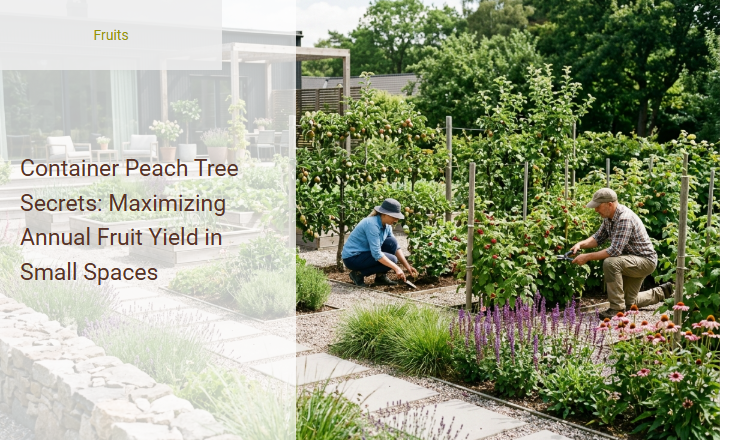
Many urban gardeners dream of plucking ripe, juicy peaches from their patios, only to face the disappointment of stunted growth, dropped buds, and barren branches. Growing stone fruit in confined pots is notoriously challenging. To overcome these hurdles, one must first understand that containerized soil lacks the natural temperature insulation and moisture-buffering capacity of open ground.
Mastering this micro-environment, however, unlocks the ability to harvest baskets of sweet, sun-warmed fruit from a space no larger than a balcony. While choosing genetically dwarf cultivars like the 'Bonanza' or 'Pix Zee' peach makes small-space cultivation highly viable, achieving consistent annual yields stipulates strict adherence to precise watering schedules and root-zone management.
In this guide, we will unpack the essential secrets of container peach care, from soil optimization and strategic pruning to winterization techniques, ensuring your compact tree thrives and produces abundantly year after year.
Read also: Early vs Late Varieties for Continuous Peach Harvest
The Magic of Dwarf Peaches in Small Spaces
Growing luscious, sun-ripened peaches is no longer a privilege reserved for those with expansive orchards. Thanks to modern breeding, you can experience the pure joy of harvesting juicy fruit right from your patio, deck, or balcony. Cultivating dwarf peach trees in pots brings the beauty of spring blossoms and the sweetness of summer harvests into a compact, manageable footprint.
One of the greatest advantages of this approach is the ability to achieve a high yield of full-sized fruits from a tree that fits comfortably in a limited space. Container growing also allows you to control the soil quality perfectly and move your tree to chase the sun, making it an ideal solution for urban gardeners seeking maximum productivity in small outdoor areas.
Selecting the Perfect Container Peach Cultivar
To succeed with container fruit gardening, choosing the right variety is essential. Genetic dwarf peaches are naturally programmed to stay small, usually reaching only four to six feet in height, while still producing standard-sized, delicious fruit. Because they are self-pollinating, you only need to grow a single tree to get a bountiful harvest.
- Bonanza: Perhaps the most famous dwarf peach, this variety features highly ornamental pink spring blossoms followed by sweet, yellow-fleshed freestone peaches in mid-summer.
- Garden Gold: A highly productive genetic dwarf that offers excellent cold hardiness and delicious yellow-fleshed fruit with a lovely red blush.
- Honey Babe: Known for its dense, compact growth habit and exceptionally sweet, rich flavor, making it a stellar addition to any sunny deck.
- Pix Zee: An early-ripening variety that produces large, flavorful fruit on an incredibly compact frame.
Choosing the Ultimate Container and Drainage System
The vessel you choose acts as the entire world for your dwarf peach tree's root system. To ensure healthy growth, select a container that holds at least 15 gallons (approximately 18 to 20 inches in diameter). This volume provides enough space for the roots to anchor the tree securely and access vital nutrients without becoming severely root-bound too quickly.
When comparing materials, classic terracotta offers great stability against wind and excellent breathability, but it can be heavy to move and dries out quickly. Lightweight plastic or resin pots are much easier to relocate and retain moisture longer, though they may require extra anchoring in windy spots. Whichever material you select, preventing root rot must be your top priority. Ensure the pot has several large, open drainage holes at the bottom; without them, standing water will suffocate the roots and lead to irreversible damage.
Crafting the Ideal Soil Mix for Heavy Feeders
Standard garden soil is too heavy and compacts too easily for container use, suffocating delicate feeder roots. Dwarf peaches are heavy feeders that require a lightweight, highly aerated, and nutrient-dense growing medium that drains rapidly while retaining just enough moisture to keep the tree hydrated.
- Start with a high-quality, peat- or coco-coir-based organic potting soil mix as your base (approx. 50% of the volume).
- Add coarse perlite or pumice (approx. 20% of the volume) to dramatically improve aeration and structural drainage.
- Incorporate well-rotted compost or worm castings (approx. 20% of the volume) to provide a rich reservoir of organic matter and beneficial microbes.
- Mix in aged pine bark fines or coarse grit (approx. 10% of the volume) to provide long-lasting physical structure.
- Add a handful of balanced, slow-release organic fruit tree fertilizer and a cup of agricultural lime to help stabilize soil pH.
Sun and Placement: Strategizing for Maximum Photosynthesis
Peaches are absolute sun-worshipers. To fuel the energy-intensive process of flower production and fruit sweetening, your dwarf peach tree requires at least 6 to 8 hours of direct, unfiltered sunlight every single day. When positioning your container, look for microclimates on your patio or balcony that capture maximum midday and afternoon sun, such as south- or west-facing aspects.
Placing your pot against a light-colored wall can also be highly beneficial, as the wall reflects additional light and radiates stored heat back to the tree during cool evenings. Be mindful of wind patterns; while a gentle breeze is good for air circulation, strong gusts can dry out the foliage and knock young fruit off the branches.
Mastering the Art of Container Irrigation
Because their root systems are confined to a limited volume of soil, container-grown peach trees dry out significantly faster than their in-ground counterparts. To keep your tree healthy, employ the "soak and dry" watering method: water the container thoroughly until excess moisture flows freely from the drainage holes, then allow the top two inches of soil to dry out before watering again.
To accurately detect moisture levels, insert your index finger into the soil or use a digital moisture meter. Avoid relying solely on the dry appearance of the surface soil. Keep in mind that overwatering is just as dangerous as underwatering, as constantly waterlogged soil deprives roots of oxygen, triggering root rot and causing the developing fruit to drop prematurely.
Fertilizer Schedule for Prolific Fruit Production
Confined to a pot, a dwarf peach tree quickly consumes the nutrients available in its soil. To support vigorous spring growth, strong blossoms, and a heavy set of sweet fruit, you must implement a reliable, structured feeding schedule using organic fertilizers, high-potash feeds, and essential micronutrients.
| Season / Timing | Fertilizer Type | Primary Benefit |
|---|---|---|
| Early Spring (Bud Break) | Balanced organic fruit tree fertilizer (high nitrogen and phosphorus) | Fuels new foliage growth and early blossom development |
| Late Spring (Fruit Set) | High-potash organic feed (like kelp or liquid seaweed) | Encourages fruit swelling and improves cell wall strength |
| Summer (Active Fruiting) | High-potash and micronutrient-rich liquid fertilizer (applied bi-weekly) | Maximizes sugars, flavor profile, and final fruit size |
| Early Autumn (Post-Harvest) | Light top-dressing of compost (no heavy nitrogen) | Replenishes soil health without stimulating tender late-season growth |
Pruning and Fruit Thinning for Gigantic Harvests
Even dwarf peach trees benefit immensely from thoughtful structural maintenance. Employing an open-center (or "V" shape) pruning method in late winter allows maximum sunlight and airflow to reach the center of the canopy, which reduces fungal diseases and ensures even ripening of the fruit inside the branches.
Equally critical is the practice of thinning your young fruit. Left to its own devices, a healthy dwarf tree will produce far more fruit than its branches can support, leading to tiny, sour peaches or snapped limbs. Once the young peaches reach the size of a marble, thin them out so there is a distance of 6 inches between each fruit. This aggressive thinning directs the tree's energy into producing large, incredibly sweet, gourmet-quality peaches.
Winter Protection and Chill Hours
While the canopy of a dwarf peach tree is often quite cold-hardy, its roots are far more vulnerable when suspended above ground in a container. When winter temperatures drop below freezing, wrap the pot in bubble wrap, burlap, or straw, or move the container into an unheated garage or shed to protect the root system from extreme temperature fluctuations.
However, do not keep the tree in a warm house. Peach trees must experience a specific number of chill hours-temperatures between 32°F and 45°F-during their winter dormancy to successfully break bud, leaf out, and set blossoms in the spring. Monitor local conditions to ensure your selected variety receives its required winter chill while remaining shielded from killer ground frosts.
Harvesting and Enjoying Your Homegrown Peaches
The culmination of your container-gardening journey is the harvest. Peaches do not gain sugar after being picked, so timing is everything. Look for a warm, fragrant aroma radiating from the fruit, and check that the background skin color has transitioned completely from green to warm yellow or cream. The flesh should yield slightly to gentle pressure from your thumb near the stem.
When you are ready to harvest, avoid pulling the fruit straight down, as this can tear the bark or bruise the delicate flesh. Instead, use the proper twisting technique: cup the peach gently in your hand, lift it slightly, and twist it upward and sideways. A perfectly ripe peach will separate effortlessly from the branch, ready to be enjoyed fresh, warm from the sun.
Summary
Growing peach trees in containers is an excellent way for gardeners with limited space to enjoy a bountiful, annual harvest. The secret to maximizing fruit yield in small spaces lies in selecting the right dwarf or genetic miniature peach varieties, such as 'Pix Zee' or 'Bonanza', which naturally thrive in confined environments. Key success factors include choosing a large, well-draining pot and using high-quality potting soil mixed with organic matter. Successful container cultivation also requires positioning the tree in a spot that receives at least six to eight hours of direct daily sunlight. Consistent watering, balanced fertilization during the growing season, and proper winter protection are crucial. Finally, gardeners must practice annual pruning and strategic fruit thinning to prevent branches from overloading, ensuring larger, sweeter peaches year after year.
Leave a comment