
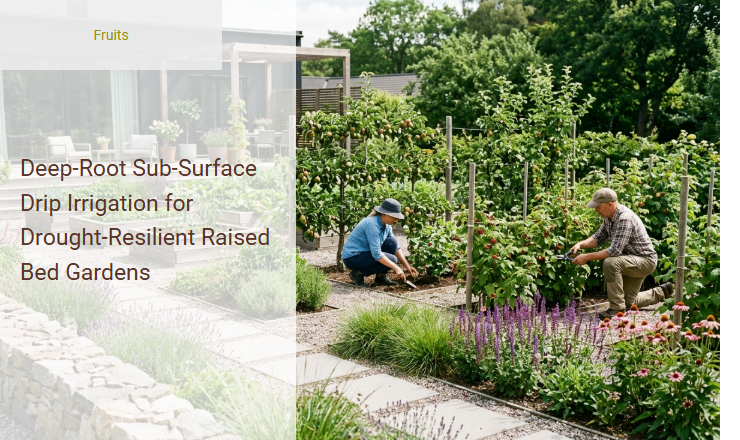
Keeping raised bed gardens hydrated during scorching summer droughts is an exhausting, water-intensive battle that often ends in withered crops and skyrocketing utility bills. Traditional overhead watering loses up to half its volume to evaporation before ever reaching the root zone, leaving plants vulnerable.
Deep-root sub-surface drip irrigation flips this dynamic, delivering targeted moisture directly to the soil depths. This method grants gardeners thriving, highly resilient yields while slashing water consumption by up to 70%. However, achieving these results stipulates precise hydraulic pressure calibration and strategic emitter spacing; improper installation can easily lead to underground dry pockets or clogged lines.
When designed correctly, deep-rooted crops like heirloom tomatoes and summer squash thrive even during intense heatwaves. This article will guide you through the core engineering principles, component selection, and step-by-step installation methods required to build a drought-proof watering system.
Read also: Drip vs Overhead Irrigation for Strawberry Patches
Introduction to Deep-Root Sub-Surface Drip Irrigation
Maintaining a thriving garden during periods of intense heat and dry spells is one of the greatest challenges facing modern growers. Traditional watering methods like overhead sprinklers and manual surface watering fail during these critical times because water evaporates rapidly into the air before it can reach the thirsty roots of your plants. To overcome this limitation, deep-root sub-surface drip irrigation has emerged as a game-changing solution for modern growers. By delivering water directly beneath the soil surface, this innovative watering method creates exceptionally drought-resilient raised bed gardens that thrive even when surface conditions are harsh and dry.
The Science Behind Sub-Surface Irrigation
To understand why this method is so effective, we must look at the physical and biological interactions occurring beneath the soil. When water is applied directly to the root zone, it bypasses the hot, dry surface layer of the soil entirely, reducing evaporation loss to near zero. This prevents the formation of a hard, impermeable soil crust that typically blocks oxygen and water absorption. Additionally, because the moisture is concentrated deep within the soil profile, plant roots are naturally encouraged to grow downward rather than spreading shallowly near the surface, resulting in stronger, more resilient root architectures.
Core Advantages for Raised Bed Gardens
Raised bed gardens benefit immensely from sub-surface irrigation compared to traditional overhead spray systems. Overhead watering often dampens the foliage and the top layer of soil, which creates an ideal environment for weed seeds to germinate and fungal diseases to spread. By switching to a sub-surface layout, you gain significant advantages:
- Minimized Weed Germination: The surface soil remains dry, preventing weed seeds from getting the moisture they need to sprout.
- Disease Prevention: Keeping the foliage dry prevents common moisture-loving diseases like powdery mildew and blight.
- Soil Structure Preservation: Water seeps gently from below, avoiding the compaction and erosion caused by heavy droplets hitting the soil surface.
- Unrivaled Water Efficiency: Every drop of water goes directly to the root zone, maximizing your conservation efforts.
Essential System Components and Materials
Building a highly functional sub-surface drip irrigation system requires specific components designed to regulate flow, protect your water supply, and ensure even distribution throughout the raised bed.
- Drip Tubing with Emitters
- Durable, pressure-compensating tubing buried underground that slowly releases water directly into the soil.
- Pressure Regulator
- A device that reduces the high incoming water pressure to a safe, low level suitable for drip lines.
- Water Filter
- An essential component that removes sediment and debris to prevent the underground emitters from clogging.
- Backflow Preventer
- A safety mechanism that keeps the irrigation water from siphoning back into your clean home drinking water supply.
Designing the Perfect Irrigation Grid
A successful sub-surface system relies on a precise layout inside your raised bed. For standard vegetable beds, place the drip lines 6 to 12 inches deep, spaced about 12 inches apart to create an even grid of moisture. In sandy soils, lines should be closer together as water tends to drain straight down, whereas in clay-heavy soils, they can be spaced further apart because clay spreads water horizontally. Carefully mapping out your layout ensures that every plant has access to consistent hydration without dry pockets.

Step-by-Step Installation Process
- Assemble the manifold: Connect your main supply line to the backflow preventer, filter, and pressure regulator outside the raised bed.
- Lay the drip lines: Position your durable drip tubing along the bottom of the empty bed frame, spacing the lines evenly according to your design.
- Secure the tubing: Use heavy-duty landscape staples to pin the lines firmly to the bottom of the bed so they do not shift when soil is added.
- Perform a pre-burial test: Turn on the water to check for leaks, uniform emitter output, and proper pressure before covering the lines.
- Fill with soil: Carefully shovel your rich organic soil mix over the pressurized lines, being mindful not to puncture or kink the tubing.
Plant Selection and Water Zoning
To maximize the efficiency of your deep-root system, group plants with similar water requirements and rooting depths together in the same zone. This strategy prevents overwatering shallow-rooted herbs while underwatering deep-rooted vegetables.
| Plant Category | Rooting Depth | Water Needs |
|---|---|---|
| Leafy Greens | Shallow (6-12 inches) | Frequent, light watering |
| Root Vegetables | Medium (12-18 inches) | Moderate, consistent watering |
| Nightshades (Tomatoes, Peppers) | Deep (18-24+ inches) | Deep, infrequent watering |
System Maintenance and Winterization
To ensure your subsurface irrigation system operates flawlessly for years, you must perform regular preventative maintenance and safely prepare the components for the winter freeze.
- Flush the lines twice a season to clear out any mineral deposits or soil particles that may have bypassed the filter.
- Monitor the soil moisture levels across the bed to detect any hidden underground leaks or clogged emitters.
- Use an air compressor to blow out any standing water from the lines before the first hard freeze of winter.
- Store the removable timers, regulators, and filters indoors during the cold winter months to protect them from cracking.
Monitoring and Smart Automation
Integrating modern technology with your subsurface watering grid takes water conservation to the next level. By coupling soil moisture sensors with a smart Wi-Fi irrigation controller, you can automate your watering schedules based on real-time soil data and localized weather forecasts.
Automating your system ensures that plants receive the exact amount of water they need, right when they need it, eliminating guesswork and preventing wasted resources during changing weather patterns.
Achieving Long-Term Drought Resilience
Embracing sub-surface drip irrigation is a powerful step toward securing the future of your garden. By placing water exactly where plants can use it most efficiently, you minimize water waste, foster deep and robust root networks, and ensure your raised bed gardens remain productive even under strict watering restrictions. Investing in this technology is a commitment to long-term sustainability, reliable food security, and environmental stewardship.
Summary
This article explores the implementation of deep-root sub-surface drip irrigation (SDI) as a highly efficient watering method for raised bed gardens, particularly in drought-prone regions. Traditional surface watering often leads to high evaporation rates and shallow root systems. In contrast, deep-root SDI delivers water directly to the root zone beneath the soil surface, minimizing water waste from evaporation and runoff while encouraging plants to develop deeper, more robust root systems.
By fostering deeper roots, plants become significantly more resilient to extreme heat and dry spells. The article outlines practical steps for designing and installing an SDI system in raised beds, selecting appropriate materials, and managing watering schedules to optimize conservation. Ultimately, this sustainable irrigation technique offers gardeners a reliable way to maintain productive, thriving gardens and conserve precious water resources during periods of drought.
Leave a comment