
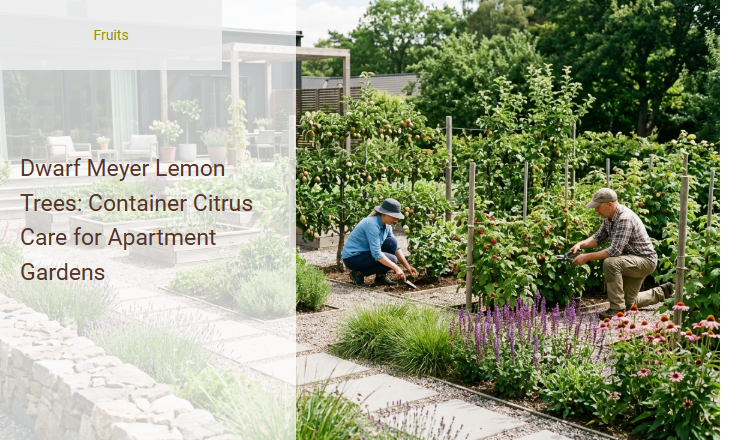
Apartment dwellers often feel locked out of productive fruit gardening due to limited square footage and the absence of a traditional backyard. While standard foliage houseplants offer easy greenery, they lack the sensory rewards and utility of home agriculture.
Dwarf Meyer lemon trees bridge this gap, granting urban gardeners the luxury of harvesting fragrant, culinary-grade citrus directly from their living spaces. However, cultivating tree fruits indoors is not a passive endeavor; success requires replicating a precise Mediterranean microclimate. For instance, positioning your container in a draft-free, south-facing window to secure six hours of daily sunlight, paired with a highly aerated, acidic soil mix, is vital to prevent root rot.
To ensure your botanical investment thrives, this guide outlines the essential parameters of container selection, watering schedules, indoor fertilization, and seasonal pest management.
Read also: Orange vs Tangerine for Patio Growing
Introduction to Dwarf Meyer Lemons for Apartments
Bringing nature indoors has never been more rewarding than with the addition of a Dwarf Meyer Lemon tree to your living space. These compact citrus wonders are perfectly suited for container gardening, offering apartment dwellers the rare luxury of harvesting fresh, sweet-tart fruit right from their living room or balcony. Beyond their delicious yield, they provide exceptional aesthetic appeal with their glossy deep-green foliage and fill your home with the exquisite, sweet perfume of their delicate white blossoms, making them an outstanding indoor plant companion.
Selecting the Perfect Container and Potting Mix
To ensure your dwarf citrus tree thrives, you must provide it with a home that supports healthy root development. A pot that is too large can hold excess water and lead to issues, while one that is too small will restrict growth. Selecting a lightweight, breathable material with excellent drainage is crucial for success.
- Container Size: Start with a 12-to-15-inch diameter pot for young trees, graduating to a 5-to-10-gallon container as the tree matures.
- Drainage Holes: Ensure the container has multiple, large drainage holes at the base to prevent water accumulation.
- Pot Material: Terracotta or unglazed clay is ideal for breathing, though lightweight plastic or resin works well for easy movement.
- Ideal Soil Mix: A blend of 2 parts peat moss, 1 part perlite or vermiculite, and 1 part organic compost ensures a lightweight, acidic, and well-draining environment.
Maximizing Sunlight on Balconies and Indoors
Meyer lemon trees are sun-worshipers, requiring at least six to eight hours of direct sunlight daily to produce abundant blooms and fruit. In an apartment setting, placing your tree next to a spacious south-facing window is the best way to capture intense natural rays. If your apartment lacks adequate natural exposure, supplementing with full-spectrum LED grow lights positioned a few inches above the canopy for 12 to 14 hours a day will keep your citrus tree vibrant and productive.
Master the Art of Watering Container Citrus
Watering container citrus is an art of balance, easily mastered using the "soak and dry" method. Instead of watering on a strict calendar schedule, always check the soil moisture first by inserting your finger two to three inches deep into the potting mix. If it feels dry, it is time to water thoroughly until liquid drains freely from the bottom of the pot. Ensure you empty the collection saucer afterward so the roots do not sit in standing water.
Warning: Overwatering is the leading cause of indoor citrus failure. Consistently wet soil deprives roots of oxygen, rapidly leading to root rot-a silent killer that manifests as yellowing leaves, leaf drop, and twig dieback. When in doubt, it is safer to let the soil dry out slightly rather than keeping it constantly soggy.
Nutrients and Fertilizing for Fruit Production
Because container-grown trees have limited access to natural soil minerals, regular fertilization is essential for healthy growth and bountiful fruit production. Meyer lemons are heavy feeders, requiring a balanced fertilizer formulated specifically for citrus. Look for an NPK ratio with a higher proportion of nitrogen (such as 2-1-1 or 3-1-1), augmented with essential micronutrients like iron, manganese, and zinc.
| Season | Feeding Frequency | Application Guidelines |
|---|---|---|
| Spring | Every 2 to 4 weeks | Apply a high-nitrogen slow-release or liquid citrus fertilizer to kickstart new vegetative growth and blooming. |
| Summer | Every 4 weeks | Continue feeding to support developing fruit, ensuring the soil is damp before applying liquid nutrients to prevent root burn. |
| Winter | Every 6 to 8 weeks (or suspended) | Minimize fertilization during these shorter days as the tree's growth naturally slows down; only feed lightly if using supplemental grow lights. |
Managing Temperature and Humidity Indoors
Dwarf Meyer lemons prefer environments that mimic their subtropical origins. They thrive best when kept within a stable climate, away from cold drafts or the direct heat of radiators. The optimal indoor temperature range for these trees is 65°F to 85°F (18°C to 29°C) during the day, with slightly cooler nights. Furthermore, indoor heating during winter can dry out apartment air. To combat low humidity, you can place your pot over a tray filled with pebbles and water, group your plants together to create a humid microclimate, or mist the leaves daily with distilled water.
Pruning and Shaping Your Miniature Tree
Pruning is essential for maintaining a compact, bushy shape that fits your apartment while ensuring your tree allocates its energy toward producing high-quality fruit. The best time to prune is in late winter or early spring before the new growth cycle begins. Regular pruning increases air circulation and light penetration throughout the canopy, which naturally deters pests and encourages healthier, heavier fruiting.
- Identify and remove any dead, diseased, or damaged branches using sharp, sterilized pruning shears.
- Prune away any "suckers"-vigorous shoots growing from below the graft union on the lower trunk-as they steal energy from the main tree.
- Cut back leggy, overly long branches to an outward-facing bud to maintain the desired height and compact shape.
- Thin out crowded branches in the center of the canopy to improve air circulation and allow sunlight to reach the interior leaves.
Hand Pollination for Indoor Citrus Blossoms
Outdoor citrus trees rely on the wind and buzzing bees to carry pollen from flower to flower, but indoor apartment environments lack these natural helpers. Without pollination, your fragrant blossoms will simply drop off without setting any fruit. Fortunately, hand pollination is a simple and rewarding process that ensures a successful harvest. All you need is a soft-bristled artist's paintbrush or a cotton swab to act as your artificial pollinator.
To hand-pollinate, gently insert the tip of your tool into an open blossom, swirling it softly to collect the powdery yellow pollen from the outer anthers. Next, transfer this pollen to the sticky center pistil of the same flower or neighboring blossoms. Remember to be extremely gentle during this process so you do not bruise the delicate structures of the flower, and repeat this daily during the blooming cycle for maximum fruit yield.
Preventing and Treating Common Citrus Pests
The dry, warm air of apartment living can sometimes attract unwanted pests to your indoor citrus tree. Regularly inspecting the undersides of leaves and along stems is your best defense against infestations. If you spot unwelcome visitors, utilize safe, organic treatments that protect both your home environment and the quality of your future harvest.
- Spider Mites
- Tiny, sap-sucking pests that leave fine webbing on the undersides of leaves. Treat by washing the leaves with a mild insecticidal soap or applying neem oil solution.
- Scale Insects
- Small, immobile bumps resembling brown armor shells that cluster on stems and leaf veins. Control them by dabbing individual insects with a cotton swab dipped in rubbing alcohol.
- Aphids
- Soft-bodied, pear-shaped insects that cluster on tender new growth, causing leaves to curl. Wipe them away with a damp cloth or spray the canopy with diluted organic horticultural soap.
Harvesting and Enjoying Your Homegrown Lemons
The culmination of your care is the rewarding moment of harvesting your own Dwarf Meyer lemons. Unlike store-bought lemons, Meyer lemons have a thinner skin, a sweeter taste, and a distinct herbal aroma. To know when they are ready, look for a deep egg-yolk yellow color with no green traces and feel for a slight softness when gently squeezed, indicating the fruit is fully ripe and juicy. Instead of pulling the fruit directly, which can tear the delicate bark, use sharp hand pruners to clip the stem just above the lemon. In the kitchen, these fresh citrus treasures are perfect for zesting over pasta, squeezing into refreshing lemonades, or baking into delectable, aromatic tarts.
Summary
Dwarf Meyer lemon trees are the ideal citrus variety for apartment dwellers looking to bring a touch of orchard life indoors or onto a small balcony. This guide explores how to successfully cultivate these compact, hybrid trees in containers. To thrive in an apartment setting, dwarf Meyer lemons require at least six to eight hours of direct sunlight daily, well-draining soil, and a pot with excellent drainage to prevent root rot.
Consistent watering, moderate humidity, and regular fertilization during the growing season are crucial for healthy fruit production. Additionally, apartment gardeners must protect the trees from cold drafts and safely overwinter them indoors when temperatures drop. With proper care, these resilient trees reward indoor gardeners with highly fragrant blossoms and a bountiful harvest of sweet, thin-skinned lemons, proving that limited space is no barrier to enjoying homegrown citrus.
Leave a comment