
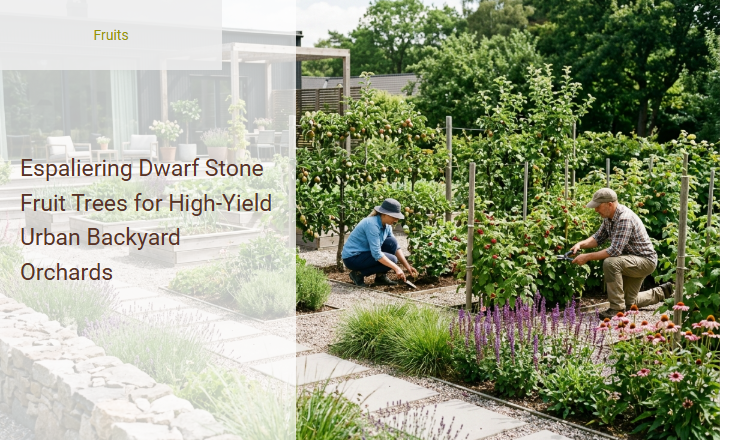
Urban gardeners often struggle with a frustrating paradox: the deep desire for home-grown, sun-ripened stone fruit clashes directly with the harsh reality of limited backyard square footage. Traditionally, cultivating a productive orchard required expansive acreage to accommodate sprawling, light-blocking tree canopies.
However, adapting the ancient horticultural art of espalier to modern cultivation grants growers the ability to maximize crop yields within a highly compressed, two-dimensional footprint. While this intensive system stipulates a commitment to precise, seasonal pruning and structural training, selecting dwarf varieties of peaches, nectarines, and plums makes the process exceptionally manageable.
In this guide, we will examine the step-by-step techniques, optimal support structures, and specific cultivar recommendations required to successfully establish a high-yielding, space-efficient vertical orchard on your property.
Read also: Summer vs Winter Pruning for Stone Fruits
Introduction to Urban Espalier Stone Fruit Orcharding
Urban gardening often presents a spatial puzzle, leaving city dwellers with limited ground space but a strong desire to grow their own food. Espaliering dwarf stone fruit trees offers an elegant, space-saving solution by training trees to grow flat against a vertical surface. This ancient horticultural practice turns bare walls, fences, and property boundaries into highly productive vertical orchards. Beyond the impressive yields of fresh peaches, plums, and cherries, an espaliered tree serves as a living, architectural masterpiece, combining agricultural utility with stunning visual appeal.
Selecting the Best Dwarf Stone Fruit Varieties
Choosing the right cultivars is essential when planning a compact vertical orchard. Selecting self-fertile dwarf varieties ensures that you can achieve a bountiful harvest even if you only have room for a single tree. Look for trees grafted onto dwarfing rootstocks such as Pixy for plums or Krymsk 1 for peaches.
- Peaches: Varieties like 'Bonanza II' or 'Garden Gold' are naturally genetic dwarfs that produce full-sized, sweet fruit on compact frames.
- Nectarines: 'Nectarina' and 'Garden Delight' thrive in tight spaces and offer beautiful spring blossoms followed by juicy summer fruits.
- Plums: 'Pixy' grafted European plums or self-fertile 'Methley' Japanese plums adapt beautifully to vertical training.
- Cherries: 'Stella' and 'Compact Stella' sweet cherries are highly productive, self-fertile, and easy to manage against a warm wall.
Sun, Soil, and Site Selection for Urban Microclimates
Urban yards possess unique microclimates shaped by concrete walls, windbreaks, and nearby buildings. Stone fruits require a minimum of six to eight hours of direct sunlight daily to ripen properly and ward off fungal diseases. A south- or west-facing brick wall is the optimal location, as the masonry absorbs heat during the day and radiates it back to the tree at night, extending the growing season.
Soil preparation is equally critical. Dwarf stone fruits dread "wet feet" and require highly permeable, nutrient-rich soil. Before planting, amend the native soil with generous amounts of organic compost and aged manure to improve drainage and fertility. Ensure the soil pH rests in the slightly acidic to neutral range of 6.0 to 6.8 for optimal nutrient uptake.
Deciding on the Best Espalier Patterns for Stone Fruits
The Fan Shape vs. Horizontal Cordons
While apples and pears adapt beautifully to rigid horizontal cordons, stone fruits like peaches, nectarines, and plums require a different approach. These species produce fruit primarily on one-year-old wood, meaning branches that grew during the previous season. A fan-shaped espalier is the superior design because it allows you to easily prune away spent fruiting wood and tie in new, vigorous shoots each year without ruining the geometric pattern.
The fan design radiates branches outward from a low, central trunk, maximizing sunlight penetration and airflow. This open framework prevents the interior congestion that often plagues horizontal systems when applied to vigorous stone fruit varieties.
Constructing a Heavy-Duty Trellis Support System
A strong, reliable support system is critical. A mature dwarf stone fruit tree laden with fruit can become incredibly heavy, meaning your trellis must withstand significant weight and wind resistance. Follow this step-by-step process to build a robust trellis against a wall or fence.
- Install sturdy anchor posts or masonry eye-bolts spaced 6 to 8 feet apart, keeping the wire frame at least 4 to 6 inches away from the wall to ensure healthy air circulation.
- Run heavy-duty galvanized wire (ideally 12 to 14 gauge) horizontally across the anchors, spacing the wires roughly 12 to 18 inches apart vertically.
- Attach wire tensioners (turnbuckles) to each line to keep the wires tight and prevent sagging under the weight of growing branches and heavy summer fruit.
- Construct a fan template using lightweight bamboo canes lashed to the wire grid, providing a physical guide to train the young branches outward.
Planting and Initial Training of Your Dwarf Tree
Plant your bare-root or container-grown dwarf stone fruit tree approximately 6 to 9 inches away from the wall or fence line. Ensure the planting hole is twice as wide as the root ball, gently spreading the roots outward to encourage rapid establishment. Position the tree so the graft union sits 2 to 3 inches above the soil line to prevent the scion from rooting and bypassing the dwarfing rootstock.
Once planted, make the first critical cuts to initiate the fan shape. Head the main leader back to just above a pair of strong, healthy buds located near the lowest wire of your trellis. These buds will produce the initial side branches. Gently tie these emerging shoots to your bamboo guide canes at a 45-degree angle, using soft, flexible plant ties that will not constrict the growing wood.
Seasonal Pruning and Training Techniques
Spring and Summer Management
Pruning is the most vital chore for maintaining a productive espalier. Unlike traditional orchards where winter pruning dominates, stone fruits require careful summer pruning to control vigor and maximize sun exposure.
- Spring: Pinch out misplaced buds that are growing directly toward or away from the wall to prevent unwanted outward growth.
- Summer: Shorten non-fruiting lateral shoots back to three or four leaves. This redirects the tree's energy into fruit development and the formation of next year's flower buds.
Winter Dormancy Care
During late winter, perform structural maintenance while the tree is dormant.
- Winter: Remove dead, diseased, or damaged wood. Thin out crowded, older branches that have finished fruiting to make room for new, productive one-year-old shoots.
Managing Pollination and Urban Pest Control
In isolated urban yards, natural pollinators like bees might be scarce. To guarantee a high fruit set, you can hand-pollinate your blossoms by gently transferring pollen from flower to flower using a small, soft paintbrush on sunny afternoons. This simple step dramatically increases fertilization rates in closed courtyards.
Protecting your dwarf espalier from diseases like peach leaf curl and brown rot requires proactive care. Apply an organic copper fungicide spray during late autumn and again in early spring before the buds burst. Keep the area around the base of the tree clear of fallen leaves and debris to interrupt the life cycles of common pests and fungal spores.
Thinning and Fertilizing for Maximum Yield
Dwarf stone fruit trees often set more fruit than their compact frames can support. Proper thinning and balanced nutrition are vital to prevent branch breakage and guarantee high-quality, flavorful fruit.
- Fruit Thinning: In early summer, thin developing peaches and nectarines to stand 4 to 6 inches apart, and plums to 2 to 3 inches apart. This ensures larger, sweeter fruit and protects branches from snapping.
- Spring Feeding: Apply a balanced, slow-release organic fertilizer in early spring to fuel the initial flush of vegetative growth and bloom production.
- Mulching: Spread a 2-inch layer of organic compost or bark mulch around the root zone to conserve soil moisture and suppress weeds, keeping the mulch away from the direct trunk.
Harvesting Your Bounty and Long-Term Maintenance
Determining peak ripeness is a sensory experience. Stone fruits do not gain sugar after being picked, so they must ripen fully on the vine. Look for a slight softening of the flesh near the stem and a rich, fragrant aroma. Gently cup the fruit and twist upward; a perfectly ripe peach or plum will detach easily from the spur. Consistent soil moisture during the final ripening phase prevents the fruit skins from splitting.
Sustaining your urban espalier orchard over the years requires ongoing attention to structural integrity. Regularly inspect your trellis wires, replacing worn ties and adjusting turnbuckles to handle the evolving weight of your mature dwarf trees. Through routine pruning and care, your vertical stone fruit orchard will remain a productive, stunning feature of your urban home for decades.
Summary
Espaliering dwarf stone fruit trees is an innovative and space-saving gardening technique designed to maximize fruit production in limited urban environments. By training dwarf varieties of peaches, plums, apricots, and cherries to grow flat against vertical surfaces-such as walls, fences, or trellises-gardeners can cultivate highly productive, space-efficient backyard orchards.
This method relies on selecting dwarf rootstocks, which naturally restrict tree size and encourage early fruiting. Through structural training patterns, like the fan or cordon system, and diligent pruning, growers can balance vegetative growth with abundant fruit-bud development. Beyond saving space, espaliering improves fruit quality by maximizing sunlight exposure and enhancing air circulation, which significantly reduces the risk of fungal diseases. Ultimately, this practice transforms underutilized vertical spaces into beautiful, high-yield edible landscapes, making fresh, homegrown stone fruits accessible to urban dwellers.
Leave a comment