
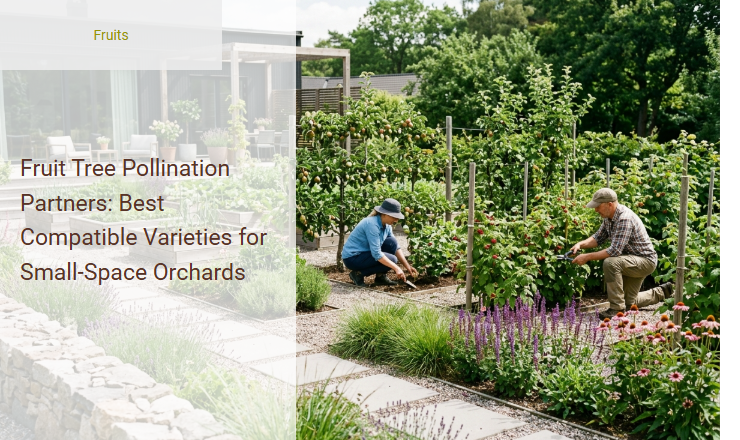
Many home gardeners face the deep frustration of watching their carefully tended fruit trees blossom beautifully, only to drop their petals without ever producing fruit. This common disappointment rarely stems from poor soil or watering; instead, it is almost always a failure of pollination, a challenge magnified in isolated, small-scale backyards.
Fortunately, strategic pairing allows you to unlock high-yield harvests from even the smallest footprint. However, achieving this requires a basic botanical stipulation: compatible varieties must have overlapping bloom periods and genetically compatible pollen. For example, pairing a 'Honeycrisp' apple with a 'Fuji' companion ensures the precise synchronization needed for successful cross-pollination.
In this guide, we will analyze the best compatible pairings, explore self-fertile alternatives, and outline spatial layouts designed to optimize pollination in limited spaces.
Read also: Self-Fertile vs Cross-Pollinating for Cherry Orchards
Introduction to Small-Space Orchard Pollination
Growing your own fresh fruit is one of the most rewarding aspects of home gardening, but limited backyard square footage often poses a significant challenge. Many aspiring orchardists believe that a small yard means they cannot produce a meaningful harvest. However, the secret to a high-yielding compact orchard lies not in the number of trees you plant, but in how effectively they interact with one another.
To secure a bountiful harvest in a confined area, understanding pollination is essential. Many fruit trees cannot set fruit entirely on their own, or they produce far better yields when paired with a compatible neighbor. Selecting the right pollination partners ensures that every square foot of your garden works efficiently, turning a cramped yard into a highly productive food forest.
Demystifying Pollination: Self-Fertile vs. Cross-Pollinating
To design a successful small-space orchard, you must first understand the biological mechanisms behind fruit production. Fruit trees generally fall into one of two categories: self-fertile (or self-pollinating) and cross-pollinating. A self-fertile tree can set fruit using its own pollen, meaning you only need to plant a single specimen to get a harvest. While convenient for tight spaces, even self-fertile varieties often yield larger, sweeter, and more abundant fruit when a partner tree is nearby.
Conversely, cross-pollinating trees require pollen from a genetically distinct variety of the same species to produce fruit. This process relies on bees and other wind patterns to transfer pollen between blossoms. In small gardens, choosing compatible cross-pollinators is vital. This genetic diversity stimulates better seed development, which directly correlates with larger fruit size, improved texture, and a more robust overall yield.
Perfect Apple Tree Pairs for Compact Gardens
Apple trees are classic orchard additions, and thanks to modern dwarf rootstocks, you can easily grow them in tight spaces. To ensure a heavy crop, you need to pair varieties that bloom at the exact same time and are genetically compatible.
- Honeycrisp and Fuji: A spectacular pairing for dessert apple lovers. Both thrive on dwarf rootstocks, stay under eight feet tall with proper pruning, and readily cross-pollinate.
- Gala and Golden Delicious: This is a highly reliable combination. Golden Delicious is known as an excellent pollenizer for almost all apple varieties, making it a safe partner for the sweet, crisp Gala.
- Cox's Orange Pippin and Egremont Russet: For those who prefer heirloom varieties, this compact duo offers rich, complex flavors and excellent pollen compatibility.
Pear Tree Compatibility in Tight Spaces
Pears are exceptionally easy to grow and are highly productive even when trained against a wall as espaliers. When selecting pears for a small garden, you must distinguish between European and Asian varieties, though some crossover pollination can occur if their bloom periods overlap.
- Bartlett and d'Anjou (European): This classic pairing yields sweet, juicy dessert pears. Both varieties adapt beautifully to dwarf rootstocks and cross-pollinate reliably.
- Shinseiki and Hosui (Asian): If you prefer crisp, round Asian pears, this duo is unmatched. They require very few chill hours and provide abundant cross-pollination.
- Conference and Concorde (European): Conference is partially self-fertile, but pairing it with Concorde ensures a massive yield of long, sweet fruits in a compact footprint.
Sweet and Sour Cherry Partnerships
Cherries are a beloved summer treat, but sweet cherries are notoriously picky about pollination. Many traditional sweet cherry varieties require a partner, whereas sour (or tart) cherries are almost always self-fertile and make excellent additions to shaded or northern-facing small yards.
For sweet cherries, pairing is crucial. If you plant a Bing cherry, you must plant a compatible partner like Rainier or Black Tartarian nearby. Because sweet cherries can grow quite large, selecting trees grafted onto dwarf rootstocks like Gisela 5 or Gisela 6 is essential for keeping them manageable in a small backyard.
Decoding Plum Tree Pollination Partners
Plum trees offer some of the most vibrant spring blossoms and heavy summer yields, but navigating their pollination requirements can be confusing due to the distinct differences between species.
To ensure fruit set, you must pair Japanese plums with other Japanese varieties, and European plums with European varieties. They cannot cross-pollinate each other successfully due to differences in chromosome numbers and blooming schedules.
- Japanese Plums (Prunus salicina)
- These bloom early in the spring and produce juicy, clingstone fruits. Excellent compatible pairs for small yards include Santa Rosa (which is partially self-fertile but acts as a great partner) and Shiro or Satsuma.
- European Plums (Prunus domestica)
- These bloom later, avoiding late frosts, and produce dense, freestone fruits perfect for baking or drying. A reliable pair is Stanley (self-fertile) and Green Gage, which produces incredibly sweet, honey-like plums.
Multi-Graft Fruit Trees: The Ultimate Space Saver
When yard space is so limited that planting even two dwarf trees is impossible, multi-graft fruit trees offer an ingenious solution. These trees feature three or four different compatible varieties grafted onto a single rootstock. You get a diverse orchard experience from a single trunk, making them highly efficient for suburban patios or tiny urban gardens.
Because the grafted varieties are carefully selected to bloom simultaneously, they cross-pollinate each other on the same tree. You can find 3-in-1 Apple trees featuring Honeycrisp, Fuji, and Gala, or Multi-Plum trees combining several Japanese varieties. This setup provides a extended harvest window as different branches ripen at different times throughout the season.
Matching Bloom Times: The Key to Pollination Success
For cross-pollination to occur, your selected trees must bloom at the same time. Orchardists categorize fruit trees into pollination groups based on their flowering schedule, typically labeled from early-season to late-season (Groups A through D). A tree in Group A will rarely pollinate a tree in Group D because the flowers of the first will have fallen before the second opens.
When selecting your compact trees, always choose varieties within the same pollination group or adjacent groups to guarantee overlapping blossoms.
| Pollination Group | Bloom Period | Compatible Groups | Example Varieties |
|---|---|---|---|
| Group A (Early) | Early Spring | Group A, Group B | Gravenstein Apple, Santa Rosa Plum |
| Group B (Mid-Early) | Mid-Spring | Group A, Group B, Group C | Gala Apple, Bartlett Pear |
| Group C (Mid-Late) | Late Mid-Spring | Group B, Group C, Group D | Honeycrisp Apple, d'Anjou Pear |
| Group D (Late) | Late Spring | Group C, Group D | Fuji Apple, Rome Beauty Apple |
Boosting Pollination with Companion Planting
Even with perfectly matched tree pairs, your small orchard relies heavily on local insect activity to transfer pollen. You can dramatically improve pollination success by transforming your orchard floor into a haven for bees, hoverflies, and butterflies. Planting flowering companion plants around the base of your fruit trees ensures a steady stream of active pollinators throughout the spring.
- Borage: Known as the ultimate bee magnet, its bright blue flowers bloom continuously and supply pollenizers with abundant nectar.
- Lavender: Provides a strong scent and beautiful purple spikes that draw in bumblebees right as late-spring fruit trees bloom.
- Rosemary: Blooms very early in the spring, helping to attract and sustain early-emerging wild bees when early-season plums and peaches are flowering.
- Daffodils and Crocuses: Excellent spring bulbs to plant directly in the tree basins to signal local pollinators to visit your yard early in the season.
Your Small-Space Orchard Planning Checklist
Ready to start planting? Use this systematic checklist to ensure you select the perfect, highly compatible dwarf fruit tree pairs for your compact backyard garden.
- Measure Your Space: Confirm that you have at least 8 to 10 feet of space between planting sites for dwarf rootstocks, or plan to grow your trees as espaliers flat against a fence.
- Determine Your USDA Hardiness Zone: Verify that your chosen varieties are rated for your winter temperatures and meet the required chilling hours.
- Select Your Fruit Type: Choose whether you want apples, pears, cherries, or plums, keeping in mind that you need to stick within the same species for cross-pollination.
- Verify Genetic Compatibility: Cross-reference variety pollinator charts to ensure your chosen pairs can fertilize each other successfully.
- Match the Bloom Groups: Check that both trees belong to the same or adjacent pollination groups (e.g., both Group B, or one Group B and one Group C).
- Plan for Pollinators: Source companion flowers to plant alongside your new trees to encourage local bee activity from day one.
Summary
Growing a bountiful backyard orchard in a limited space requires a strategic approach to fruit tree pollination. Since many popular varieties-including apples, pears, plums, and sweet cherries-are self-sterile, they require compatible pollination partners that bloom simultaneously to set fruit. This guide demystifies pollination groups, helping small-space gardeners pair compatible varieties for maximum yield.
For growers with tight footprints, we highlight space-saving solutions such as choosing reliable self-fertile cultivars, planting multi-graft "family" trees that feature multiple compatible varieties on a single trunk, or planting two compatible trees in a single hole. By understanding the fundamentals of cross-pollination and selecting the right companion trees, urban orchardists can overcome space constraints, attract vital pollinators, and enjoy a diverse, heavy harvest of fresh, homegrown fruit year after year.
Leave a comment