
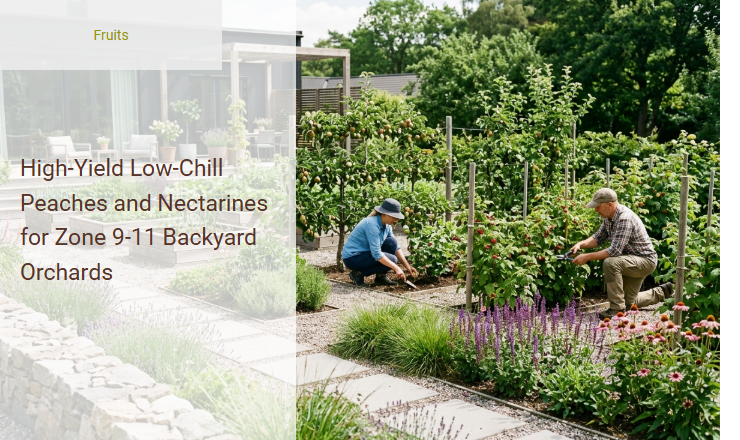
Gardeners in USDA Zones 9 through 11 often face immense frustration when attempting to grow traditional stone fruits, only to watch their trees fail to blossom and set fruit year after year. To overcome this obstacle, one must first understand the concept of "chill hours"-the cumulative number of winter hours below 45°F that deciduous trees require to break dormancy. Fortunately, selecting cultivars specifically engineered for low-chill environments grants warm-climate growers the ability to harvest abundant, tree-ripened fruit right from their own backyards.
However, successful cultivation is stipulated on pairing these low-chill hours with meticulous microclimate management and exceptional soil drainage. Renowned varieties such as the 'Desert Gold' peach and the 'Snow Queen' nectarine serve as concrete proof that high yields are entirely achievable in subtropical climates. In this guide, we will evaluate the top-performing low-chill cultivars, explore critical planting techniques, and outline a seasonal maintenance roadmap to ensure your warm-climate orchard thrives.
Read also: Peach vs Nectarine for Warm Climates
Introduction to Warm-Climate Stone Fruits
For generations, the dream of harvesting juicy, sun-ripened peaches and nectarines was considered exclusive to cooler northern climates. Traditional stone fruits required deep winter freezes to produce sweet blossoms and abundant yields. However, the botanical landscape has changed dramatically. Thanks to decades of dedicated agricultural hybridization, backyard growers in USDA Zones 9-11 can now enjoy the unmatched pleasure of harvesting sweet, tree-ripened stone fruits right from their own gardens.
The secret behind this horticultural revolution lies in the development of modern low-chill cultivars. These specialized varieties bypass the need for long, freezing winters, allowing trees to break dormancy, bloom, and set fruit in regions with mild winters and hot summers. Whether you live in the sandy coastal plains of Florida, the arid valleys of Arizona, or the Mediterranean microclimates of Southern California, establishing a high-yielding backyard orchard is now highly feasible and incredibly rewarding.
Demystifying Chill Hours for Zones 9 through 11
To successfully cultivate stone fruits in warm climates, it is essential to understand the science of chill hours. Chill hours represent the cumulative number of hours that temperatures drop between 32°F and 45°F during the winter dormant season. Deciduous fruit trees utilize this biological clock to undergo a crucial hormonal transition known as vernalization. This internal mechanism prevents the tree from blooming during brief, unseasonably warm spells in autumn, protecting the delicate flower buds from cold damage.
If a stone fruit tree does not receive its required chill hours, its buds will remain dormant, emerge unevenly, or drop off entirely, resulting in poor leaf development and a lack of fruit. In warm winter regions like zones 9 through 11, traditional peach and nectarine varieties that require 800 to 1,000 chill hours will fail. Growers in these regions must select low-chill varieties, specifically those requiring under 300 hours, to ensure successful bud break, uniform flowering, and a heavy harvest in the spring.
Top High-Yielding Low-Chill Peach Varieties
When selecting peach cultivars for warm climates, opting for proven low-chill selections ensures reliable performance and exceptional flavor year after year.
Flordaprince
Requiring only 150 chill hours, 'Flordaprince' is a standout performer for the deepest south. This semi-freestone variety produces medium-to-large fruit with a beautiful red blush over a yellow ground color. The flesh is yellow, firm, and melts in your mouth with a classic, rich peach sweetness. It is highly valued for its exceptionally early harvest, often ripening as early as mid-April to early May.
Desert Gold
With a low requirement of 250 chill hours, 'Desert Gold' is highly adapted to hot, arid desert regions as well as humid subtropical areas. It yields medium-sized, yellow-fleshed peaches with an outstanding sweet-tart balance. The tree is exceptionally vigorous and sets fruit reliably even after unusually warm winters, with fruit ripening in late spring.
May Pride
An excellent selection for home gardens, 'May Pride' requires approximately 150 to 200 chill hours. It is famous for its stunning, showy pink blossoms in late winter, followed by delicious, large, semi-freestone peaches with yellow flesh. The fruit is sweet, tangy, and ready for harvest in May, making it a perfect early-season treat.
Premier Low-Chill Nectarine Varieties
Nectarines offer the same juicy, rich flavor profiles as peaches but feature smooth, fuzz-free skin. Several low-chill cultivars have been specifically bred to thrive in hot climates.
Desert Dawn
Requiring about 250 chill hours, 'Desert Dawn' is a highly productive yellow-fleshed nectarine that performs brilliantly in warm climates. The fruit is highly colored, sweet, and firm, with a rich, aromatic flavor. Because it ripens early in the season, it avoids the intense midsummer heat that can sometimes stress fruit development.
Snow Queen
A favorite among home orchardists who prefer white-fleshed stone fruits, 'Snow Queen' requires 250 to 300 chill hours. It produces large, sweet, cream-colored nectarines with a rich, sweet, and low-acid flavor profile. It adapts beautifully to coastal southern areas and inland valleys alike, ripening in late June.
Double Delight
This sensational cultivar requires around 300 chill hours and serves a dual purpose in the landscape. In early spring, 'Double Delight' showcases spectacular double pink blossoms that rival ornamental trees. By midsummer, it yields exceptional, dark red-skinned nectarines with rich, sweet, yellow flesh that consistently wins taste-test awards.
Rootstock Selection for Southern Soils
While selecting the correct upper scion variety determines fruit flavor and chill hour compatibility, selecting the right rootstock is what determines the overall survival and vigor of the tree. Southern soils, particularly in Florida, Texas, and coastal regions, are notorious for harboring destructive root-knot nematodes. These microscopic soil pests attack delicate root systems, stunted tree growth, and eventually kill stone fruit trees.
To combat this threat, backyard growers should only plant trees grafted onto specialized nematode-resistant rootstocks. Nemaguard is an industry-standard rootstock that provides excellent resistance to root-knot nematodes and adapts well to a variety of sandy and loam soils. For growers in the extreme, humid Southeast with sandy soils, Flordaguard is highly recommended, as it offers superior resistance to the specific peach root-knot nematode strains native to those regions, ensuring robust growth and long-term tree health.
Planting Strategies for Maximum Sun and Drainage
In hot, wet, or sandy climates, correct planting techniques are paramount to prevent root rot and maximize tree establishment. Peaches and nectarines require exceptional drainage and plenty of sunlight to thrive.
Follow these essential steps to plant your warm-climate stone fruit trees successfully:
- Select a prime location: Choose a spot that receives at least 8 hours of direct, unfiltered sunlight daily, away from the shadow of large landscape trees.
- Test and amend the soil: Ensure your soil is in the slightly acidic to neutral pH range (6.0 to 6.5). If your soil contains heavy clay or drains poorly, incorporate organic compost to improve structure.
- Build a raised planting mound: Create a wide mound of soil 12 to 18 inches high and 3 to 4 feet wide. Planting on a mound ensures that the tree's crown remains dry and free from standing water during heavy tropical downpours.
- Position the graft union high: Dig a shallow hole on top of your mound and set the root ball in place. Ensure that the graft union (the distinct bump where the variety meets the rootstock) sits at least 2 to 3 inches above the final soil line to prevent rot and scion rooting.
- Backfill and mulch: Fill the hole with native soil, firm it gently to eliminate air pockets, and apply a 3-inch layer of organic mulch around the base, keeping the mulch a few inches away from the trunk.
Pruning and Training for High-Yield Open Centers
Pruning is not merely an aesthetic chore; it is a critical practice for maintaining tree health and maximizing fruit yields in humid, hot environments. The "open-center" or "vase-shaped" training system is the gold standard for peaches and nectarines, as it ensures optimal sunlight penetration and maximizes air circulation to prevent fungal pathogens.
To establish and maintain an open-center shape, implement these key pruning techniques annually:
- Establish scaffold branches: Select 3 to 4 strong, outward-growing main branches spaced evenly around the trunk, and prune away the central leader completely to create a hollow center.
- Remove inward-pointing growth: Prune out any branches growing back toward the center of the tree to maintain an open interior that allows sunlight to reach the lower branches.
- Thin the fruiting wood: Peaches and nectarines produce fruit on one-year-old red wood. Thin out up to 50% of this growth every winter to prevent the tree from overproducing and snapping branches under heavy loads.
- Prune for height management: Keep the overall height of the tree maintained at 7 to 9 feet to make pest control, netting, pruning, and harvesting manageable without a ladder.
Watering and Feeding in Hot Climates
Warm-climate stone fruits have high water and nutrient demands, especially during the rapid growth periods of late spring and hot summer months. Proper timing of irrigation and fertilization ensures juicy, plump fruits and resilient trees.
Refer to the schedule below for optimal seasonal watering and organic feeding guidelines:
| Season | Watering Frequency | Fertilization Plan |
|---|---|---|
| Late Winter (Bud Break) | Keep soil consistently moist but not waterlogged. | Apply a balanced organic fruit tree fertilizer rich in nitrogen and potassium. |
| Spring (Fruit Swell) | Deep-water 2 to 3 times per week to support cell division in growing fruit. | Apply a top-dressing of compost and organic micro-nutrients to support foliage. |
| Summer (Post-Harvest) | Water deeply once per week during dry spells to relieve heat stress. | Apply a light dose of organic nitrogen to help the tree set next year's buds. |
| Autumn & Winter | Reduce watering significantly, only keeping roots slightly moist. | Do not fertilize; allow the tree to naturally enter winter dormancy. |
Preventing Common Warm-Climate Pests and Diseases
The warmth and high humidity of zones 9-11 can create breeding grounds for pests and fungal diseases. Implementing preventative organic management practices is key to maintaining a clean and productive orchard.
Peach Leaf Curl
This fungal disease causes leaves to puck, redden, distort, and eventually drop. To control it, apply a preventative organic copper fungicide spray in late winter while the tree is completely dormant, just before the buds begin to swell.
Thrips and Stinkbugs
These tiny pests feed on flower buds and developing fruit, causing scarring and woody dimples. Protect your crop by encouraging beneficial insects, applying organic neem oil during the early stages of bud development, or using insect barrier netting.
Brown Rot
A devastating fungus that turns ripening fruit into mushy, gray-brown masses. Prevent brown rot by maintaining an open-center canopy for maximum air circulation, removing any mummified fruit left on the tree from the previous year, and applying organic sulfur sprays during the blooming period.
Harvesting and Ripening for Peak Flavor
Harvesting your peaches and nectarines at the perfect moment makes all the difference in flavor development. Unlike many fruits, stone fruits do not increase in sweetness once detached from the branch; they only soften. Therefore, leaving them on the tree until they reach full sugar potential is crucial.
To determine if your fruit is ready to harvest, look for a shift in the ground color of the skin. This is the background color of the fruit, not the red blush created by direct sun exposure. When the ground color changes from a grassy, pale green to a warm, creamy yellow or soft white, the fruit is ready. Cup the fruit in your hand and give it a gentle squeeze near the stem shoulder; if it has a slight give and releases from the branch with a gentle, upward twist, it is at peak ripeness. Store your fresh harvest at room temperature for immediate enjoyment, or place them in the refrigerator to preserve their sweet flavor and soft texture for up to a week.
Summary
Growing stone fruits in warm climates is highly achievable with low-chill peaches and nectarines, specifically bred for USDA Zones 9 through 11. Unlike traditional varieties that require hundreds of cold winter hours to break dormancy, low-chill cultivars need fewer than 300 chill hours to produce abundant, high-quality fruit. Exceptional peach varieties like 'Desert Gold' and 'Flordaprince', alongside standout nectarines like 'Snow Queen' and 'Double Delight', thrive in these milder winter regions.
To maximize yields in backyard orchards, growers should prioritize sun-drenched planting sites with well-draining soil, apply consistent irrigation, and perform annual pruning to encourage new fruiting wood. By choosing the right microclimate-adapted varieties and implementing proper orchard management, home gardeners in southern and coastal regions can enjoy a bountiful harvest of sweet, juicy stone fruits right from their own backyards.
Leave a comment