
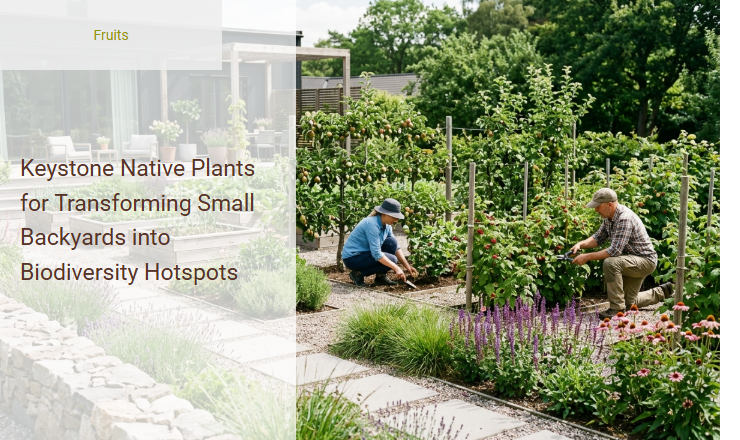
Many urban and suburban homeowners with limited outdoor space struggle to feel like their gardening efforts can make a meaningful ecological difference. While traditional ornamental landscaping provides aesthetic appeal, these manicured lawns often function as biological deserts, offering little support to struggling local wildlife.
Fortunately, strategic ecological design grants you the power to maximize biodiversity impact within a minimal footprint. However, a key stipulation must be understood: not all native plants are ecologically equal. True habitat transformation relies on "keystone" species-powerhouse plants like native Oaks (Quercus) or Goldenrods (Solidago) that support hundreds of critical insect and bird species, far outperforming standard backyard foliage.
This article will explore the science of keystone plants, identify the best species for compact spaces, and outline a step-by-step framework to turn your small backyard into a thriving biodiversity hotspot.
Read also: Elderberry vs Mulberry for Wildlife Gardens
The Power of Keystone Plants in Small Spaces
Our home gardens are no longer just aesthetic ornaments; they are crucial components of a fragmented ecological landscape. Keystone native plants act as the foundational pillars of our local food webs. Just like the keystone in an arch, these specific plant species support an overwhelming majority of local wildlife. By hosting these high-impact plants, even a tiny suburban backyard or urban courtyard can be transformed into a thriving biodiversity hotspot.
When you plant a keystone species, you are not just adding green to your yard; you are actively feeding the insects that drive the entire terrestrial ecosystem. It takes only a few strategic choices to turn a biological desert into a biodiversity sanctuary.
Mighty Oaks: The Ultimate Biodiversity Anchors
The Superpower of Quercus
Native oaks (Quercus) are undisputed giants of ecological productivity. They support hundreds of species of caterpillars, which serve as the primary food source for nesting songbirds. Without oaks, local food webs lose their most vital anchor.
Dwarf Oak Species for Small Yards
Many homeowners believe their yards are too small to support an oak tree, but several compact species offer the same immense ecological value without taking up massive amounts of space:
- Bear Oak (Quercus ilicifolia): A hardy, shrubby oak that rarely exceeds fifteen feet in height, perfect for tight spaces.
- Dwarf Chinquapin Oak (Quercus prinoides): This species matures as a small tree or large shrub, producing abundant acorns at a young age.
Native Cherries and Plums for Early Spring Life
The genus Prunus provides critical early-season sustenance when wildlife is emerging from winter dormancy. Native cherries and plums burst into bloom early in the spring, offering rich pollen and nectar to native bees and early butterflies. Furthermore, their foliage serves as a vital host plant for hundreds of moth and butterfly caterpillars, making them a high-impact ecological powerhouse for any landscape.
To fit these ecological champions into tight quarters, gardeners can opt for compact varieties like the Beach Plum (Prunus maritima) or the Sand Cherry (Prunus pumila). These smaller shrubs deliver all the biological benefits of their larger tree relatives without crowding your patio.
Goldenrods: The Autumn Fuel Station
As summer fades, many gardens lose their ecological steam, yet this is precisely when migrating insects need energy most. Solidago (goldenrods) step in as the ultimate late-season fuel station, providing massive quantities of high-quality pollen and nectar. Despite their incredible wildlife value, goldenrods are often unfairly blamed for seasonal allergies.
The true culprit behind autumn allergies is wind-pollinated ragweed, which blooms at the same time. Goldenrod pollen is heavy and sticky, designed to be carried by insects, not the wind, making it entirely innocent of causing hay fever.- Ecological Landscaping Association
Native Asters: Late-Season Color and Conservation
A Perfect Partnership with Goldenrods
Native asters (Symphyotrichum) bloom alongside goldenrods, creating a visually stunning purple-and-gold palette that acts as a beacon for late-season pollinators. These plants provide the critical lipids and carbohydrates that monarch butterflies need to fuel their epic migrations and that native queen bees require to survive winter hibernation.
Top Aster Choices for Compact Gardens
Asters are incredibly easy to grow and fit beautifully into even the smallest urban plots. Here are a few excellent choices for small gardens:
- Smooth Blue Aster: Highly adaptable, featuring clean foliage and beautiful lavender flowers.
- Aromatic Aster: A compact, mounding species that handles dry soils beautifully and blooms late into the fall.
Sunflowers: Radiant Giants with Huge Ecological Returns
Native sunflowers (genus Helianthus) are much more than just cheery faces in the garden; they are heavyweights of biodiversity. These plants are especially vital for specialist bees, which rely exclusively on the unique pollen chemistry of sunflowers to feed their young. Without native sunflowers, these specialized pollinator species would simply vanish from our urban spaces.
In addition to supporting insects, the dense seed heads of native sunflowers provide an invaluable, energy-rich food source for goldfinches and other songbirds preparing for the cold winter months. Choosing perennial native sunflowers like the Woodland Sunflower (Helianthus divaricatus) brings these massive ecological rewards to shaded, smaller yards.
Vertical Keystone Species: Vines for Tight Quarters
When horizontal ground space is at a premium, looking upward is the smartest design strategy. Native climbing vines allow urban gardeners to pack a powerful ecological punch into a footprint only a few inches wide, utilizing fences, trellises, and walls to build a living green canopy.
- Coral Honeysuckle (Lonicera sempervirens): A spectacular vine that provides nectar for hummingbirds and hosts the Snowberry Clearwing moth.
- Purple Passionflower (Passiflora incarnata): An exotic-looking native vine that serves as the exclusive host plant for the Gulf Fritillary butterfly.
Layering for Life: Designing the Keystone Canopy
Maximizing the Vertical Dimension
To squeeze the maximum ecological value out of a small yard, you must think in three dimensions. Natural ecosystems thrive on structural complexity. By mimicking the layered architecture of a forest edge, you can stack multiple wildlife-supporting niches on top of one another within a tiny footprint.
Start with a dwarf oak as your small-scale canopy, plant a mid-story of native cherries or plums beneath it, and blanket the ground with asters and goldenrods. This dense, multi-tiered structure provides shelter, nesting sites, and a continuous food supply throughout the seasons.
Managing Constraints: Big Ecology in Small Footprints
Navigating Urban and Suburban Challenges
Growing wilder, high-performance native plants in tight urban spaces requires a balance of ecological enthusiasm and thoughtful design. Homeowners often face challenges like heavy shade from buildings, compacted soils, and neighbor complaints about messy wild yards.
- Embrace Cues to Care: Use neat, defined borders and pathways to show neighbors that your native garden is intentional.
- Select for Shade: Use woodland varieties of asters and goldenrods that thrive under building shadows.
- Amend Soil Mindfully: Many native keystone plants prefer lean, unfertilized soils, so avoid heavy composts that encourage floppy growth.
Taking the First Step Toward Your Living Backyard
The global biodiversity crisis can feel overwhelming, but the solution starts right outside your back door. You do not need acres of land to make a profound difference. By replacing even a small, unused patch of turf grass with just one or two keystone native plants, you instantly establish a vital oasis for local wildlife.
Every square foot of native habitat counts. Your yard has the potential to become a living, breathing sanctuary-one leaf, one caterpillar, and one bloom at a time.
Summary
This article explores how homeowners can combat habitat loss by integrating "keystone" native plants into small backyard spaces to create thriving, resilient biodiversity hotspots. Keystone species-such as native oaks, wild cherries, goldenrods, and sunflowers-exert a disproportionately large, positive influence on their local ecosystems. These essential plants provide critical food and nesting habitat for the vast majority of local caterpillars and specialist pollinators, which serve as the foundation for the entire terrestrial food web.
The article emphasizes that even limited garden spaces can achieve a significant ecological impact when gardeners prioritize these highly productive native plants over non-native ornamental species. By strategically selecting keystone flora tailored to their ecoregion, urban and suburban residents can actively restore local food webs, support declining wildlife populations, and foster vibrant micro-habitats right outside their back doors.
Leave a comment