
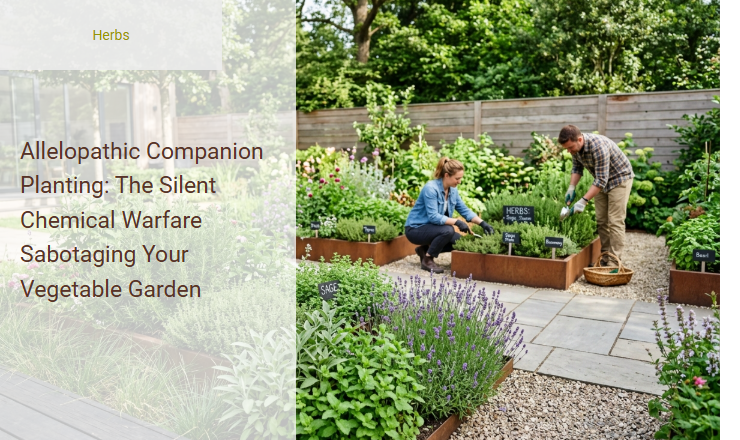
Have you ever watched a prized vegetable stunt and wither, despite receiving optimal sunlight, premium compost, and meticulous watering? This frustrating, unexplained decline plagues even the most dedicated growers. While traditional gardening advice champions companion planting as a universal remedy, it often overlooks a critical, hidden biochemical reality happening beneath the soil surface.
Understanding this subterranean dynamic grants you the power to actively safeguard your garden's yield, shifting your cultivation strategy from trial-and-error to predictable science. This phenomenon is known as allelopathy-a biological survival mechanism where certain plants release chemical compounds that inhibit the growth of their neighbors. For example, planting black walnut near nightshades, or positioning fennel near bush beans, can quietly decimate your crops through chemical suppression.
In this guide, we will analyze the science behind these invisible botanical conflicts, identify the primary allelopathic culprits in vegetable plots, and provide a strategic layout blueprint to ensure your garden thrives in chemical harmony.
Read also: Mugwort vs Wormwood for Weed Suppression
Under the Soil: The Invisible Battleground in Your Vegetable Garden
To the naked eye, a vegetable garden appears to be a peaceful sanctuary of growth, color, and quiet vitality. However, beneath the damp, dark soil lies a silent, chemical battleground where plants fight aggressively for survival. Many backyard gardeners have experienced the frustration of a seemingly healthy, well-watered, and properly fertilized bed mysteriously failing to thrive. The culprit is often not a disease, pest, or lack of sunlight, but a covert mechanism of plant warfare known as allelopathy.
Through this evolutionary defense system, certain plants synthesize and release toxic compounds directly into the rhizosphere to actively suppress, injure, or kill their neighbors. This hidden chemical warfare dictates which crops can coexist and explains why some plant combinations are destined for failure. Understanding these subterranean conflicts is key to unlocking the true potential of your garden beds.
Deciphering the Science of Allelopathy
At its core, allelopathy is a biological phenomenon where an organism produces one or more biochemicals that influence the growth, survival, and reproduction of other organisms. These biochemicals, known as allelochemicals, are secondary metabolites, meaning they are not essential for the plant's basic growth but serve as defense mechanisms. Plants synthesize these compounds within their cells and release them into the surrounding environment through four primary pathways.
The first pathway is root exudation, where active chemicals are pumped directly from the roots into the surrounding soil water. The second is volatilization, where plants release chemical vapors through their leaves, which are then absorbed by neighboring plants or settled into the soil. The third mechanism is leaching, occurring when rain or irrigation washes toxins off the plant foliage and down into the root zone of vulnerable neighbors. Finally, residue decomposition occurs when fallen leaves, stems, or decaying roots break down in the soil, slowly releasing stored toxins over time. Through these diverse delivery methods, plants effectively claim and protect their territory.
The Shadow of the Giant: Black Walnut and Juglone Toxicity
The Reign of Juglone
Among all allelopathic species, the Black Walnut tree (Juglans nigra) is arguably the most notorious. It produces a highly potent toxic chemical known as juglone. While juglone is present in all parts of the tree, it is highly concentrated in the roots, walnut hulls, and buds. This chemical does not easily dissolve in water, meaning it persists in the soil surrounding the tree's extensive root system, which can extend up to eighty feet away from the trunk itself. Any susceptible vegetable planted within this zone is likely to suffer a swift or gradual decline.
Vulnerable Garden Crops
Many of the most popular summer vegetables are highly sensitive to juglone, suffering from a condition often called walnut wilt. If you plant the following crops near a Black Walnut tree, they will likely exhibit severe stunting, yellowing, and eventual death:
- Tomatoes
- Peppers
- Potatoes
- Eggplants
- Cucumbers
- Asparagus
The Secret Saboteurs: Allelopathic Vegetables in Your Beds
Fennel and the Zone of Exclusion
It is not just wild trees that engage in chemical warfare; several common garden plants are secret saboteurs. Florence fennel is perhaps the most notorious vegetable offender. Fennel releases a cocktail of chemicals through its roots and foliage that stunts almost every plant grown near it. It is so chemically aggressive that it should always be planted in an isolated container or a dedicated corner of the garden where its root exudates cannot contaminate other vegetable beds.
The Heavy Toll of Sunflowers and Brassicas
Similarly, sunflowers are powerful allelopaths. While beautiful, they release toxins through their roots, leaves, and seed hulls that inhibit the germination of seeds and stunt the growth of nearby plants, particularly beans and potatoes. Even certain brassicas, such as broccoli, mustard, and cabbage, leave behind chemical residues that suppress neighboring plants. These brassica chemicals can remain in the soil even after the harvest, making thoughtful crop placement essential.
Cover Crops and Weeds: Friends Turned Foes
In the quest to improve soil health, many gardeners use cover crops without realizing that some of these species are highly allelopathic. Cereal rye is a prime example. While it is excellent for preventing erosion and adding organic matter, it releases benzoxazinoids-natural chemical compounds that suppress the germination of small seeds. When cereal rye is terminated and incorporated into the soil, this chemical barrier remains active for several weeks, preventing weed seeds from emerging but also accidentally ruining the germination of direct-sown vegetables like carrots and lettuce.
The residual impact of these plant toxins can linger in the soil long after the physical plants have been pulled or tilled under. This persistence means that gardeners must wait at least three to four weeks after clearing allelopathic cover crops or heavy weed patches before sowing new vegetable seeds.
Diagnosing the Damage: Identifying Allelopathic Symptoms
Distinguishing between nutrient deficiencies, disease, and allelochemical poisoning can be incredibly challenging for home gardeners. However, observing the specific pattern and speed of your plants' decline can help you identify a chemical attack. Unlike nutrient deficiencies, which usually develop slowly across an entire bed, allelopathic damage is often localized and sudden, occurring specifically in plants closest to the offending species.
To accurately diagnose your garden, look for the following symptoms of allelochemical poisoning:
- Sudden, Irreversible Wilting: Plants wilt rapidly despite adequate soil moisture, as toxins clog the vascular system.
- Chlorosis (Yellowing Leaves): Foliage loses chlorophyll rapidly, starting from the lower leaves and moving upward.
- Severely Stunted Root Systems: Roots appear brown, short, and lack the fine feeder root hairs necessary for nutrient absorption.
- Germination Failure: Sown seeds swell with water but rot in the ground instead of sprouting, or seedlings die immediately after emerging.
Allelopathy vs. Resource Competition: Debunking Garden Myths
Many gardeners quickly attribute any plant failure to chemical allelopathy, but it is important to distinguish this from simple, physical resource competition. In a crowded garden bed, plants are constantly vying for limited resources like sunlight, water, and essential soil nutrients. A taller plant shading out a shorter one, or a thirsty crop absorbing all the surface moisture, is not engaging in chemical warfare-it is simply outcompeting its neighbor physically.
True allelopathy occurs when chemical compounds actively interfere with a plant's internal physiological processes, independent of resource availability. Even in a perfectly irrigated, heavily fertilized bed with optimal sunlight, an allelopathic toxin will still stunt or kill a susceptible neighboring crop. - Soil Science Society of America
To determine which issue is affecting your garden, look at the resource levels. If your stunted plants are receiving plentiful water and fertilizer, yet still show severe, localized signs of distress near specific companions, you are likely dealing with chemical inhibition rather than simple competition.
Designing the Peace Treaty: Companion Planting Layouts to Avoid
The Rules of Spatial Separation
To prevent chemical warfare in your garden beds, you must design your vegetable layouts with physical distance in mind. As a general rule of thumb, aggressive allelopathic plants should be kept at least four to six feet away from sensitive annual vegetables. If you are dealing with large woody shrubs or trees like the Black Walnut, the safety buffer must extend well beyond the drip line-ideally fifty to eighty feet away from your vegetable patches to ensure roots do not intermingle.
Disastrous Vegetable Pairings
When planning your spring and summer beds, avoid planting these chemically incompatible combinations next to one another:
- Fennel and Bush Beans: Fennel releases root exudates that will completely stop the growth of bush and pole beans.
- Sunflowers and Potatoes: Sunflowers exude toxins from their roots that cause potato tubers to rot and fail.
- Broccoli and Tomatoes: Brassica residues will actively stunt the root development of tomatoes and other nightshades.
- Garlic and Peas: While garlic is a natural pest repeller, its strong sulfur compounds can stunt leguminous crops like peas.
Soil Rehabilitation: Neutralizing the Chemical Residues
If you have discovered that your soil is contaminated with allelochemicals, there is no need to abandon your garden beds. You can actively detoxify and rehabilitate your soil through biological bioremediation. The most effective weapon against these natural toxins is a thriving population of soil microbes. Beneficial bacteria and fungi naturally break down and metabolize complex organic chemicals, neutralizing them into harmless compounds. Adding generous amounts of high-quality compost introduces abundant microbial life, which accelerates this natural detoxification process.
For severe contamination, such as soil affected by juglone or heavy weed residues, you can apply activated charcoal or biochar. Activated charcoal acts like a chemical sponge, binding to the toxins and preventing plant roots from absorbing them. Additionally, practicing strict crop rotation and leaving beds fallow or planting tolerant crops for a season allows the soil time to naturally flush out and degrade residual chemical barriers, ensuring the long-term health of your vegetable garden.
Harnessing the Power: Using Natural Herbicides to Your Advantage
While allelopathy may seem like a gardener's worst nightmare, it can also be harnessed as a powerful, organic tool for weed management. By understanding which plants suppress others, you can use these natural chemical defenses to replace synthetic herbicides. Planting cover crops like winter rye, hairy vetch, or oats in the late autumn creates a natural chemical blanket that prevents winter and early spring weeds from germinating, leaving you with clean, weed-free beds to plant into once the residue has safely decomposed.
Using chopped allelopathic materials, such as sunflower stalks or eucalyptus leaves, as a specialized mulch around established woody plants can also keep weed seeds from taking hold. By turning this subterranean chemical warfare to your advantage, you can build a more resilient, low-maintenance, and highly sustainable organic vegetable garden.
Summary
While companion planting is widely celebrated for its pest-repelling and growth-promoting benefits, certain plants engage in a hidden biological conflict known as allelopathy. The article, "Allelopathic Companion Planting: The Silent Chemical Warfare Sabotaging Your Vegetable Garden," explores how specific plants release toxic biochemicals, or allelochemicals, into the soil to inhibit the germination, growth, and survival of neighboring vegetation.
Common culprits like black walnut trees, fennel, sunflowers, and certain brassicas deploy these chemical defenses through their roots, leaves, or decomposing tissue, unwittingly stunting nearby vegetables. To safeguard your garden from this silent subterranean warfare, understanding plant compatibility is essential. By identifying allelopathic species and strategically planning garden layouts, gardeners can prevent accidental crop failure, optimize plant health, and foster a highly productive, harmonious growing environment.
Leave a comment