
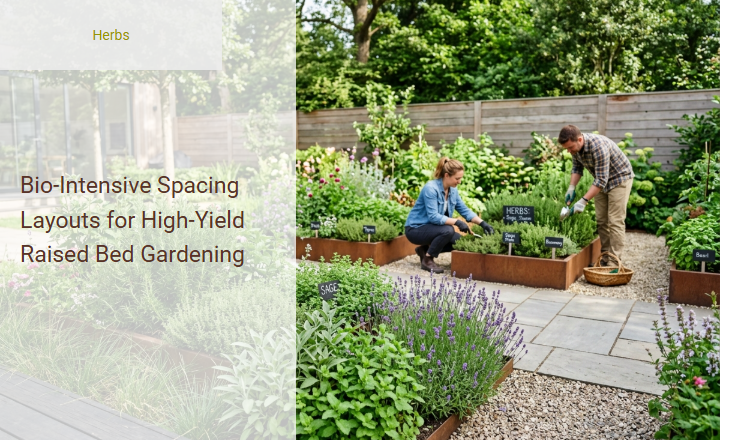
Many home gardeners face the frustrating reality of underwhelming harvests, watching their carefully constructed raised beds quickly become either unproductive, empty spaces or overcrowded, disease-prone jungles. While traditional row-cropping methods are highly effective on large agricultural acreage, applying these wide-spaced linear designs to confined backyard structures represents a massive waste of premium, hand-blended soil.
Adopting bio-intensive spacing layouts solves this spatial inefficiency, granting you up to four times the yield from the exact same footprint. Crucially, this high-density approach is not a passive system; it stipulates a rigorous commitment to deep soil preparation and precise moisture management to support such intensive root competition. For example, staggering butterhead lettuce in an offset hexagonal grid-rather than traditional square rows-creates a living mulch canopy that naturally locks in soil moisture and chokes out weeds.
Below, we outline the exact spacing blueprints, companion-layering techniques, and crop-succession strategies required to transform your raised beds into a highly productive, bio-intensive ecosystem.
Read also: Chamomile vs Lavender for Raised Beds
The Foundations of Bio-Intensive Raised Bed Gardening
Bio-intensive gardening is a highly efficient agricultural system designed to maximize food production within a minimal footprint. By focusing on the health of the entire ecological micro-system, this method allows backyard growers to achieve up to four times the yield of conventional row gardening. The core philosophy centers on nurturing the soil biology, which in turn feeds the plants. This organic feedback loop is the key to maintaining long-term sustainability and outstanding productivity in a confined space like a raised bed.
The success of this approach relies on three tightly integrated pillars. First, deep soil preparation ensures that root systems can grow downward instead of outward, allowing plants to be packed closely together. Second, organic fertilizing practices keep the soil rich with microbial life, providing a steady stream of bio-available nutrients. Finally, close spacing mimics natural ecosystems, protecting the soil from evaporation and weed competition. When these three elements are properly aligned, the raised bed becomes a self-sustaining powerhouse of crop growth.
Implementing these techniques requires a shift in how we view space. Instead of keeping plants separated by wide pathways of bare earth, we treat the entire bed as a single, unified planting zone. Every square inch is utilized, turning the garden bed into a dense, vibrant canopy of edible plants. Through this mindful stewardship of the soil, gardeners can grow an abundance of fresh, organic produce while actively conserving water, building soil fertility, and harmonizing with natural life cycles.
The Science Behind Hexagonal Spacing
Traditional row planting leaves massive gaps of exposed soil between lines of crops. This layout wastes valuable space, exposes soil to direct sunlight, and promotes weed growth. Hexagonal spacing, also known as the offset or triangular grid, solves this inefficiency by placing each plant at the point of an equilateral triangle. In this arrangement, every plant is equidistant from all of its immediate neighbors, maximizing the canopy coverage over the soil surface.
Mathematically, a hexagonal grid allows you to fit up to fifteen percent more plants in the same area compared to a square or rectangular grid. Beyond the sheer increase in numbers, this geometry creates a highly beneficial microclimate. As the plants mature, their leaves touch and create a continuous green canopy. This living mulch shades the ground completely, drastically reducing soil temperature and preventing moisture from evaporating into the air.

By protecting the soil from wind and sun, the living mulch conserves vital water resources. Soil microbes thrive in this dark, damp, and cool environment, accelerating the decomposition of organic matter and making nutrients more accessible to the dense root systems below. The plants themselves benefit from the physical support of their neighbors, reducing damage from heavy rains and wind.
Essential Soil Preparation for High-Density Planting
The Principles of Double-Digging
To support a high-density growing system, the soil must be loose, aerated, and deeply fertile. The double-digging method is the gold standard for preparing bio-intensive beds, loosening the soil to a depth of twenty-four inches. This deep preparation allows roots to penetrate straight down rather than spreading horizontally, preventing competition among closely spaced crops.
First, remove a trench of soil one spade-blade deep and set it aside. Next, use a garden fork to loosen the compacted subsoil in the bottom of the trench another twelve inches down. Move to the next trench section, shifting its topsoil into the first trench, and loosen the subsoil beneath. Repeat this process across the entire bed, finally filling the last trench with the soil set aside from the first. This labor-intensive process massively increases aeration and water retention capacity.
Organic Amendment Recipes
Deeply loosened soil must be enriched with high-quality nutrients to sustain intensive crop growth. Before planting, incorporate a balanced mix of organic amendments into the top layer of your bed.
- Aged Compost: Apply a layer of two to three inches across the bed to build stable humus and introduce beneficial microbes.
- Alfalfa Meal: Add this slow-release nitrogen source to stimulate early leafy growth and feed earthworms.
- Bone Meal: Mix in this high-phosphate amendment to encourage robust root development and strong cell walls.
- Kelp Meal: Provide trace minerals and growth hormones that help plants resist environmental stress and disease.
Designing Your First Hexagonal Grid Layout
Preparing Your Tools and Bed
Creating a precise hexagonal grid ensures that no space is wasted and every plant has the perfect amount of room to thrive. For a standard four-by-eight raised bed, accuracy during the layout phase will make planting and subsequent maintenance significantly easier. Gather a measuring tape, a long straightedge or planting board, string, and small wooden markers or chalk to map your grid.
Step-by-Step Planting Guide
- Measure the optimal spacing required for your chosen crop, using the distance as your base measurement for the equilateral triangles.
- Starting at one corner of the four-by-eight bed, measure in from the edge by half of your target spacing distance to establish your first planting point.
- Mark along the first row at exact intervals of your spacing distance until you reach the opposite end of the bed.
- To locate the points for the second row, measure down the bed by approximately eighty-six percent of your spacing distance to maintain the geometric offset.
- Offset the second row's points by shifting them horizontally by half the spacing distance, creating the interlocking triangular pattern.
- Repeat this alternating offset pattern for each subsequent row until the entire surface of the raised bed is mapped out.
- Gently press your seeds or transplants into the soil at each marked intersection, ensuring consistent depth and immediate watering.
Bio-Intensive Spacing Guide for Leafy Greens
Optimizing Canopy Closure
Leafy greens are ideal candidates for bio-intensive systems because of their pliable structures and rapid growth cycles. When spaced tightly, their soft leaves easily overlap to form the protective living mulch. To achieve the best results, you must match the spacing to the specific mature size of each green, ensuring they touch without suffocating one another.
| Crop Type | Hexagonal Spacing (Inches) | Target Canopy Goal |
|---|---|---|
| Salad Greens / Mesclun Mix | 4 - 6 | Soft, interlocking carpet of mixed textures |
| Spinach | 6 - 8 | Broad, overlapping leaves sheltering the soil |
| Swiss Chard | 8 - 10 | Upright, dense foliage blocks with colorful stems |
| Dinosaur / Curly Kale | 10 - 12 | Forest-like canopy shielding lower soil levels |
The Cut-and-Come-Again Harvesting Method
Maintaining high-density beds requires a strategic approach to harvesting. Rather than pulling up the entire plant, practice the cut-and-come-again technique. Harvest only the mature outer leaves of spinach, kale, and loose-leaf lettuces, leaving the central growing tip intact. This continuous harvest model keeps the soil constantly shaded while providing a steady, prolonged yield from a single planting grid.
Root Crop Optimization in Dense Systems
Understanding Subterranean Spatial Dynamics
Root crops present a unique challenge in bio-intensive systems because their primary yield develops underground. While leafy greens can overlap in the air, root vegetables must have enough physical space in the soil to expand without deforming. Deeply prepared, loose soil is absolutely critical here, as it allows roots to grow straight down, reducing the lateral space they require to mature successfully.
Interplanting and Stratified Spacing
By pairing crops with different growth rates and root depths, you can stack yields within the same physical footprint. This technique utilizes natural biological niches to maximize production.
- Radishes and Carrots: Sowing fast-maturing radishes alongside slow-growing carrots works beautifully. The radishes are harvested within three to four weeks, loosening the soil and leaving perfect gaps for the carrots to swell into.
- Beets and Scallions: Position beets on an eight-inch hexagonal grid and interplant shallow-rooted scallions in the empty spaces. The scallions grow upward and take up minimal root zone space.
- Parsnips and Spinach: Deep-rooting parsnips can be paired with shallow-rooted spinach. The spinach protects the soil surface early in the season while the parsnips slowly develop their deep taproots below.
Maximizing Yields with Heavy Feeders
Nutrient Allocation in High-Density Grids
Heavy feeders like tomatoes, peppers, and brassicas extract massive amounts of nutrients from the soil. In a bio-intensive system, planting these crops closely together can quickly deplete the soil if not managed with care. To prevent nutrient deficiencies, the soil must be heavily amended with slow-release organic fertilizers before planting, and supplemented with targeted organic liquid feeds throughout the peak growing season.
Spacing and Managing Large Crops
While we want to maximize density, crowding heavy feeders too tightly will restrict airflow, leading to fungal diseases and lower yields. Strategic management is required to balance density and plant health.
- Indeterminate Tomatoes: Space at eighteen inches on a hexagonal grid, and prune aggressively to a single main stem. Support them vertically with stakes or trellises to keep foliage off the ground.
- Bell and Hot Peppers: Position at twelve to fifteen inches. Their bushy habits will touch and support each other, preventing sunscald on the developing peppers.
- Broccoli and Cabbage: Plant at fifteen to eighteen inches. Ensure they receive consistent moisture, as dry soil will cause these crops to bolt or produce stunted heads.
Companion Planting and Multi-Tiered Layouts
Vertical Integration of the Canopy
A highly productive bio-intensive raised bed utilizes three-dimensional space. By combining tall, medium, and low-growing plants in a single grid, you can create a multi-tiered ecosystem that mimics a natural forest edge. This stratified arrangement allows you to harvest light at multiple levels, ensuring that no solar energy is wasted.
Symbiotic Relationships in Action
The physical structure of your layout should facilitate beneficial interactions between companion plants. Tall, sturdy plants provide structural support or shade, while low-growing species act as living ground covers.
"By planting tall corn, climbing beans, and sprawling squash together, we create a self-sustaining system where each plant supports the other physically and nutritionally." Traditional Ecological Design Principles
In a standard raised bed, you can replicate this by planting vining crops like cucumbers on a rear northern trellis, placing medium-height peppers in front of them, and tucking low-growing, shade-tolerant herbs like cilantro and parsley underneath. The peppers shield the herbs from hot afternoon sun, while the herbs keep the soil cool and moist for the deeper-rooting crops.
Irrigation and Water Management for Dense Beds
Densely planted bio-intensive beds develop a massive network of interlocking roots that rapidly draw moisture from the soil. Overhead watering with a sprinkler or hose is highly inefficient in these systems. The thick leaf canopy prevents water from reaching the soil surface, causing moisture to evaporate off the foliage while leaving the root zones dangerously dry. This trapped humidity also creates a perfect breeding ground for fungal pathogens.
To overcome this challenge, gardeners must deliver water directly to the soil level. Implementing a dedicated micro-irrigation system is the most effective solution for maintaining consistent moisture levels.
- Drip Irrigation lines: Snake drip lines with closely spaced emitters through your hexagonal grid to deliver precise amounts of water directly to the root zones.
- Soaker Hoses: Lay porous soaker hoses beneath the mulch layer to weep water slowly and evenly across the entire surface of the raised bed.
- Deep Mulching: Apply a light layer of straw or shredded leaves over the soil before the plant canopy closes to further minimize evaporation.
Succession Planting and Crop Rotation Cycles
Continuous Harvesting Through Succession
To maintain peak productivity throughout the year, bio-intensive raised beds should never sit empty. As soon as one crop is harvested, the next should be ready to take its place. This continuous cycle requires planning your planting dates so that young transplants are ready to go into the ground the moment a mature crop is removed, keeping the soil covered and productive.
| Spring Crop | Summer Succession | Fall Succession |
|---|---|---|
| Radishes & Spinach | Bush Beans | Winter Carrots |
| Head Lettuce | Cherry Tomatoes | Kale & Mustard Greens |
| Early Peas | Zucchini | Garlic (Overwinter) |
Seasonal Crop Rotation
With such intensive use of the soil, rotating plant families is essential to prevent the buildup of soil-borne pests and diseases. Avoid planting species from the same family in the exact same spot two seasons in a row. Rotate heavy-feeding crops with light feeders or nitrogen-fixing legumes to naturally rebuild soil structure and fertility over time, ensuring your raised beds remain vibrant and productive year after year.
Summary
Bio-intensive spacing is a highly efficient gardening methodology designed to maximize food production in limited spaces, such as raised beds. By transitioning from traditional row planting to staggered, hexagonal grid layouts, gardeners can position crops much closer together. This dense configuration allows mature plant leaves to touch, creating a "living mulch" canopy. This natural cover helps conserve soil moisture, regulate ground temperature, and naturally suppress weed growth.
The success of this high-yield system relies on deep, nutrient-rich soil preparation, which encourages root systems to grow downward rather than outward. When paired with companion planting, these layouts optimize resource efficiency and pest management. Ultimately, bio-intensive spacing transforms standard raised beds into highly productive, self-sustaining ecosystems that can yield up to four times more harvest per square foot than conventional gardening methods.
Leave a comment