
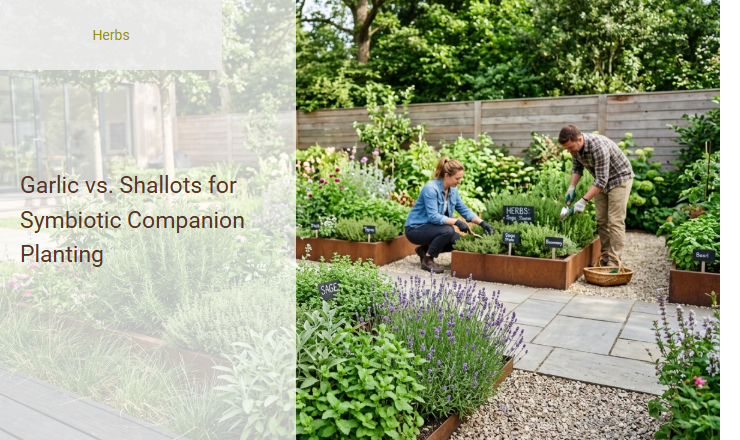
Many home growers struggle to maximize limited garden bed space while managing persistent pests without resorting to harsh chemical interventions. Before selecting your crops, it is crucial to understand how underground root networks and soil chemistry dictate overall garden health. Choosing the correct Allium for your specific microclimate grants your crops a self-sustaining defense system that naturally enhances vigor and flavor.
However, companion planting is not a magical cure-all; its success stipulates that growers first establish proper soil drainage and correct plant spacing. For instance, pairing garlic with roses is a proven method to deter aphids, while planting shallots alongside carrots effectively repels the destructive carrot rust fly.
In this guide, we will analyze the distinct symbiotic profiles of garlic and shallots. We will compare their companion dynamics, spatial requirements, and pest-repelling capabilities to help you design a highly productive, bio-diverse garden layout.
Introduction to Alliums in Companion Planting
In the realm of organic gardening, the Allium family serves as a cornerstone of natural defense and structural diversity. Both garlic and shallots, as prominent members of this botanical group, share key traits such as the production of sulfur-based compounds that naturally repel common garden pests. While they share these defensive characteristics, their distinct growth habits allow them to play unique roles in organic pest management. Gardeners can utilize the intense, pungent barrier of garlic or the space-saving, clump-forming growth of shallots to establish a resilient polyculture. Understanding these subtle differences is essential for designing a highly productive, self-sustaining garden ecosystem where plants thrive through mutualism and natural protection.
Garlic's Natural Defense Mechanism and Benefits
Garlic is widely recognized as a highly potent, biodynamic deterrent in the garden. Its efficacy stems from high concentrations of sulfur compounds, specifically allicin, which are released when the plant tissue is disturbed or during active growth. These compounds emit a strong odor that masks the scent of host plants, effectively confusing and repelling destructive pests.
- Aphid Prevention: The pungent aroma of garlic disrupts the sensory receptors of aphids, preventing them from colonizing nearby crops.
- Spider Mite Control: Regular systemic root exudates from garlic deter spider mites from establishing webs on vulnerable foliage.
- Fungal Suppression: Natural sulfur compounds exuded by garlic roots act as mild systemic fungicides, protecting neighboring root systems from soil-borne pathogens.
Below the surface, garlic roots engage in active biochemical sharing. By releasing sulfur-rich exudates directly into the rhizosphere, garlic alters the soil microbiome to favor beneficial organisms while suppressing harmful bacteria and fungi, creating a healthier underground environment for neighboring companion plants.
The Subtle Strengths of Shallots in the Garden Bed
While garlic commands attention with its intense aroma, shallots offer a quieter, yet highly effective, contribution to the garden ecosystem. Shallots exhibit a unique clump-forming growth habit, producing multiple bulbs from a single planted clove. This growth pattern creates a wider, denser cluster of foliage above ground, which provides excellent physical coverage and helps shade the soil surface.
"The gentle but persistent presence of shallots provides a milder aromatic shield that deters pests without overwhelming the sensory profile of more delicate companion herbs."
Though their scent is notably milder than that of garlic, shallots still possess sufficient sulfur levels to discourage pests like root flies and thrips. Their compact, multi-bulbed spatial footprint makes them exceptionally well-suited for interplanting within tight spaces, offering a structural alternative to the tall, singular stalks of garlic.
Root Architecture and Space Optimization
Efficient resource allocation is key to a successful polyculture. Understanding how garlic and shallots structure their roots allows gardeners to pair them with companions that feed at different soil depths, minimizing nutrient competition.
| Feature | Garlic Root System | Shallot Root System |
|---|---|---|
| Root Type | Fibrous and relatively shallow | Clustered, fibrous, and moderately deep |
| Soil Depth | Mainly top 6 to 12 inches | Concentrated in top 8 to 14 inches |
| Nutrient Uptake | High demand for nitrogen and potassium | Moderate demand, balanced feeding |
Because both alliums feature compact, non-invasive fibrous root systems, they do not aggressively outcompete neighboring taprooted or deep-rooting plants. This makes them ideal partners for vegetables that draw resources from deeper soil layers.
Ideal Companion Plants for Garlic
Symbiotic Companions
Selecting the right partners for garlic can dramatically enhance both crop yield and overall garden health. By planting garlic alongside specific partners, you create a mutually beneficial environment that deters pests and maximizes space.
- Nightshades
- Potatoes, tomatoes, and peppers benefit immensely from garlic's ability to repel spider mites and beetles, while their upright structure does not compete for sunlight.
- Brassicas
- Broccoli, cabbage, and kale are frequently targeted by cabbage worms. Garlic's strong sulfur scent masks these crops, keeping pests at bay.
- Fruit Trees
- Planting garlic around the base of apple or peach trees helps prevent fungal diseases like peach leaf curl and deters boring insects.
Top Symbiotic Partners for Shallots
Favored Plant Partners
Shallots thrive alongside plants that appreciate their mild pest-repelling qualities and non-invasive growth. These combinations foster a balanced ecosystem.
- Carrots: Shallots repel the notorious carrot rust fly, while carrots break up the soil, creating an ideal texture for shallot bulb expansion.
- Chamomile: This herb improves the flavor of shallots and attracts beneficial pollinators to the garden bed.
- Beets: The shallow roots of beets pair beautifully with the compact rooting zone of shallots without competing for vital nutrients.
The Antagonists: What Not to Plant
While alliums are excellent companions for many crops, certain pairings can be highly detrimental. In particular, planting garlic or shallots near legumes such as beans and peas should be strictly avoided.
Alliums produce compounds that cause a chemical inhibition of nitrogen fixation. Legumes rely on a symbiotic relationship with beneficial rhizobia bacteria in the soil to convert atmospheric nitrogen into a usable nutrient form. The antibacterial properties of the sulfur compounds exuded by garlic and shallots disrupt these bacteria, stunting growth and severely reducing the yield of both crops.
Designing a Polyculture Bed with Alliums
Creating an optimized polyculture bed requires careful spatial planning to balance light, nutrients, and pest-repellent barriers. By alternating rows of deep-rooting companions with shallow-rooting alliums, you can maximize your garden's yield.
Layout: Row 1 (Brassicas) - Row 2 (Garlic or Shallots) - Row 3 (Root Crops)
Harvest Timelines and Companion Disturbance
Understanding the temporal dynamics of your garden is crucial when integrating alliums. Garlic and shallots have long growing seasons, often planted in the autumn and harvested in mid-summer. This timeline requires careful coordination to prevent soil disruption during the active growth of neighboring summer crops.
When harvesting alliums, the physical extraction of bulbs can disturb the root zones of adjacent plants. Utilizing a fork-lift method rather than pulling directly helps minimize this damage. This ensures that nearby companions, such as nightshades, continue their growth cycle unhindered by the mid-season harvest.
Choosing the Right Allium for Your Garden Ecosystem
Deciding whether to plant garlic or shallots depends on your specific garden architecture and pest management needs. Garlic is the superior choice if your primary goal is maximum pest deterrence, especially against heavy infestations of aphids or beetles. Its intense aroma creates a highly effective biological shield for large-scale vegetable beds.
Conversely, shallots are ideal for gardeners seeking a higher culinary yield per square foot and a more compact growth habit. Their clump-forming nature is perfect for intensive, small-space gardening where a milder aromatic presence is preferred.
| Companion Aspect | Garlic (Allium sativum) | Shallots (Allium cepa var. aggregatum) |
|---|---|---|
| Best Companions | Tomatoes, peppers, eggplants, cabbage, broccoli, roses, fruit trees. | Carrots, beets, lettuce, spinach, mint, chamomile, brassicas. |
| Pests Deterred | Aphids, spider mites, cabbage maggots, Japanese beetles, codling moths. | Carrot rust fly, aphids, thrips, leafminers. |
| Avoid Planting Near | Beans, peas, asparagus, sage, parsley (stunts growth/impairs flavor). | Beans, peas, asparagus, sage, other close-planted alliums. |
| Root & Space Profile | Deep-rooted, heavy nutrient feeder. Accumulates sulfur to act as a natural fungicide. | Shallow, clustering root systems. Less nutrient-competitive, ideal for surface interplanting. |
Leave a comment