
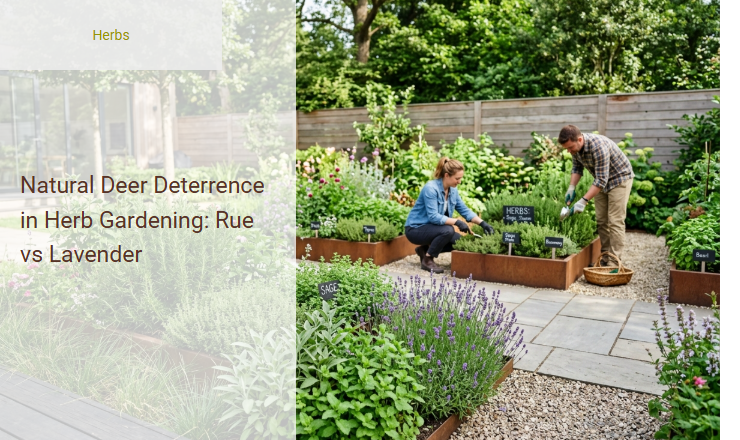
For passionate herb gardeners, few sights are as disheartening as waking up to find meticulously cultivated basils and parsleys decimated overnight by foraging deer. While physical barriers offer some protection, integrating naturally aromatic deterrents directly into your landscape design provides a more sustainable, integrated pest management strategy.
This approach not only safeguards your culinary crops but also enhances the visual and olfactory appeal of your garden. However, it is vital to understand that while certain botanical species are highly effective repellents, no plant is entirely "deer-proof" when foraging resources are scarce.
For instance, the bitter alkaloids in Ruta graveolens (Rue) and the strong linalool compounds in Lavandula (Lavender) act as powerful, natural sensory deterrents. In this guide, we will analyze the cultivation requirements, toxicity profiles, and deterrent efficacy of both Rue and Lavender to help you select the optimal protective border for your herb garden.
Introduction to Natural Deer Deterrence in Herb Gardening
Cultivating a backyard herb garden is a deeply rewarding endeavor, but it often comes with the frustrating challenge of wildlife intrusion. For many gardeners, foraging white-tailed deer can decimate a carefully nurtured plot overnight. Finding a balance between maintaining an organic, beautiful garden and keeping hungry herbivores at bay requires strategic plant selection. Rather than relying on unsightly fencing or harsh chemical sprays, experienced growers utilize the natural defenses of specific plants.
Among the most effective botanical allies in this struggle are Rue (Ruta graveolens) and Lavender (Lavandula). These two popular, highly resilient perennial herbs serve as excellent natural deterrents. Their unique physiological traits make them highly unappealing to deer, offering an organic and aesthetically pleasing solution for protecting more vulnerable garden varieties.
Why Deer Avoid Certain Herbs: The Science of Scent and Taste
To effectively deer-proof a garden, one must understand the sensory biology of the target animal. Deer possess an incredibly acute sense of smell, estimated to be up to 800 times more sensitive than a human's. This highly developed olfactory system is their primary tool for detecting predators and identifying safe forage. When a deer encounters plants rich in concentrated volatile organic compounds, the sensory overload is immediate and repulsive. The intense aroma of certain essential oils signals to the animal that the plant may be toxic or at least highly unpalatable.
In addition to smell, deer rely on a highly sensitive palate. Their tongue and mouth contain receptors designed to detect bitter plant metabolites, such as alkaloids and glycosides, which often correlate with toxicity in the wild. Physical texture also plays a significant role. Leaves that are fuzzy, rough, or leathery are difficult to chew and digest, discouraging browsing. Herbs that combine intense aromas, bitter tastes, and tough physical structures exploit these evolutionary aversions, creating an invisible chemical barrier in your landscape.
Rue (Ruta graveolens): The Bitter Shield
Rue, scientifically known as Ruta graveolens, is an ornamental, woody-based perennial prized for its unique aesthetic and potent defensive properties. Featuring delicate, deeply lobed, bluish-green foliage, this plant adds a distinctive architectural element to the herb garden. Historically, Rue has been cultivated since antiquity as a medicinal herb, a culinary spice in highly controlled quantities, and a reliable pest deterrent due to its incredibly pungent nature.
The plant owes its legendary deer resistance to a complex chemical profile that deer find utterly intolerable. Its primary characteristics and deterrent properties include:
- Rutin Concentration: High levels of the bitter glycoside rutin, which imparts an intensely disagreeable flavor to foraging herbivores.
- Acrid Volatile Oils: A rich cocktail of essential oils, including methyl nonyl ketone, which emits a musty, sharp, and medicinal odor.
- Textural Repulsion: Semi-evergreen, leathery leaves that are unappealing to chew.
- Historical Pest Repellent: Long utilized to ward off fleas, mice, and insects, establishing its reputation as a universal biological shield.
Lavender (Lavandula): The Highly Aromatic Guard
While Rue repels through bitterness and mustiness, Lavender (Lavandula) takes a completely different sensory route. Beloved by humans for its calming aroma and elegant purple blooms, Lavender is a powerful deterrent against deer. The very characteristics that make this Mediterranean native a favorite in aromatherapy and cosmetics are the exact traits that drive deer away from its vicinity.
The secret lies in the concentrated essential oils stored in microscopic glands on the plant's narrow foliage and stems. When brushed against or bitten, these glands rupture, releasing a powerful scent cloud. The structural and aromatic benefits of Lavender include:
- Linalool and Linalyl Acetate: Major chemical constituents that produce a sweet, floral, yet intensely concentrated aroma that overwhelms a deer's sensitive nasal cavities.
- Camphor Content: High concentrations of camphor in certain varieties, adding a sharp, medicinal note that deer strongly dislike.
- Tough, Needle-like Foliage: Narrow, fibrous, and often fuzzy leaves that are difficult for deer to manipulate and digest.
- Durable Woody Structure: A woody growth habit that resists physical damage and maintains its aromatic defense year-round.
Safety and Toxicity: Essential Considerations for Rue and Lavender
While both plants excel at deterring wildlife, their safety profiles for human handling and domestic pets differ dramatically. Understanding these differences is crucial before introducing them into your home garden landscape, especially if children or companion animals frequent the area.
Rue requires a high degree of caution. The plant contains furanocoumarins, which cause severe phototoxicity. When the sap of Rue gets on human skin and is subsequently exposed to sunlight, it can cause phytophotodermatitis, resulting in painful, long-lasting blisters and hyperpigmentation. Additionally, Rue is toxic to cats, dogs, and horses if ingested in significant quantities, potentially causing systemic distress.
In contrast, Lavender is celebrated for its exceptionally safe profile. It is non-toxic to humans and is widely used in culinary creations, teas, and topical applications. While large quantities of lavender essential oil can upset a pet's stomach, the plant itself is generally safe and pet-friendly, making it an ideal choice for high-traffic household gardens where safety is a primary concern.
Cultivating Rue: Soil, Sun, and Hardiness Requirements
Rue is a remarkably low-maintenance plant once established, thrives in challenging conditions, and actually prefers neglect over excessive pampering. It is highly drought-tolerant and stands up well to heat, making it an excellent candidate for xeriscaping and low-water herb gardens.
To cultivate Rue successfully, select a location that receives full sun, meaning at least six to eight hours of direct sunlight daily. It thrives in poor, sandy, or gravelly soils with an alkaline to neutral pH. Excellent drainage is absolutely mandatory, as wet soil or standing water will rapidly cause root rot. Rue is hardy in USDA zones 4 through 9, allowing it to survive harsh winters in many temperate regions. Avoid heavy mulching or over-fertilizing, as highly fertile soils can cause the plant to become floppy and lose its compact, attractive form.
Cultivating Lavender: Soil, Sun, and Variety Selection
Lavender is another sun-loving Mediterranean perennial, but it is somewhat more selective about its growing conditions than Rue. To keep Lavender healthy and intensely aromatic, mimicking its native habitat is the key to success.
Lavender demands maximum sunlight and sandy, alkaline, sharp-draining soil. It is incredibly sensitive to damp roots, so incorporating grit, gravel, or sand into the planting hole is highly recommended. For the best deer resistance and cold tolerance, English Lavender (Lavandula angustifolia) is the premier choice, surviving well in zones 5 through 9. For hotter, more humid climates, French Lavender (Lavandula dentata) or Spanish Lavender (Lavandula stoechas) are excellent alternatives. These varieties produce higher levels of camphor, which increases their overall scent output and provides superior deer deterrence.
Strategic Companion Planting: Designing a Deer-Proof Border
To maximize the effectiveness of these deer-resistant herbs, place them strategically throughout your landscape. Rather than scattering them randomly, create a continuous, protective sensory barrier along the perimeter of your garden beds. This design layout forces browsing deer to encounter the intense smells and bitter tastes of Rue and Lavender first, discouraging them from exploring further inside the garden where more palatable herbs like basil, parsley, and cilantro might be growing.
"For the most robust physical and sensory shield, plant a staggered double border. Place the taller, highly fragrant Lavender varieties in the outermost ring to catch the wind and disperse scent trails, followed by a middle layer of dense, bitter Rue to create a taste barrier that stops curious foragers in their tracks."
This layered approach utilizes both olfactory and gustatory defenses, effectively hiding your prized culinary herbs behind a living, fragrant wall of protection.
Head-to-Head Comparison: Rue vs. Lavender
| Category | Rue (Ruta graveolens) | Lavender (Lavandula) |
|---|---|---|
| Scent Intensity | Extremely high; musty, medicinal, and acrid. | High to extremely high; sweet, floral, and camphorous. |
| Ease of Growth | Very easy; highly adaptable to poor soils and neglect. | Moderate; strictly requires excellent drainage and specific pH. |
| Safety around Children/Pets | Low; phototoxic sap and toxic if ingested. | Very high; non-toxic, pet-friendly, and culinary-grade. |
| Ornamental Value | Moderate; attractive bluish-green foliage with small yellow flowers. | Exceptional; vibrant purple, pink, or white blooms and silver foliage. |
| Secondary Beneficial Uses | Insect repellent and host plant for Giant Swallowtail butterflies. | Culinary use, aromatherapy, craft making, and pollinator attraction. |
Choosing the Best Deterrent for Your Herb Garden
Selecting between Rue and Lavender-or deciding to cultivate both-depends on your unique gardening environment and household needs. If your garden is a sanctuary for children and curious pets, Lavender is the indisputable champion. Its gentle nature, high ornamental value, and culinary versatility make it a low-risk, high-reward choice that repels deer while welcoming beneficial pollinators like bees and butterflies.
On the other hand, if you are battling a severe deer problem in a remote or low-traffic zone of your property, Rue provides an unmatched, highly resilient line of defense. Its intense bitterness offers a level of deterrence that few other plants can match. By understanding the distinct growing habits, sensory profiles, and safety considerations of both herbs, you can design a beautiful, functional, and deer-proof garden that thrives throughout the seasons.
| Comparison Feature | Rue (Ruta graveolens) | Lavender (Lavandula spp.) |
|---|---|---|
| Resistance Level | Extremely High (Virtually immune) | Very High (Highly avoided) |
| Deterrent Mechanism | Acrid bitter taste, strong musty odor, and toxic alkaloids. | Strong aromatic essential oils (linalool) and tough, woody texture. |
| Toxicity & Side Effects | Toxic to mammals; sap causes severe phytophotodermatitis in humans. | Non-toxic; safe for humans and pets, therapeutic aroma. |
Leave a comment