
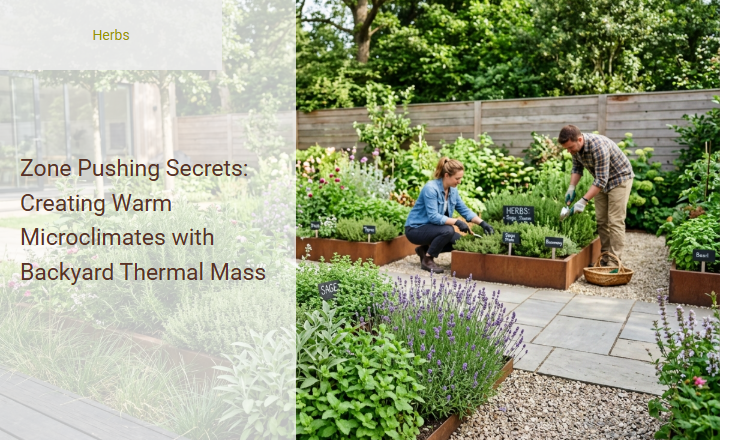
Many passionate gardeners feel defeated by the rigid boundaries of their regional hardiness zones, frequently watching early frosts claim tender crops or exotic specimens. However, successfully bypassing these climate restrictions is not about fighting nature; it requires a fundamental understanding of localized thermodynamics. By mastering backyard thermal mass, you can unlock a warmer microclimate that effectively coaxes your yard into a more temperate zone-without the ongoing energy costs of active greenhouse heating.
To be clear, thermal mass is not a magical heat-generation system; its efficacy relies entirely on strategic solar exposure to act as a passive heat battery. When designed correctly, high-density elements like dark water barrels, stone retaining walls, and brick pathways absorb daytime solar radiation and slowly radiate that warmth during cold nights.
In this guide, we will break down the science of radiant heat transfer, identify the best materials for your layout, and outline step-by-step placement strategies to design a resilient, zone-defying landscape.
Read also: Holy Basil vs Sweet Basil for Indoor Growing
Understanding Zone Pushing and Backyard Microclimates
Gardeners have long been bound by the strict lines of USDA hardiness zones, believing that their geographic location dictates exactly what they can and cannot grow. However, zone pushing offers a liberating alternative. By understanding and manipulating the unique characteristics of your property, you can bypass these rigid boundaries and cultivate plants typically reserved for much warmer climates.
This practice relies on the creation of localized microclimates-small, distinct areas within your backyard where the temperature, humidity, and wind protection differ significantly from the surrounding region. By identifying and enhancing these pockets of warmth, you can successfully overwinter tender perennials, trigger early spring growth, and extend your harvest deep into the cold months.
The Science of Thermal Mass in the Garden
To successfully manipulate your local climate, you must understand the physics of thermal mass. Thermal mass refers to the ability of high-density materials to absorb, store, and later release heat energy. This process is governed by thermodynamic principles that can be harnessed to protect sensitive plants from freezing temperatures.
During the day, high-density objects are bombarded by solar radiation. Instead of reflecting this energy, they absorb it, causing their internal temperature to rise. When the sun sets and the ambient air temperature drops, a thermal gradient is created. The stored heat begins to slowly radiate outward, warming the immediate boundary layer of air surrounding the material. This heat transfer occurs through:
- Conduction, which directly warms soil or plants in physical contact with the mass.
- Radiation, which projects infrared heat waves into the surrounding space.
- Convection, as air warmed by the thermal mass rises and circulates.
Mapping Your Yard for Thermal Opportunities
Before installing new plants, you must conduct a detailed thermal audit of your landscape. Every property is a mosaic of different conditions shaped by topography, wind, and structures. Mapping these variables allows you to strategically place your zone-pushing plants where they have the highest chance of survival.
Follow these steps to complete your backyard thermal audit:
- Track Solar Radiation: Observe your yard at different times of the day to identify areas that receive full, unobstructed sunlight, particularly during the low-angle winter sun.
- Identify Wind Corridors: Note where cold winds sweep through your property, as these drafts strip away heat and accelerate desiccation.
- Locate Existing Hardscapes: Find concrete patios, brick walls, or asphalt driveways that already act as accidental heat sinks.
- Observe Frost Patterns: Walk your yard early in the morning after a light freeze to see where frost melts first and where it lingers in cold pockets.
Harnessing the High Heat Capacity of Water
Water has an exceptionally high specific heat capacity, meaning it requires a significant amount of energy to change its temperature. This makes water one of the most efficient, natural materials for stabilizing microclimates. By positioning large volumes of water near your garden beds, you can buffer against sudden temperature drops and prevent devastating frost damage.
Using dark-colored rain barrels filled with water is an excellent way to absorb maximum solar energy during the day and release gentle, consistent warmth throughout the night.
Additionally, small backyard ponds and galvanized stock tanks act as thermal stabilizers. The surface of the water reflects sunlight toward nearby plants during the day, while the deep reservoir of water retains heat, keeping the boundary layer of air around your tender plants several degrees warmer than the surrounding ambient air.
Building with Stone, Brick, and Concrete
Hardscaping elements offer a permanent, structural way to integrate passive solar heating into your garden design. Dense materials like stone, brick, and concrete possess excellent thermal properties, absorbing intense daytime sunlight and slowly radiating that warmth long after dusk.
You can easily build these materials into your landscape with several practical projects:
- Dry-Stack Stone Walls: Build a low wall behind your planting beds to serve as a beautiful, high-capacity heat collector.
- Brick Pathways: Lay brick paths through your garden beds to warm the soil from the ground up, keeping plant roots cozy.
- Concrete Pavers: Position large concrete pavers directly beneath the canopy of sensitive shrubs to catch and store falling solar energy.
Subsurface Warmth: Hugelkultur and Thermal Soil Beds
To truly push your agricultural zones, you must look below the surface. Soil temperature is critical for plant survival, as active roots can sustain a plant even when the foliage suffers minor frost damage. Implementing subterranean thermal mass techniques, such as Hugelkultur, can generate and retain heat directly within the root zone.
A Hugelkultur bed is a mound built over decaying logs, branches, and organic matter. As the wood slowly decomposes, the chemical reactions release a small, steady amount of metabolic heat, warming the soil from within. Additionally, the porous nature of the decaying wood acts as an underground sponge, retaining warm water and keeping soil temperatures stable throughout the cold winter months.
Strategic Windbreaks to Trap Radiated Heat
Creating thermal mass is only half the battle; you must also protect the warmed air from being swept away by chilly drafts. Cold winter winds cause rapid evaporative cooling and remove the warm boundary layers generated by your stones and water barrels. By installing strategic windbreaks, you can create a sheltered pocket of trapped, warm air.
Consider using these structures to shield your thermal microclimates:
- Dense evergreen hedges, such as arborvitae or yew, which block wind year-round.
- Solid wooden privacy fences that deflect cold northerly winds.
- Trellises covered in thick, persistent vines to filter and slow down aggressive gusts.
Leveraging Slopes and Terracing for Maximum Sun Exposure
The topography of your land plays a massive role in how heat is distributed. Cold air is denser than warm air, meaning it behaves like water, flowing downhill and settling in low points to form dangerous frost pockets. If your property has a slope, you can leverage this natural air drainage to your advantage.
By constructing south-facing terraces with heavy stone retaining walls, you achieve a double benefit. First, you elevate your plants out of the low-lying cold air pathways. Second, you angle the soil surface toward the low winter sun, maximizing solar gain while the stone walls absorb and store the heat to keep frost at bay.
Microclimate Planting Placement Strategies
Once you have identified or built your thermal microclimates, your success depends on exact plant placement. Placing a tender plant even a few inches too far from a thermal heat source can mean the difference between survival and winter kill. You must position your most delicate, zone-pushing specimens strategically to maximize the benefits of your hardscaping.
To optimize placement, keep these rules in mind:
- Plant sensitive shrubs within six to twelve inches of south-facing brick or stone walls.
- Nestle potted cold-sensitive herbs directly between dark rain barrels to enclose them in a warm micro-pocket.
- Place early-blooming plants on the high points of your terraced slopes to avoid the freezing air settling at the base.
Monitoring and Enhancing Your Microclimates Year-Round
Creating microclimates is an ongoing process of observation, experimentation, and refinement. To manage these microclimates effectively, you must gather accurate data on how your yard behaves during extreme temperature fluctuations. Low-tech tools, such as minimum-maximum thermometers placed in different areas of your garden, can help you track real-time temperature variations.
Using thick layers of wood chip mulch around the base of your plants acts as an insulating blanket, locking in the ground heat generated by your subterranean thermal mass.
By monitoring the microclimates you build, you can make informed decisions about when to provide temporary covers or when to expand your collection of zone-pushing plants, ensuring a thriving, biodiverse garden regardless of your official hardiness zone.
Summary
Zone Pushing Secrets: Creating Warm Microclimates with Backyard Thermal Mass explores how ambitious gardeners can defy USDA hardiness zone limitations to grow tender, exotic plants. The core strategy relies on strategically utilizing thermal mass-high-density materials that absorb solar energy during the day and slowly radiate it as heat during chilly nights. This process creates a stabilized microclimate, protecting sensitive plants from sudden frost and extreme temperature swings.
The article highlights practical techniques for integrating thermal mass into backyard designs. Gardeners can use heavy materials like large boulders, brick pathways, concrete retaining walls, and water features such as ponds or dark-colored rain barrels. Positioned correctly, particularly on south-facing slopes or alongside windbreaks, these elements act as natural heaters. By mastering these thermal mass principles, growers can successfully extend their growing seasons, shield vulnerable crops, and cultivate a lush, diverse garden that defies local climate boundaries.
Leave a comment