
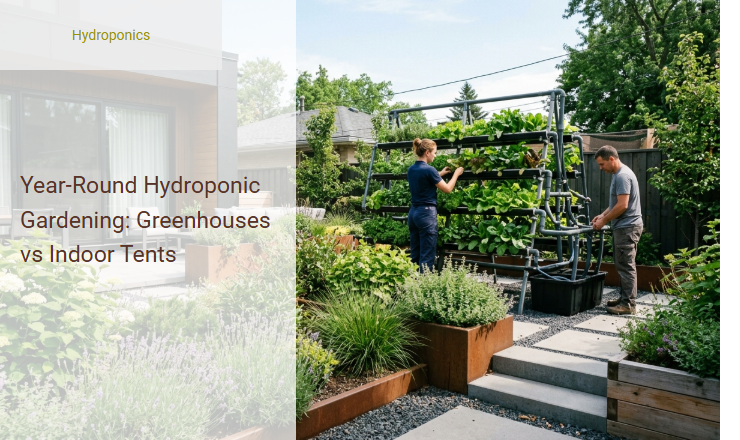
For passionate growers, the arrival of early autumn frost or scorching summer heatwaves often means an abrupt, frustrating end to a successful harvest. To bypass these seasonal limitations, modern cultivators are increasingly turning to Controlled Environment Agriculture (CEA) as a permanent solution. Transitioning to a dedicated CEA setup grants you absolute sovereignty over your crops' microclimate, enabling continuous, high-yield harvests of demanding plants like winter heirloom tomatoes or delicate bibb lettuce regardless of the outdoor forecast.
However, maximizing this potential requires a realistic assessment; neither system is a plug-and-play miracle, and long-term success depends heavily on managing energy costs and equipment footprints. To help you navigate this decision, this article compares the two leading controlled-environment solutions: hydroponic greenhouses and indoor grow tents. We will evaluate their thermal efficiency, setup costs, and spatial demands to help you choose the ultimate year-round cultivation sanctuary.
Introduction to Year-Round Hydroponics
Year-round gardening has transitioned from a specialized hobby into a highly viable method for producing fresh crops regardless of the season. At the heart of this agricultural shift is hydroponics-a soil-free cultivation method that delivers mineral-rich water directly to plant roots. For growers seeking to establish a continuous cultivation cycle, the foundational decision rests on choosing the ideal growth environment. This choice typically sparks a debate between utilizing the natural, open atmosphere of an outdoor greenhouse versus the sterile, hyper-controlled environment of an indoor grow tent.
Greenhouses rely heavily on natural sunlight and passive ventilation, allowing growers to leverage ecological cycles while offering a barrier against extreme weather. Conversely, indoor grow tents rely on absolute isolation and synthetic automation, allowing gardeners to maintain a perfect, micro-managed climate in any residential room. Both methods have distinct strengths that cater to different spaces, budgets, and gardening goals.
Harnessing the Sun: The Hydroponic Greenhouse
Greenhouse hydroponics bridges the gap between traditional soil farming and technical cultivation. By leveraging natural sunlight, growers can significantly reduce their dependency on artificial illumination, optimizing their plant cycles in tandem with the daily progression of the sun. However, successful year-round production in a glazed structure requires careful consideration of structural dynamics and seasonal variables.
Operating a greenhouse hydroponic system involves several key factors:
- Sunlight and Solar Gain: Glazed structures capture radiant energy from the sun, heating the interior naturally and offering full-spectrum light that is difficult for synthetic bulbs to perfectly replicate.
- Construction and Materials: Building a greenhouse requires structural permits, durable framing (like aluminum or wood), and glazing panels made of glass, polycarbonate, or polyethylene film.
- Seasonal Limitations: Winter periods present challenges such as shorter photoperiods and freezing temperatures, which necessitate supplementary heating and artificial lights to maintain consistent harvest schedules.
Precision Control: The Indoor Grow Tent
Indoor grow tents offer an isolated microclimate designed to eliminate the unpredictability of the natural world. Placed inside a spare room, basement, or garage, these fabric structures utilize reflective interior lining to maximize synthetic light efficiency. This setup allows urban growers and hobbyists to cultivate premium crops in environments completely disconnected from the climate conditions outside.
Key benefits of utilizing a dedicated indoor grow tent include:
- Absolute Environmental Isolation: Sealed tents prevent outdoor weather fluctuations, drafts, and light pollution from interfering with delicate growth phases.
- Synthetic Photoperiods: Growers have absolute control over light cycles, using timers to dictate exact vegetative and flowering schedules without relying on seasonal changes.
- Spatial and Urban Convenience: Grow tents occupy minimal footprints and are designed to fit seamlessly into modern living spaces, making year-round farming accessible to apartment dwellers.
Climate Control and Environmental Management
Managing the atmosphere within a growing space dictates the overall health and speed of crop development. Greenhouses and indoor grow tents approach temperature, humidity, and airflow regulation from entirely different operational starting points.
Greenhouse Environmental Challenges
In a greenhouse, climate management is highly reactive to outdoor weather conditions. During warm months, growers must prevent overheating by utilizing automated roof vents, exhaust fans, and wet-wall evaporative cooling systems. In the winter, gas or electric heaters are essential to prevent frost. Humidity levels fluctuate dramatically based on external weather, often requiring powerful commercial dehumidifiers to avoid stagnant air zones that invite rot.
Indoor Grow Tent Environmental Precision
Indoor grow tents require active air exchange to replenish carbon dioxide and control heat generated by grow lights. Because tents reside inside a climate-controlled home, maintaining the target zone is far easier. Basic setups rely on an inline exhaust fan with a carbon filter to pull stale air out while pulling fresh, conditioned room air in. Small clip-on fans ensure continuous interior circulation, while compact humidifiers and dehumidifiers easily maintain targeted vapor pressure deficit targets.
Lighting Dynamics: Natural Sun vs. Artificial Grow Lights
The choice of illumination directly affects plant development, crop cycle speeds, and monthly overhead costs. Greenhouses utilize the unfiltered power of the sun, whereas indoor tents rely entirely on artificial spectra tailored to plant photoreceptors.
| Factor | Greenhouse (Natural Sunlight) | Indoor Grow Tent (LED / HID) |
|---|---|---|
| Light Spectrum | Full, natural solar spectrum containing optimal UV and infrared wavelengths. | Customized spectrums optimized for photosynthetic efficiency. |
| Energy Consumption | Zero baseline cost; supplemental lighting is only needed during overcast winter months. | Moderate to high electrical draw, depending on wattage and run-times (12 to 18 hours daily). |
| Intensity & Control | Fluctuates daily based on cloud cover, geographical location, and seasonal shifts. | Highly consistent intensity that can be dimmed or scheduled precisely via digital controllers. |
While the sun offers a free and complete spectrum, modern LED grow lights can replicate these wavelengths with extreme precision. The stability of artificial lights ensures that indoor growers can achieve consistent, uninterrupted growth phases year-round, whereas greenhouse growers must often adapt to cloudy days and shorter winter light cycles.
Space Constraints and Scalability
The physical environment surrounding your grow operation dictates how large your setup can become. Analyzing spatial footprints helps determine which hydroponic pathway aligns with your long-term expansion goals and immediate physical limitations.
Physical Footprint and Urban Adaptation
Indoor grow tents are inherently restricted by the walls of the dwelling. They are designed to fit inside closets, spare bedrooms, or garages, offering a compact footprint. While this limits overall yield potential per harvest, it makes them exceptionally practical for urban growers who do not have access to an outdoor yard or balcony.
Scaling Up for Larger Harvests
Greenhouses offer vastly superior scalability. If you have outdoor land, a greenhouse can be expanded or built to encompass hundreds of square feet. This allows for massive vertical farming setups, multi-tier hydroponic channels, and a much higher volume of mature crops. Scaling a greenhouse involves adding structure, whereas scaling grow tents typically means purchasing and managing multiple individual tents, which complicates power and ventilation routing.
Financial Breakdown: Upfront Setup and Operating Costs
Embarking on a year-round hydroponic journey requires balancing immediate capital investments against ongoing monthly operational costs. Budgetary limits often play a deciding role in which system is most viable.
Initial Capital Investment
An indoor grow tent setup requires a relatively low initial investment. A hobbyist can purchase a complete kit, including the tent, LED grow lights, inline ventilation fans, and a small hydroponic system, for a modest upfront price. In contrast, building a durable, weather-resistant greenhouse demands significant initial capital. Foundations must be prepared, framing and glazing materials purchased, and professional utility connections are often necessary.
Ongoing Operating Costs
Operating a greenhouse year-round relies primarily on heating during the winter and mechanical cooling during the summer. While solar energy is free, running high-draw heaters can cause utility bills to spike in cold climates. Indoor tents draw consistent, predictable power for synthetic lights and ventilation. Though their monthly electrical draw is higher during the summer compared to a passive greenhouse, their overall utility costs remain stable and predictable throughout the entire calendar year.
Pest Prevention and Disease Control
Maintaining biosecurity is critical to preventing crop loss. Because pathogens and pests thrive in high-humidity hydroponic systems, understanding how to defend your cultivation zone is vital to keeping plants healthy.
Biosecurity measures and risks differ significantly between the two systems:
- Greenhouse Exposure Risks: Because greenhouses are situated outdoors, they are highly susceptible to pests like aphids, thrips, and spider mites entering through ventilation vents or structural seams.
- Indoor Isolation Advantages: Sealed grow tents act as physical quarantine zones. Pests can only enter if carried in by the grower or introduced via contaminated clone plants.
- Pathogen Spread Dynamics: Greenhouse environments face rapid temperature swings that can create condensation on leaves, leading to fungal diseases like powdery mildew, whereas indoor tents can maintain optimal airflow to prevent moisture buildup.
Crop Yields, Quality, and Consistency
The ultimate measure of any hydroponic system is the predictability, flavor, and volume of the harvest. Regulating all variables allows growers to maximize the genetic potential of their plants.
Consistent Quality in Controlled Tents
Indoor grow tents excel at producing highly consistent harvests. Because the light spectrum, temperature, and feeding schedules are maintained without variance, crops develop in a uniform manner. Growers can expect identical growth rates, flavors, and cannabinoid or terpene profiles across sequential harvests, ensuring a standardized product year-round.
High Yield Potential in Greenhouses
Greenhouse yields can be massive during peak seasons when plants receive intense, natural solar radiation. However, seasonal changes can cause fluctuations in crop consistency. Winter harvests may have slightly lower yields or slower growth times unless supplementary lighting and heating are perfectly optimized. The flavor profiles of greenhouse crops are often praised for their complexity, as natural sunlight stimulates full secondary metabolite production in ways that synthetic lighting struggles to replicate.
Making the Choice: Greenhouses vs. Grow Tents
Deciding between a greenhouse and an indoor grow tent requires evaluating your personal resources, geographic climate, and cultivating goals. Both options are capable of producing exceptional hydroponic yields when managed correctly.
Consider the following decision framework to guide your investment:
- Choose a Greenhouse if: You have ample outdoor yard space, live in a region with high sunny days, want to minimize electrical usage, and plan on scaling up your plant volume significantly.
- Choose an Indoor Grow Tent if: You live in an urban apartment or suburban home, require a hyper-controlled environment, want protection from extreme outdoor pests, and prefer consistent, automated harvests throughout all seasons.
By matching your choice to your budget and available space, you can secure a sustainable, productive hydroponic garden that flourishes all year long.
| Comparison Metric | Greenhouses | Indoor Grow Tents |
|---|---|---|
| Primary Light Source | Natural sunlight; requires supplemental lighting in winter. | 100% artificial (LED/HPS); fully controllable photoperiod. |
| Climate Control | Vulnerable to ambient weather; high heating/cooling demands. | Highly insulated; precise microclimate manipulation. |
| Capital Expense (CapEx) | High; requires site prep, permits, and structural build. | Low to moderate; rapid assembly, plug-and-play kits. |
| Operating Expense (OpEx) | Lower; utilizes free solar energy for light and daytime heat. | Higher; continuous electricity draw for lights and ventilation. |
| Pest & Pathogen Risk | High; soil contact and ventilation admit outdoor pests. | Minimal; sealed environment prevents vector entry. |
| Space & Scalability | High footprint; optimal for large-scale crop volumes. | Limited footprint; constrained by residential indoor space. |
Leave a comment