
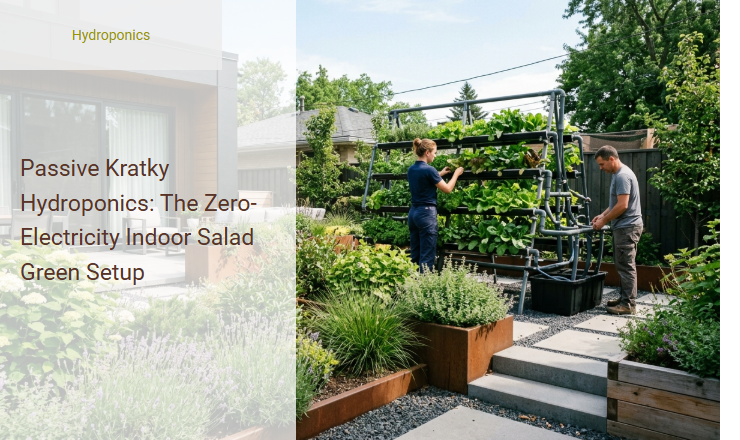
For many indoor gardeners, the dream of year-round harvesting is often derailed by the realities of active hydroponics: soaring electricity bills, noisy water pumps, and complex plumbing systems that require constant monitoring. While these high-tech setups certainly yield results, they introduce a level of complexity and utility cost that often frustrates the casual grower.
Passive Kratky hydroponics offers an elegant bridge, granting you a continuous supply of fresh, pesticide-free greens with zero electricity and virtually no ongoing maintenance. This method relies on a static nutrient solution that naturally recedes as the plant grows. It is important to stipulate, however, that this hands-off approach is highly specialized; it is optimized specifically for fast-growing leafy crops-such as butterhead lettuce, spinach, and baby kale-rather than heavy-fruiting plants.
In this guide, we will break down the essential components of a Kratky setup, outline the step-by-step assembly, and share key maintenance protocols to ensure your indoor salad bar thrives.
Read also: Kratky vs DWC for Lettuce Growth
Introduction to Passive Kratky Hydroponics
The Kratky method is a revolutionary passive hydroponic technique that allows anyone to grow fresh produce indoors without complex machinery. Developed by Dr. Bernard Kratky at the University of Hawaii, this system requires zero electricity, making it one of the most sustainable gardening methods available. Because there are no moving parts, the start-up costs are extremely low, and the system demands minimal maintenance once established.
For urban dwellers and indoor gardeners, this hands-off approach is the perfect setup for growing fresh salad greens. You simply set up the system, place it in a well-lit area, and watch your leafy crops thrive with almost no daily intervention.
The Science Behind the No-Pump System
Unlike traditional hydroponic setups that rely on noisy air pumps and airstones to oxygenate the water, the Kratky method leverages basic plant biology and physics. As the seedling consumes the nutrient-rich water, the liquid level inside the container steadily drops. This receding water level creates an expanding "air zone" within the reservoir.
The plant adapts by developing two distinct types of roots. The upper roots, known as adventitious roots, hang in this damp, oxygen-rich air zone to breathe. Meanwhile, the lower roots remain submerged in the nutrient solution to drink and absorb essential minerals. This natural division of labor allows the plant to flourish without any artificial aeration.
Essential Materials for Your DIY Setup
Building your own passive hydroponic system is simple and requires only a few inexpensive, readily available items. Gather the following materials to construct your DIY Kratky reservoir:
- Food-grade container: A 1-gallon to 5-gallon plastic bucket, jar, or tote with a secure lid (ensure it is opaque to block light).
- Net cups: Mesh baskets (typically 2-inch or 3-inch) that hold the plant and fit securely into the container lid.
- Growing media: Inert materials like clay pebbles (LECA) or coco coir to support the plant stem.
- Grow plugs: Rockwool cubes or rapid rooters for germinating seeds.
- Hydroponic nutrients: A high-quality, water-soluble fertilizer formulated specifically for leafy greens.
Top Salad Green Varieties for Kratky Growing
Not all plants are suited for passive hydroponics, but fast-growing leafy greens are the absolute gold standard for this system. Here are the top varieties that yield incredible results:
- Butterhead Lettuce: Renowned for its tender leaves and sweet flavor, Butterhead grows exceptionally fast and adapts perfectly to static water levels.
- Spinach: A nutrient-dense option that thrives in cooler indoor temperatures and produces high yields within a few weeks.
- Kale: Highly resilient and productive, dwarf kale varieties can be harvested continuously for months.
- Arugula: Ideal for gardeners who enjoy a peppery kick; it germinates rapidly and is ready to harvest in record time.
Mixing Your First Nutrient Solution
To ensure healthy growth, you must provide your salad greens with the perfect balance of minerals dissolved in water. Follow these steps to mix your nutrient solution:
- Fill your clean reservoir with tap water or filtered water, leaving a small amount of room at the top.
- Add your specialized hydroponic fertilizer according to the manufacturer's instructions, ensuring you mix the nutrients thoroughly.
- Use a pH meter to test the acidity of your solution; salad greens grow best in a pH range of 5.5 to 6.5.
- If necessary, adjust the pH using organic "pH Up" or "pH Down" solutions to reach the target range.
- Fill the reservoir up to the point where the bottom of the net cup is submerged in exactly one-half inch of the nutrient water.
Germinating Seeds in Net Cups
A successful Kratky garden begins with healthy sprouts. To germinate your seeds, place one or two salad green seeds into a pre-moistened rockwool cube or organic grow plug. Keep the plug damp but not waterlogged, as excess moisture will starve the seeds of necessary oxygen.
Keep the seeds in a warm, dark place until they sprout. As soon as the first tiny green leaves emerge, move them to a sunny window or under grow lights. Allow the seedlings to grow for about one to two weeks until you see roots starting to poke through the bottom of the grow plug, signaling they are ready for the main reservoir.
Setting Up for Optimal Growth
Once your seedlings have established strong starter roots, it is time to move them into their permanent home. Secure the grow plugs inside your net cups, stabilizing them with clay pebbles. Gently lower the net cup into the cutout on your reservoir lid, making sure the bottom of the cup touches the nutrient solution to feed the young roots.

Managing the Air Gap as Plants Grow
As your salad greens consume the water, the liquid level inside the container will steadily drop. This creates a critical physical gap between the bottom of the net cup and the surface of the water. New growers often feel tempted to top up the reservoir, but doing so will drown the plant.
Harvesting Your Continuous Salad Bar
One of the greatest joys of growing salad greens at home is the ability to enjoy a continuous, fresh harvest right from your kitchen counter. To maximize your yield, use the smart "cut-and-come-again" method:
- Always harvest the outer, mature leaves first using sharp, clean scissors.
- Leave the center growing bud intact so the plant can continue to produce new leaves.
- Never harvest more than one-third of the total foliage at a single time to avoid shocking the plant.
- Using this selective harvesting technique ensures you can enjoy fresh greens from the same plant for several weeks.
Troubleshooting Common Kratky Issues
While the Kratky method is highly hands-off, you may occasionally run into minor challenges. Here is how to diagnose and solve common issues quickly:
- Algae Growth
- Algae thrives when light penetrates the reservoir. Ensure your container is completely opaque by wrapping it in foil, dark tape, or paint.
- Root Rot
- If roots turn brown and slimy, they are lacking oxygen. Ensure your air gap is wide enough, and never overfill the container when topping off.
- Leggy Seedlings
- Seedlings grow tall, thin, and weak when they do not receive enough light. Move your setup closer to a south-facing window or use a dedicated LED grow light.
- Nutrient Deficiencies
- Yellowing leaves often indicate a pH imbalance or depleted nutrients. Flush the reservoir and mix a fresh batch of pH-balanced nutrient solution.
Summary
The Kratky method of passive hydroponics offers a simple, cost-efficient, and electricity-free solution for growing fresh salad greens and herbs indoors. Unlike active hydroponic systems, this "set-it-and-forget-it" technique requires no water pumps, air stones, or electricity, making it completely silent and highly accessible for beginners.
In a Kratky setup, plants are suspended in net pots filled with growing media over a reservoir of nutrient-rich water. As the plants grow and consume the liquid, the water level naturally drops. This receding water level creates a crucial "air zone" that allows the upper roots to absorb oxygen, while the lower roots continue to drink the remaining nutrients. Ideal for fast-growing leafy greens, this low-maintenance method allows anyone to easily cultivate a thriving indoor garden using basic household containers with minimal effort and zero utility costs.
Leave a comment