
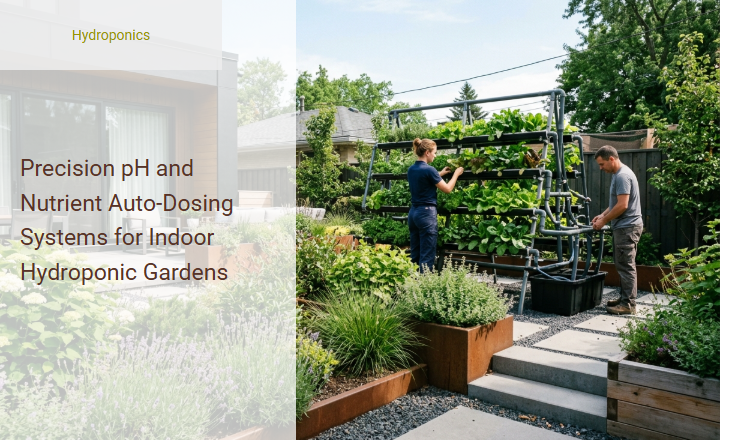
Managing an indoor hydroponic reservoir often feels like an exhausting, 24/7 balancing act. For many growers, the constant chore of manual testing and chasing stable ppm levels is the primary bottleneck to scaling their yields. In water-based cultivation, plants lack the natural buffering capacity of soil, meaning even minor environmental shifts can rapidly destabilize your water chemistry.
Transitioning to precision pH and nutrient auto-dosing systems grants growers ultimate environmental control, unlocking explosive growth rates and a much-needed peace of mind. However, automation is not a hands-off miracle; these systems stipulate rigorous initial calibration and routine sensor cleaning to remain reliable. Without proper oversight, a drifted probe can easily trigger catastrophic nutrient burn or calcium lockout. In this guide, we will analyze how modern auto-dosers function, compare the leading systems on the market, and outline the essential maintenance protocols required to protect your harvest.
Read also: Peristaltic Pump vs Diaphragm Pump for Auto Dosing
Introduction to Hydroponic Automation
Indoor gardening has evolved from simple soil pots to highly controlled environments. Manual monitoring of water parameters is rapidly becoming obsolete. Today, precision pH and nutrient auto-dosing systems are revolutionizing the industry, replacing manual test kits with continuous, automated adjustments. This shift ensures that crops receive the ideal environment every second of the day, leading to unparalleled growth rates.
The Critical Role of pH and Nutrient Balance
In hydroponics, plants absorb essential elements directly from the water. If the pH level shifts outside the optimal range, a phenomenon known as nutrient lockout occurs, where the roots cannot absorb vital minerals despite their presence in the reservoir. Maintaining a stable Electrical Conductivity (EC) level ensures that osmotic pressure is perfectly balanced, promoting rapid root development and preventing nutrient burn.
How Auto-Dosing Systems Work
The technical process begins when real-time sensors continuously read the reservoir's chemistry. The central controller processes these signals, comparing them to the target values programmed in the controller's memory, such as target_pH = 5.8 or target_EC = 1.8. If a deviation is detected, the controller triggers the activation of peristaltic pumps to inject precise micro-doses of pH adjusters or concentrated nutrients into the water loop.
Key Components of a Precision Dosing System
- pH Probes: Glass electrodes that measure hydrogen-ion activity.
- EC Sensors: Electrical conductivity probes that assess total dissolved solids.
- Dosing Pumps: Peristaltic pumps that deliver precise liquid volumes without direct contact.
- Central Microcontrollers: The brain of the system, handling sensor data processing.
Major Benefits of Automated Nutrient Management
Automated dosing removes human error and provides plants with constant access to nutrients. This leads to accelerated vegetative growth and significantly higher yields, while also optimizing water conservation by preventing the need for frequent reservoir dumps.
An automated reservoir creates a highly stable root zone, allowing plants to focus energy entirely on vigorous flower and fruit production.
Step-by-Step Installation Guide
- Prepare the reservoir: Clean the water tank and ensure proper circulation with a submersible pump.
- Mount the controller: Install the main auto-doser unit on a wall away from direct water splashes.
- Position the sensors: Submerge the pH and EC probes in a high-flow area of the reservoir.
- Connect the dosing lines: Run food-grade tubing from your nutrient bottles through the peristaltic pumps to the water.
Calibrating Your Sensors for Maximum Accuracy
To prevent dosing errors caused by sensor drift, a regular maintenance protocol is essential. Probes must be calibrated using standard reference solutions at set intervals to guarantee reliable readings.
- Rinse the pH probe with distilled water before beginning calibration.
- Submerge the probe in a pH 7.0 calibration buffer and wait for the reading to stabilize.
- Repeat the process using a pH 4.0 or 10.0 reference solution depending on your target range.
- Calibrate the EC sensor using a known standard conductivity solution, usually 1413 microSiemens.
Selecting Compatible Nutrients and Additives
When utilizing automated peristaltic pumps, the physical properties of your liquid fertilizers are just as important as their chemical makeup. It is highly recommended to use fully dissolved, synthetic nutrients that flow easily through narrow tubing.
Troubleshooting Common Auto-Dosing Issues
- Pump Siphoning: This occurs when the nutrient bottles are placed higher than the reservoir, causing gravity to pull liquid through the pump. Keep bottles below the reservoir level to prevent this.
- Sensor Drift: Dirty probes lead to inaccurate readings and potential over-dosing. Clean probes monthly with a soft brush and calibration solution.
- Over-Dosing: Caused by rapid dosing without adequate mixing time. Use incremental delay settings in your controller software to allow elements to disperse fully.
The Future of Smart Hydroponics and IoT Integration
The landscape of indoor cultivation is rapidly transitioning toward fully connected ecosystems. Future setups will leverage AI-driven dosing algorithms that analyze historical growth trends to predict nutrient demands before deficiencies occur. Through IoT cloud monitoring and dedicated smartphone apps, growers can monitor, adjust, and optimize their reservoirs from anywhere on the globe, ensuring that intelligent automation handles the heavy lifting of modern agriculture.
Summary
Precision pH and nutrient auto-dosing systems represent a major technological advancement in indoor hydroponic gardening, transitioning cultivation from manual, error-prone monitoring to automated precision. These systems utilize advanced sensors to continuously analyze the reservoir's pH and Electrical Conductivity (EC) levels. When fluctuations occur, the system automatically dispenses precise micro-doses of pH adjusters or concentrated liquid nutrients to maintain the optimal feeding profile.
By stabilizing the root-zone environment, auto-dosing effectively prevents nutrient lockout, minimizes plant stress, and accelerates growth cycles. For indoor growers-ranging from hobbyists to commercial vertical farming operations-integrating automated dosing systems is vital for reducing labor, conserving resources, and maximizing crop yields. Ultimately, this technology ensures consistent, high-quality harvests by delivering the exact chemical balance plants need to thrive, empowering growers to scale their operations efficiently while maintaining rigorous quality control.
Leave a comment