
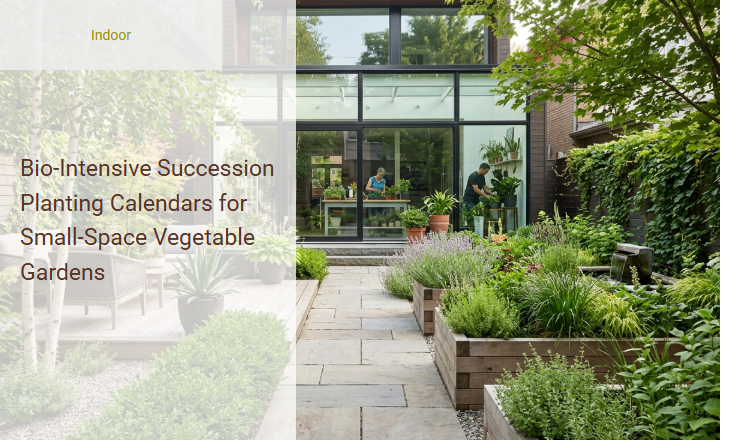
For small-space gardeners, the frustration of watching a prized raised bed sit empty or underproduce after the mid-summer harvest is a common struggle. Traditional gardening guides often assume acres of available land, leaving urban and suburban growers with few resources tailored to high-density layouts. By adopting bio-intensive succession planting, however, you can unlock continuous, bountiful yields from the exact same square footage.
Importantly, achieving these results requires a shift from casual sowing to precise, calendar-driven planning. For instance, transitioning a single plot from quick-maturing spring radishes immediately into nutrient-efficient bush beans, followed by hardy winter brassicas, demands calculated timing and proactive soil replenishment.
This article provides the step-by-step bio-intensive calendars, regional timing templates, and crop-rotation strategies needed to keep your micro-plot highly productive and vibrant all year long.
Read also: Smart Plugs vs Manual Timers for Grow Lights
Introduction to Bio-Intensive Succession Planting for Small Spaces
Maximizing agricultural yield in limited environments requires a smart combination of ecological science and space management. By pairing bio-intensive gardening practices with structured succession planting, backyard growers and urban homesteaders can produce an abundance of fresh vegetables from tiny plots, raised beds, or balconies. This integrated approach ensures that every square inch of soil is actively supporting plant life throughout the growing season.
The bio-intensive method focuses on creating deep, highly fertile soil environments that allow plants to be grown much closer together than in traditional row farming. When you layer succession planting on top of this framework-sowing new crops immediately as soon as others are harvested-you eliminate empty garden space and prevent productivity gaps. Together, these strategies unlock the full potential of your micro-garden, turning spatial limitations into high-yielding opportunities.
Core Principles of the Bio-Intensive Method
Deep Soil Preparation
The foundation of any bio-intensive system is double-digging or creating deeply loosened, aerated raised beds. Loosening the soil to a depth of up to 24 inches allows plant roots to grow vertically downward rather than spreading horizontally. This vertical root development means you can pack crops much closer together without root systems competing aggressively for space and nutrients.
Close hexagonal Spacing
Instead of planting in rows, bio-intensive gardening utilizes an offset, hexagonal grid pattern. This tight spacing creates a living mulch: as the plants mature, their leaves touch, shading the ground below. This dense canopy blocks sunlight from weed seeds and dramatically reduces water evaporation from the soil surface.
- Moisture Retention: Shaded soil stays cool and retains hydration longer.
- Weed Suppression: Minimal sunlight reaches the soil, preventing weed germination.
- Microclimate Creation: Low-lying humidity is preserved under the leafy canopy.
- Yield Optimization: More plants are grown per square foot compared to row cropping.
Companion Planting
Interplanting mutually beneficial species maximizes spatial efficiency. Deep-rooted crops can be grown alongside shallow-rooted ones, while tall, sun-loving varieties provide shade for delicate, low-growing greens, creating a multi-layered ecosystem in a single bed.
Demystifying Succession Planting
Succession planting is the practice of staggering planting dates or choosing varieties with different maturation times to ensure a continuous stream of harvests. Rather than dealing with a sudden glut of a single vegetable followed by weeks of empty beds, succession techniques keep the garden consistently productive.
- Interval Planting: Sowing the same crop every 7 to 14 days to ensure steady, staggered harvests of fast-growing vegetables like radishes, lettuce, and spinach.
- Relay Planting: Sowing a new crop directly between the rows of an established crop that is nearing the end of its life cycle, allowing the young plants to take over as the mature ones are removed.
- Crop Rotation: Clearing out a finished crop entirely and immediately replanting the empty bed with a different family of vegetables to balance nutrient uptake.
Assessing Your Small-Space Microclimate
Before implementing a high-density succession plan, you must analyze the unique environmental factors of your growing area. Wind patterns, building shadows, and thermal mass (such as concrete walls or brick patios) can drastically alter how plants grow in tight urban spaces.
Critical Sun Mapping Tip: Track the exact hours of direct sunlight your space receives during different seasons. A spot that receives full sun in June might be completely shaded by a neighboring building in September as the angle of the sun changes. Use this data to place high-light crops like tomatoes in permanent sun zones, and reserve shifting shade zones for cool-season leafy greens.
In addition to sun exposure, take note of wind tunnels created by nearby structures. Strong drafts can rapidly dehydrate potted plants and snap delicate stems, meaning windbreaks or sturdy trellises should be factored directly into your layout.
Top Crops for High-Density Succession Systems
Choosing the right crop varieties is crucial for small-space success. Look for compact, fast-maturing, or "cut-and-come-again" vegetables that recover quickly and tolerate close physical contact with their neighbors.
| Vegetable Variety | Recommended Spacing (Inches) | Days to Maturity | Best Succession Role |
|---|---|---|---|
| Radishes (e.g., Cherry Belle) | 2 - 3 | 21 - 30 | Excellent fast filler between slower crops. |
| Spinach (e.g., Bloomsdale) | 4 - 6 | 40 - 45 | Perfect for early spring and late autumn relaying. |
| Bush Beans (e.g., Provider) | 6 - 8 | 50 - 55 | Mid-summer nitrogen fixer to prep soil for autumn greens. |
| Baby Leaf Lettuce Mix | 3 - 4 | 30 - 35 | Continuous cut-and-come-again harvest option. |
| Dwarf Kale (e.g., Lacinato) | 8 - 10 | 55 - 60 | Long-standing crop that thrives under taller summer plants. |
The Spring to Summer Succession Calendar
The transition from cool-season spring greens to heat-loving summer crops is the busiest phase of the garden calendar. Success depends on timing the removal of spring crops just as summer seedlings are ready to take their place.
March to April
- Sow cold-hardy varieties like spinach, radishes, arugula, and peas.
- Start warm-season seeds (tomatoes, peppers, basil) indoors under grow lights.
- Apply row covers to warm the soil and protect early outdoor sowings from frost.
May to June
- Harvest early spring greens to create planting pockets.
- Interplant tomato and pepper transplants directly into the spaces cleared of spring crops.
- Sow bush beans and summer squash as the soil reaches optimal warm temperatures.
The Late Summer to Autumn Succession Calendar
To keep your garden active through autumn and even into winter, you must sow cool-season crops during the heat of late summer. This requires careful management to protect sensitive seedlings from the harsh mid-summer sun.
July to August
- Sow seeds for autumn carrots, beets, kale, and winter lettuce under the shade of mature summer crops.
- Keep the soil consistently moist; use shade cloths to reduce thermal stress on emerging fall seedlings.
- Prune back exhausted summer squash and beans to allow light to reach the new fall plantings.
September to October
- Remove remaining warm-season plants like tomatoes and peppers after the final harvest.
- Plant quick-maturing greens and radishes to utilize the remaining daylight hours.
- Install cold frames, low tunnels, or cloches to protect cold-hardy crops from early frosts.
Practical Implementation: Direct Sowing vs. Transplanting
To keep a bio-intensive bed running at 100% capacity, you must minimize "down time"-the period when a piece of ground is waiting for seeds to germinate. Direct sowing seeds into the garden means that square footage is occupied by non-productive ground for days or weeks.
Transplanting is the preferred method for the majority of crops in a bio-intensive system. By raising seedlings in modular trays or soil blocks in a separate nursery area, you can grow them to a sturdy, multi-leaf stage while another crop is finishing up in the main bed. The moment the old crop is harvested, the young transplant is popped into the ground, skipping the germination phase in the main garden entirely.
Soil Regeneration and Nutrient Management
Growing plants in close proximity back-to-back quickly depletes the soil of nutrients. To maintain fertility in a high-intensity system, you must constantly replenish organic matter between plantings rather than waiting until the end of the season.
Every time a crop is cleared, gently loosen the soil and work in a fresh, one-inch layer of well-rotted compost and a light dusting of organic multi-purpose fertilizer. This immediate infusion of microbial life and macro-nutrients ensures the incoming transplants have immediate access to the fuel they need for rapid, unchecked growth.
Troubleshooting Common High-Density Challenges
While bio-intensive succession planting offers incredible yields, the tight packing of plants creates specific ecological conditions that require vigilant monitoring and quick intervention.
- Rapid Nutrient Depletion
- The high density of plants can exhaust soil minerals quickly. Remedy this by watering with diluted organic compost tea or liquid seaweed every two weeks to provide quick, bio-available nutrition.
- Fungal Diseases (e.g., Powdery Mildew)
- Dense foliage restricts airflow, trapping humidity. Prevent issues by watering directly at the soil level using drip irrigation or a watering can with a narrow spout, avoiding wetting the leaves.
- Rapid Pest Spread
- When plants touch, pests like aphids or spider mites can move effortlessly from one plant to another. Inspect under leaves weekly and introduce beneficial insects or apply organic insecticidal soap at the first sign of an infestation.
Summary
This article explores the principles and practical application of bio-intensive succession planting calendars, specifically tailored to maximize productivity in small-space vegetable gardens. By combining bio-intensive cultivation methods-such as close plant spacing and companion planting-with meticulous succession scheduling, gardeners can achieve a continuous, abundant harvest from limited acreage.
The guide highlights key strategies for seamless crop transitions, emphasizing the use of high-quality transplants over direct seeding to save valuable bed space and time. It outlines how to select fast-maturing varieties and structure planting schedules based on local frost dates. Additionally, the article addresses the vital role of soil fertility, explaining how continuous compost applications and organic amendments sustain the high demands of back-to-back plantings. Ultimately, these tailored calendars serve as an essential roadmap for urban and small-scale growers aiming to optimize spatial efficiency and maintain a resilient backyard food system.
Leave a comment