
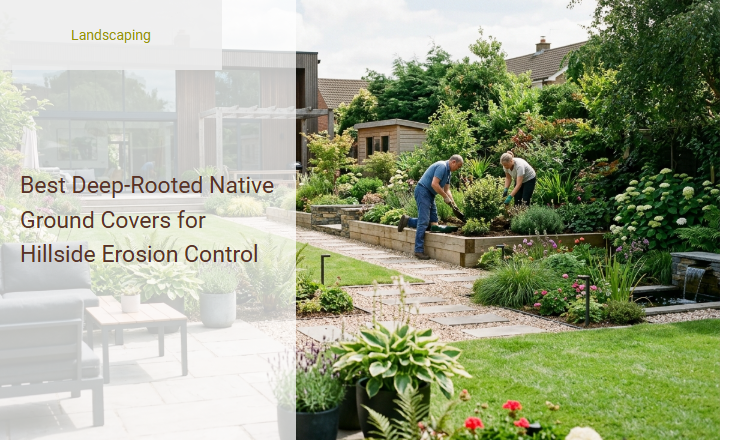
Managing a steep slope is a constant battle against gravity, especially when heavy rains wash away precious topsoil and threaten your landscape's structural integrity. While concrete retaining walls offer a mechanical fix, they are often prohibitively expensive and disrupt the natural hydrology of your property.
Instead, utilizing native vegetation grants you a self-healing, cost-effective bio-barrier that enhances local biodiversity while permanently binding the soil. However, successful ecological erosion control stipulates that these species require an initial establishment phase-often requiring temporary netting-before their subterranean root networks can fully anchor the hillside.
Deep-rooted powerhouses like Creeping Juniper (Juniperus horizontalis) and fragrant Wild Ginger (Asarum canadense) serve as living proof of nature's superior engineering. In this guide, we will analyze the premier native ground covers categorized by sunlight requirements, soil compatibility, and root depth to help you select the ideal living armor for your landscape.
Read also: Pine Straw vs Cedar Mulch for Sloped Gardens
Understanding the Threat of Hillside Erosion
Hillside erosion is a silent accelerator of landscape degradation. When steep slopes are stripped of vegetation, gravity and water conspire to strip away precious topsoil, carving deep gullies and destabilizing the entire hillside. This process is driven by rainfall impact, wind exposure, and the sheer force of gravity pulling loose earth downward. For homeowners, the consequences can be catastrophic, leading to compromised structural foundations, ruined landscapes, and costly property damage. On a broader scale, natural ecosystems suffer as silt and sediment wash into local waterways, choking aquatic life and disrupting delicate riparian habitats.
While engineered concrete retaining walls are often the default response to a failing slope, they are incredibly expensive, prone to cracking over time, and disrupt natural water patterns. A more sustainable, cost-effective, and ecologically sound solution lies in the biological armor of deep-rooted native ground covers. These living retaining walls heal the soil naturally, absorbing rainwater where it falls rather than deflecting it elsewhere.
According to conservation research, unvegetated slopes can lose up to 100 times more soil per year than those protected by mature native ground covers. Investing in biological stabilization not only secures the earth but also fosters a thriving local ecosystem.
How Deep-Rooted Plants Stabilize Soil
The practice of utilizing living vegetation to secure slopes is known as soil bioengineering. Rather than relying on rigid, lifeless barriers, this methodology utilizes the dynamic, self-healing properties of plant root systems. Deep roots act as a vast network of natural underground rebar, binding loose soil particles together and anchoring the upper soil layers directly to the stable bedrock or deeper subsoil below.
This biological network dramatically increases the soil's shear strength, making it highly resistant to sliding under the weight of heavy saturation. Furthermore, the above-ground foliage of these plants acts as a physical buffer, intercepting raindrops before they can strike bare soil, thereby reducing runoff velocity. Simultaneously, the root channels create micro-pathways that significantly improve moisture infiltration, allowing water to gently soak into the slope rather than rushing violently down it.
"Vegetation is not merely a cosmetic cover; it is a dynamic structural system. The root tensile strength of native plants serves as a biological anchor that outperforms synthetic geotextiles over time."
- Dr. Elena Vance, Soil Bioengineering Specialist
Deciduous Woody Ground Covers for Tough Slopes
Deciduous woody ground covers are exceptional choices for challenging inclines. Their woody root systems are incredibly tough and aggressive, pushing through compacted, nutrient-poor soils while providing beautiful seasonal changes in foliage and form.
Fragrant Sumac 'Gro-Low' (Rhus aromatica 'Gro-Low')
This low-growing, spreading shrub develops an expansive root network that binds soil exceptionally well. It features glossy green summer foliage that turns brilliant shades of orange, red, and purple in autumn. It is highly adaptable and thrives even in dry, rocky, and low-fertility soils.
- Soil Preference: Dry to medium, well-drained soils; highly tolerant of acidic or alkaline conditions.
- Mature Height: 1 to 2 feet (with a spread of 6 to 8 feet).
- Hardiness Zones: 3 to 9.
Red Osier Dogwood (Cornus sericea)
For slopes that experience seasonal wetness, the Red Osier Dogwood is an outstanding stabilizer. Its roots form dense underground thickets that hold shifting soils firmly in place, while its bright red winter stems provide striking visual interest against snowy backdrops.
- Soil Preference: Moist, wet, or clay soils; can tolerate occasional standing water.
- Mature Height: 6 to 9 feet (can be pruned or kept lower via stooling).
- Hardiness Zones: 2 to 7.
Evergreen Ground Covers for Continuous Protection
For year-round defense against the elements, native evergreen ground covers are indispensable. Unlike deciduous varieties, their persistent foliage remains intact through the coldest months, protecting the soil surface from the physical impact of heavy winter rains and abrasive winds while maintaining a lush green landscape.
Creeping Juniper (Juniperus horizontalis)
Creeping Juniper is a classic choice for hot, dry, wind-swept slopes. It forms a dense, carpet-like mat that completely covers bare soil, suppressing weeds and holding the earth firmly beneath its sprawling, evergreen branches.
- Sunlight Requirements: Full sun.
- Growth Rate: Slow to medium; highly drought-tolerant once established.
Bearberry (Arctostaphylos uva-ursi)
Also known as Kinnikinnick, this extremely hardy, low-growing evergreen shrub features leathery green leaves, delicate pink spring blooms, and bright red winter berries. Its prostrate branches root wherever they touch the ground, creating a highly effective, interlocking soil-binding web.
- Sunlight Requirements: Full sun to partial shade.
- Growth Rate: Slow; thrives in sandy, rocky, and highly acidic soils.
High-Performance Native Grasses for Erosion Control
Native ornamental grasses and sedges are some of the most powerful erosion-control plants available. Unlike turf grass, which has shallow roots, native prairie grasses boast extensive, deep, fibrous root systems that can penetrate up to fifteen feet into the earth, securing soil on even the steepest embankments.
Little Bluestem (Schizachyrium scoparium)
A resilient clump-forming grass that features striking blue-green summer foliage, turning to a rich copper-bronze in the fall. Its deep, tenacious root system makes it incredibly drought-resistant and excellent for securing dry, sunny hillsides.
- Spacing Requirements: Plant 18 to 24 inches apart.
- Drought Tolerance: Exceptionally high; thrives in poor, sharp-draining soils.
Switchgrass (Panicum virgatum)
Switchgrass is a robust, tall-growing grass that adapts to a wide variety of soils. Its massive, fibrous root mass acts like a subterranean sponge, holding dry slopes together and absorbing excess moisture on damp hillsides.
- Spacing Requirements: Plant 2 to 3 feet apart.
- Drought Tolerance: High to moderate; tolerates both dry spells and wet conditions.
Pennsylvania Sedge (Carex pensylvanica)
This low-growing, shade-loving sedge is perfect for stabilizing damp, wooded slopes. It spreads via rhizomes to form a soft, delicate green carpet that thrives under the canopy of large trees where other plants fail.
- Spacing Requirements: Plant 8 to 12 inches apart for quick coverage.
- Drought Tolerance: Moderate; prefers partial to full shade with consistent moisture.
Flowering Perennials That Bind the Earth
You do not have to sacrifice beauty for utility. By integrating deep-rooted flowering perennials, you can build a vibrant, living retaining wall that stabilizes the hillside while offering a continuous parade of colorful blooms and supporting local pollinator populations.
Creeping Phlox (Phlox subulata)
This semi-evergreen perennial forms a dense, cushioning mat that explodes with pink, purple, or white flowers in early spring. Its fine, spreading roots anchor the topsoil on sunny, rocky banks.
- Blooming Season: Early to mid-spring.
- Wildlife Value: High; attracts early-season butterflies and native bees.
Wild Ginger (Asarum canadense)
For shaded slopes, Wild Ginger is a magnificent choice. Its beautiful heart-shaped leaves form a solid canopy that protects soil from rainfall erosion, while its rhizomatous roots spread horizontally to lock the topsoil in place.
- Blooming Season: Mid to late spring (discreet, ground-level blooms).
- Wildlife Value: Provides essential cover for ground-dwelling beneficial insects.
Purple Coneflower (Echinacea purpurea)
Famous for its tough nature and deep taproot system, Purple Coneflower is highly effective at stabilizing deeper soil layers on sunny slopes while providing striking, long-lasting summer color.
- Blooming Season: Mid-summer to early autumn.
- Wildlife Value: Major food source for monarch butterflies, bumblebees, and goldfinches.
Matching Plants to Your Slope's Microclimate
To ensure the long-term success of your living retaining wall, you must carefully evaluate the unique microclimate of your hillside. Placing a moisture-loving plant on a parched, sun-baked clay bank is a recipe for failure, which will quickly lead to further soil destabilization. You must assess three primary factors: light availability, soil texture, and moisture patterns.
Slopes often feature varying conditions from top to bottom; for instance, the top of a hill is typically drier and windier, while the base tends to accumulate moisture. Choose drought-hardy, wind-tolerant species for the upper ridge and moisture-tolerant plants for the toe of the slope.
By matching native species with their preferred microclimates, you minimize plant mortality and allow their root systems to establish as quickly as possible to lock down the hillside.
Best Practices for Planting on Steep Slopes
Planting on an active incline requires specialized techniques to prevent the soil from washing away before the plant roots can establish. Safety for the gardener is also a priority when working on unstable ground.
- Secure the Slope: Lay down a biodegradable erosion-control blanket, such as jute or coir netting, across the face of the slope. Anchor it firmly with landscape staples. This netting will physically hold the soil in place for 2 to 3 years while your plants grow.
- Dig Pocket-Shelves: Do not dig a standard sloped hole. Instead, cut a small horizontal shelf or "pocket" into the slope for each plant. This creates a flat basin that catches rainfall and prevents water from immediately running past the root ball.
- Plant in a Staggered Pattern: Arrange your plants in a diagonal, zigzag grid rather than straight rows. This configuration forces descending runoff to meander slowly around the plants rather than channelizing into fast-moving streams.
- Incorporate Safety Measures: Always work from the bottom of the slope upward when possible, or use secure scaffolding or safety harnesses on highly steep inclines to prevent falls.
Immediately after planting, apply a thick 2-to-3-inch layer of shredded hardwood mulch. Avoid light, round wood chips, as they will easily wash down the hill during the next rainstorm. Shredded mulch knits together to form a protective mat.
Establishing and Maintaining Your Living Retaining Wall
The first two years are the most critical for any bioengineered slope. During this establishment phase, your plants are vulnerable and have not yet grown the deep root networks required to withstand severe storms or prolonged dry spells on their own.
Dedicated care during this transitional window ensures that your investment successfully transitions into a self-sustaining, permanent green wall.
- Spring Checklist: Inspect the slope for any signs of shifting soil or failed netting. Repair any tears in the jute blanket immediately. Hand-weed carefully to reduce competition for nutrients and water, taking care not to disturb the establishing roots of your ground covers.
- Summer Checklist: Implement deep, infrequent watering cycles. Rather than daily light misting, water deeply once or twice a week to encourage the roots to grow downward in search of moisture. Monitor for pests and apply supplemental organic mulch to bare spots.
- Autumn Checklist: Leave fallen leaves on the slope to add a natural protective layer, but clear any heavy, matted piles that might smother small evergreen ground covers. Plant any replacement plugs to fill gaps before winter sets in.
The Ecological Rewards of Native Erosion Control
Opting for a bioengineered living retaining wall over sterile concrete or chemically treated timbers offers profound rewards. Economically, native plants are a fraction of the cost of heavy masonry, requiring no expensive excavation or heavy machinery to install. Visually, they transform a sterile, hazardous slope into a dynamic tapestry of texture, color, and movement that shifts beautifully with the seasons.
On an environmental level, native ground covers restore vital biodiversity. They provide crucial habitat and food for native pollinators, birds, and beneficial insects. By capturing and absorbing rainwater where it falls, they dramatically reduce stormwater runoff and prevent chemical pollutants from washing into local watersheds. Furthermore, they eliminate the dangerous and difficult chore of mowing steep slopes, allowing nature to do the work of keeping your landscape secure and beautiful.
A resilient, living hillside is an investment in the future health of your local ecosystem.Secure your land, protect your local watershed, and choose the beauty of nature's own engineering.
Summary
This article explores the most effective deep-rooted native ground covers for controlling soil erosion on steep hillsides. Slope stability is a common challenge for landowners, but utilizing native plants offers a sustainable, low-maintenance solution. Unlike shallow-rooted turfgrass, native ground covers establish extensive, deep root systems that bind the soil together, acting as a natural anchor against wind and heavy rain.
Additionally, these plants are highly adapted to local climates, requiring minimal watering, fertilizer, or mowing once established. By choosing native species-such as creeping juniper, bearberry, or fragrant sumac-gardeners can prevent topsoil runoff, improve water infiltration, and support local wildlife. Ultimately, integrating these resilient ground covers transforms vulnerable slopes into beautiful, ecologically functional landscapes that naturally resist erosion year-round.
Leave a comment