
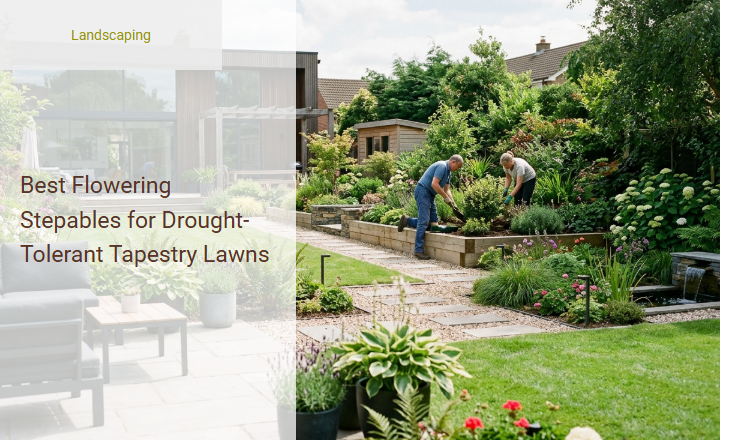
Maintaining a lush, green turf lawn in the face of escalating water restrictions and scorching summers has become an expensive, uphill battle for modern homeowners. To escape this cycle, many are turning to tapestry lawns-low-water, biodiverse alternatives to traditional grass. By integrating flowering "stepables," you can design a vibrant, pollinator-friendly carpet that slashes utility bills while adding immense visual texture to your landscape.
Crucially, success with these living carpets requires an educational approach: while highly resilient once established, these groundcovers vary in their foot-traffic tolerance and initial moisture needs. Resilient species like Thymus serpyllum (Creeping Thyme) and Chamaemelum nobile (Roman Chamomile) prove that you do not have to sacrifice durability for delicate, fragrant blooms.
Below, we examine the best flowering stepable varieties, detailing their soil preferences, traffic limits, and aesthetic qualities to help you curate a thriving, drought-tolerant landscape.
Read also: Creeping Thyme vs Clover for Lawn Alternatives
Redefining the Lawn with Flowering Tapestries
The traditional green grass lawn is increasingly being recognized as a resource-intensive luxury that offers little ecological value. Homeowners and landscapers are turning to a brilliant, sustainable alternative: the tapestry lawn. By replacing thirsty turf grass with flowering, foot-traffic-tolerant groundcovers, also known as stepables, you can create a vibrant, living mosaic of color and texture. These lawns require a fraction of the water of standard grass while boosting biodiversity by providing vital habitats and food sources for local pollinators.
Crucial Traits of Premium Flowering Stepables
When selecting plants to construct your living mosaic, certain characteristics are vital to ensure the lawn remains functional, beautiful, and resilient. Look for species that exhibit the following key traits:
- High drought resilience to withstand long periods without rainfall.
- Rapid recovery from light, everyday foot traffic.
- Naturally low-growing and prostrate habits that eliminate the need for mowing.
- Nectar-rich flowers that actively support bees, butterflies, and other beneficial insects.
Creeping Thyme (Thymus serpyllum) – The Fragrant Essential
Among the most beloved stepables, Creeping Thyme serves as a sensory masterpiece for the water-wise garden. This low-slung groundcover thrives in full sun, showing extreme tolerance to dry, sandy soils where turf grass would quickly wither. During the heat of summer, it produces a dense blanket of pink-purple summer blooms that hum with pollinator activity. As an added benefit, walking across this living carpet releases a delightful, warm herbal aroma, making it a perfect choice for pathways and active garden zones.
Kurapia (Phyla nodiflora) – The High-Traffic Powerhouse
For areas that experience regular use, Kurapia stands out as a highly resilient option. This engineered groundcover is celebrated for its rapid spreading capability, quickly knitting together to crowd out weeds. It bears charming, small white-to-pink mini flowers throughout the warm season. Kurapia features a deep, robust root system that grants it superior drought tolerance and the unique ability to handle frequent foot traffic while maintaining its lush, green appearance.
Roman Chamomile (Chamaemelum nobile) – Softness and Scent
Roman Chamomile offers a delicate, feather-like texture that feels exceptionally soft underfoot. Ideal for areas meant for relaxation, this groundcover releases a sweet, apple-scented fragrance when bruised or stepped upon. It features small, daisy-like blossoms with yellow centers and white petals, blooming throughout the summer. While it possesses moderate drought resistance, it performs best with occasional deep watering and is perfect for creating a lush, tactile oasis.
Turkish Veronica (Veronica liwanensis) – Cobalt Blue Carpets
For an injection of cool color early in the growing season, Turkish Veronica is unmatched. In spring, this tough groundcover transforms into a spectacular, shimmering sheet of bright blue flowers. Its small, glossy evergreen leaves remain attractive year-round, turning a bronze shade in winter. This species possesses excellent heat and drought endurance, making it highly reliable for filling gaps between stepping stones or carpeting sunny slopes.
White Stonecrop (Sedum album) – Succulent Resilience
When dealing with poor, rocky, or exceptionally dry soils, White Stonecrop is a top-tier performer. This succulent groundcover stores water in its fleshy green leaves, which often take on rich reddish tones during periods of cold or drought. In midsummer, it sends up clusters of starry white summer flowers that attract a wide variety of tiny beneficial insects. It thrives with minimal irrigation, making it a stellar addition to the lowest-maintenance zones of your tapestry lawn.
Microclover (Trifolium repens 'Pipolina') – The Nitrogen-Fixing Companion
Microclover is a miniature variety of traditional white clover that integrates seamlessly into a tapestry layout. It produces tiny, spherical white globes and possesses a deep, robust rooting system that helps it stay green during dry spells. Crucially, microclover acts as a natural fertilizer due to its nitrogen-fixing capabilities, pulling nitrogen from the air and sharing it with neighboring plants to keep the entire tapestry nourished and vibrant without synthetic chemicals.
Designing for Sequential Blooms and Contrast
A successful tapestry lawn relies on thoughtful design to ensure year-round aesthetic appeal. By combining various species, you can build a dynamic landscape that changes with the seasons:
- Mix contrasting foliage textures, pairing the feathery leaves of chamomile with the glossy, rounded leaves of Turkish Veronica.
- Keep heights uniform by choosing species that naturally stay under three inches tall, ensuring a clean, carpet-like appearance.
- Schedule plants with different bloom periods so that your lawn transitions smoothly from the blue spring of Veronica to the pink summer of Thyme.
Establishment and Long-Term Drought Training
Creating a self-sustaining flowering lawn requires careful initial preparation. Begin by thoroughly weeding the area and loosening the top few inches of soil. Space your stepable plugs close enough to allow them to fill in quickly, typically six to twelve inches apart depending on the species. During the critical first season, keep the soil consistently moist to help the roots take hold. Once established, transition to watering deeply but infrequently; this practice trains the roots to grow deep into the soil, securing the long-term drought resilience of your living, blooming mosaic.
Summary
This article explores the vibrant trend of tapestry lawns, focusing on the best flowering, drought-tolerant "Stepables" to replace traditional, high-maintenance turf. Unlike monoculture grass, tapestry lawns utilize a diverse mix of low-growing, foot-traffic-tolerant groundcovers that thrive with minimal water. The guide highlights top plant selections such as Creeping Thyme (Thymus serpyllum), which offers fragrant foliage and purple blooms, and Roman Chamomile (Chamaemelum nobile), known for its daisy-like flowers and sweet, apple-scented leaves. Other featured varieties include hardy, low-profile Sedum species and creeping Veronica. By incorporating these resilient, nectar-rich plants, homeowners can significantly reduce water usage, eliminate the need for frequent mowing, and create a biodiverse haven for essential pollinators. Ultimately, this sustainable landscaping approach successfully combines striking visual appeal, ecological benefits, and durability underfoot.
Leave a comment