
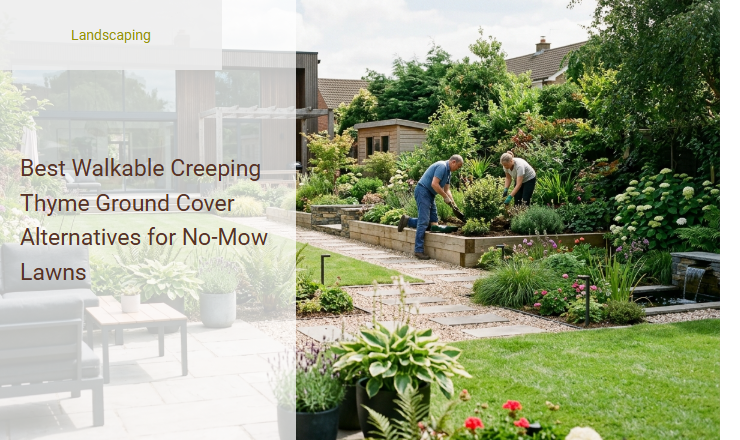
While the dream of a low-maintenance, eco-friendly lawn often leads homeowners directly to creeping thyme, establishing this popular ground cover can be frustratingly slow, and it frequently struggles in damp or heavily shaded yards. Fortunately, exploring alternative species grants you a resilient, highly adaptable green space that thrives where thyme falters. However, a key horticultural stipulation remains: "walkable" ground covers are not indestructible turfgrass, but rather resilient plants designed to withstand moderate foot traffic.
Excellent alternatives like aromatic Corsican mint, robust brass buttons (Leptinella squalida), and velvety Irish moss serve as concrete proof that you can achieve a durable, no-mow landscape. Ahead, we will evaluate the top foot-traffic-tolerant alternatives to creeping thyme, analyzing their growth habits, light requirements, and soil preferences to help you select the ideal living carpet for your home.
Read also: Shade vs Sun for Ground Covers
Beyond Creeping Thyme: Embracing Walkable No-Mow Alternatives
While creeping thyme is often celebrated as the poster child for lawn replacement, it is not always the perfect fit for every garden. Homeowners frequently seek alternative ground covers that offer better foot-traffic tolerance, superior shade adaptability, and localized biodiversity. Standard turfgrass demands constant mowing, fertilizing, and watering, prompting a shift toward low-maintenance living carpets. By exploring diverse creeping species, you can find solutions that thrive in wet clay, dense shade, or high-activity pathways where thyme might struggle.
Corsican Mint: The Fragrant Foot-Traffic Favorite
Mentha requienii
Corsican Mint is a spectacular option for pathways and tight spaces between stepping stones. Growing only a fraction of an inch tall, this tight ground cover forms a lush, bright green mat that hugs the earth closely.
Key characteristics of this aromatic species include:
- Peppermint Aroma: Releasing a refreshing scent whenever it is stepped on.
- Moisture Preference: Thriving in damp, fertile, and well-draining soil.
- Shade Tolerance: Performing exceptionally well in partial to full shade, unlike sun-loving herbs.
Irish Moss: The Velvet Carpet for Shady Paths
Sagina subulata
For those looking to create a soft, cushion-like pathway, Irish Moss offers an incredibly dense, emerald-green carpet. This plant mimics the look of real moss but is actually a member of the pink family, boasting tiny, translucent white star-shaped flowers in late spring.
Irish Moss delivers a luxurious, velvet-like feel underfoot, making it a premier choice for winding woodland paths.
To keep Irish Moss looking its best, regular moisture is essential. It performs poorly in dry, arid climates and requires consistent watering alongside excellent drainage to prevent rot.
Roman Chamomile: A Sweet-Scented, Durable Lawn Replacement
Chamaemelum nobile
Roman Chamomile is a time-tested herbal lawn alternative that delivers both aesthetic beauty and structural resilience. Unlike traditional lawns, it requires no mowing and emits a delightful, apple-like fragrance when crushed.
- Fragrant Foliage: The soft, feathery green leaves release a calming, sweet aroma underfoot.
- Moderate Traffic: It handles regular walking and light play, bouncing back quickly from light compression.
- Sun Adaptability: Performs best in full sun to light, dappled shade with well-drained soil.
Kurapia: The Ultimate Drought-Tolerant Turf Alternative
Lippia nodiflora
If you need a highly rugged, utility-focused alternative, Kurapia is an exceptional choice. This revolutionary ground cover is engineered to withstand heavy walking, making it a viable replacement for traditional turfgrass in high-traffic zones.
Its deep root system allows it to survive on minimal water, dramatically reducing your utility bills. Additionally, Kurapia blooms with sterile, white flowers that support local pollinators without seeding rampantly, while its dense growth habit effectively suppresses aggressive weeds.
Brass Buttons: Elegant Feathery Foliage for Heavy Traffic
Leptinella squalida
Hailing from New Zealand, Brass Buttons is a unique and incredibly durable ground cover that brings rich texture to the garden. It features miniature, fern-like leaves that form a flat, dense mat capable of handling high levels of daily foot traffic.
Distinctive Varieties and Growth
This low-growing perennial offers several unique advantages for modern landscapes:
- Coloration Options: Varieties like 'Platt's Black' showcase stunning bronze and purple-black foliage.
- Exceptional Wear Resistance: Its pliable stems bend instead of breaking under heavy weight.
- Spread: It expands via runner roots, filling in gaps between flagstones with ease.
Creeping Wirevine: The Tough-as-Nails Ground Hugger
Muehlenbeckia axillaris
Creeping Wirevine is a powerhouse when it comes to durability. Featuring tiny, glossy green leaves on dark, wiry stems, this plant forms a springy, low-profile mat that easily tolerates heavy daily foot traffic from pets and humans alike.
It is highly adaptable, thriving in poor soil, clay, and gravelly substrates. Whether planted in intense, baking sun or moderate shade, its tough-as-nails nature keeps it looking healthy and vibrant throughout the year.
Blue Star Creeper: A Soft, Flowering Carpet
Isotoma fluviatilis
Blue Star Creeper is highly valued for its ability to form a dense, uniform green mat that smothers out weeds. During spring and summer, this ground cover is blanketed in a sea of tiny, pale blue star-shaped flowers that add incredible visual charm to pathways.
This resilient performer handles foot traffic beautifully and adapts easily to damp, moist soils where other ground covers might rot.
It is particularly effective around stepping stones, water features, and borders that receive regular moisture and partial to full sun.
Dwarf Mondo Grass: The Modern, No-Mow Tufted Ground Cover
Ophiopogon japonicus 'Nana'
For a clean, contemporary aesthetic, Dwarf Mondo Grass offers a striking departure from typical broadleaf ground covers. It forms small, dark-green tufts that clump together to create a deeply textured, modern carpet.
Key attributes of this sleek alternative include:
- Zero Mowing: It naturally caps its height at just a couple of inches, eliminating the need for cutting.
- Regular Foot Traffic: Its thick, blade-like leaves handle regular footsteps without tearing.
- Modern Appeal: Excellent for filling geometric joints in concrete pavers or framing minimalist garden paths.
Choosing Your Perfect Walkable Ground Cover: A Comparison Guide
Selecting the ideal alternative to creeping thyme depends heavily on your garden's specific environmental conditions and how often you plan to walk on the area. Use this comparison table to match your yard's profile with the perfect walkable ground cover.
| Ground Cover | Sun Exposure | Soil Moisture | Traffic Level |
|---|---|---|---|
| Corsican Mint | Part Shade to Full Shade | Moist / Damp | Moderate |
| Irish Moss | Part Shade | Consistent Moisture | Light to Moderate |
| Roman Chamomile | Full Sun | Well-Drained / Dry | Moderate |
| Kurapia | Full Sun | Low (Drought-Tolerant) | Heavy |
| Brass Buttons | Full Sun to Part Shade | Moist to Well-Drained | Heavy |
| Creeping Wirevine | Full Sun to Part Shade | Any (Highly Adaptable) | Heavy |
| Blue Star Creeper | Full Sun to Part Shade | Moist | Heavy |
| Dwarf Mondo Grass | Part Shade to Full Shade | Average | Moderate |
Summary
While creeping thyme is a highly popular option for eco-friendly, no-mow lawns, it may not suit every climate, soil type, or aesthetic preference. Fortunately, several excellent walkable ground cover alternatives offer low maintenance, resilience, and beautiful blooms. For fragrant, lush greenery that tolerates light foot traffic, Corsican mint and Roman chamomile are outstanding choices. If you need robust options for high-traffic areas, resilient low-growers like Irish moss, star creeper, and microclover provide dense, cushioning carpets that thrive in various conditions. Choosing the right creeping thyme alternative allows homeowners to reduce water consumption, eliminate mowing, and support local pollinators while maintaining a durable, vibrant green space. By assessing your yard's specific sunlight, moisture, and traffic levels, you can easily transition from traditional turf to a sustainable, low-maintenance lawn alternative.
Leave a comment