
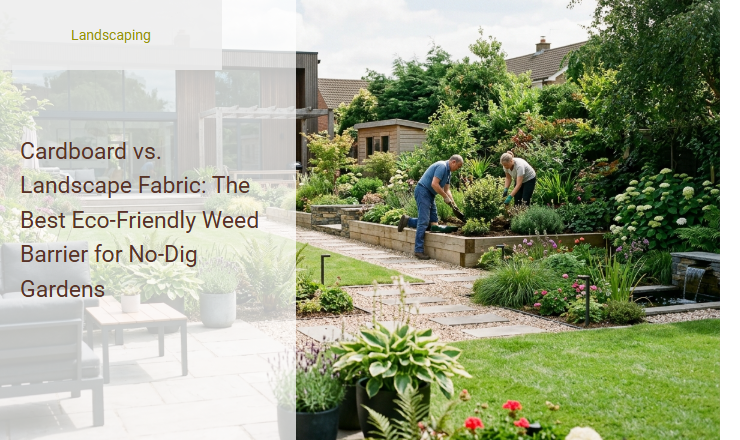
For gardeners transitioning to no-dig methods, the relentless battle against invasive weeds can feel incredibly discouraging, often threatening to overshadow the joy of cultivating a harvest. Before selecting a barrier to solve this, we must first look at the soil's natural biology as the foundation of all plant health. Choosing the correct suppression layer grants you a self-sustaining ecosystem that drastically reduces physical labor while naturally unlocking vital soil nutrients.
However, an important educational stipulation must be made: a barrier is only as sustainable as its long-term impact on the earth beneath it. For example, while organic corrugated cardboard decomposes to foster thriving earthworm populations, synthetic landscape fabrics can choke soil respiration and shed microscopic plastics over time.
To help you make the healthiest choice for your plot, this head-to-head comparison evaluates cardboard and landscape fabric across durability, cost, and ecological impact, guiding you to the ultimate weed barrier for your no-dig garden.
Read also: Landscape Fabric vs Newspaper for Weed Barrier
Introduction: The No-Dig Revolution and the Weed Control Dilemma
In recent years, the no-dig gardening movement has transformed how backyard growers and commercial farmers alike approach soil management. By leaving the soil undisturbed, gardeners preserve complex fungal networks, retain moisture, and prevent dormant weed seeds from rising to the surface. However, establishing a successful no-dig plot requires an effective initial barrier to smother existing weeds and grass. This leaves growers facing a critical decision: should they use biodegradable cardboard or synthetic landscape fabric to establish their beds? Choosing the right barrier determines not only how easy your garden is to manage, but also how healthy your soil will be for years to come.
Understanding Cardboard: The Biodegradable Champion
Cardboard has become the gold standard barrier for organic, no-dig gardeners who want to work in harmony with nature.
An Organic, Biodegradable Barrier
Unprinted, corrugated cardboard is an organic material made primarily from wood pulp. When placed over weeds, it blocks light completely, halting photosynthesis and killing existing vegetation. Over the course of a single growing season, soil moisture and weather break down the cellulose fibers, allowing the cardboard to integrate seamlessly back into the earth.
A Feast for Earthworms
As cardboard decomposes, it creates a dark, moist, and carbon-rich environment that earthworms find irresistible. Earthworms actively migrate to the surface to feed on the decaying fibers and the fungi that grow on them. This natural feeding process leaves behind nutrient-rich worm castings while naturally aerating the soil below without the need for tilling.
Analyzing Landscape Fabric: The Synthetic Competitor
Originally designed for commercial landscaping projects, landscape fabric offers a very different approach to weed management.
Synthetic Composition and Durability
Landscape fabric is typically manufactured from woven or spun plastics, such as polypropylene or polyester. Unlike cardboard, it is engineered to resist decay, offering a tough, physical barrier designed to block weed growth for several years under mulch, gravel, or pathways.
Traditional Gardening Applications
In conventional landscaping, this fabric is commonly used under decorative stone beds or permanent shrub borders to keep the underlying soil separate from the top dressing. While it excels at keeping gravel clean, its long-term presence in a living vegetable garden can introduce unexpected challenges to the soil ecosystem.
Soil Health and Microbe Activity: The Below-Ground Battle
A thriving no-dig garden relies on a healthy, active soil microbiome. Cardboard works as a biological primer; as it breaks down, it feeds beneficial bacteria and mycorrhizal fungi, which are essential for nutrient uptake in plants. Earthworms freely move through the decaying cardboard layer, creating channels that improve soil aeration and drainage. Conversely, synthetic landscape fabric acts as a physical barrier that restricts the natural movement of soil fauna. Over time, soil beneath plastic fabric can become compacted, starved of organic matter, and depleted of oxygen, severely damaging the delicate biological networks that no-dig gardening aims to protect.
Weed Suppression Efficiency: Immediate vs. Long-Term Results
While both materials are highly effective at blocking weeds initially, their long-term performance differs significantly as the garden matures.
Here is how both barriers perform over time:
- Cardboard (Immediate to Mid-Term): It completely smothers existing weeds and grass for several months. By the time it biodegrades, the thick layer of compost placed on top has created a clean, weed-free seedbed. Any wind-blown weed seeds that land on top are easily pulled from the loose compost.
- Landscape Fabric (Long-Term Issues): While it blocks weeds from below indefinitely, organic debris eventually accumulates on top of the fabric. Wind-blown seeds land in this debris, sending roots down through the weave of the fabric. Once weeds establish roots through the plastic fibers, they become incredibly difficult to pull, often requiring the gardener to tear up the fabric entirely.
Weed Permeability and Moisture Retention
Water movement is crucial for maintaining a healthy soil profile. Cardboard easily absorbs water, allowing moisture to transition smoothly from the surface compost down into the native topsoil. It acts like a sponge, keeping the soil beneath damp and cool during hot summer days. In contrast, landscape fabric can become clogged over time. Dust, fine soil particles, and organic matter settle into the pores of the woven plastic, drastically reducing its water permeability. This can cause irrigation water to run off the sides of the garden beds rather than sinking into the roots, leading to dry pockets of soil beneath the barrier.
Environmental Impact: Biodegradability vs. Microplastics
Choosing gardening materials carries ecological responsibilities that extend far beyond our backyard fences.
Cardboard is a circular, zero-waste resource that returns to the earth as organic matter, leaving behind no chemical residues if you use plain brown boxes with paper tape. On the other hand, landscape fabric degrades slowly under the sun's ultraviolet rays. As the plastic fibers weaken, they fray and disintegrate into thousands of tiny plastic particles.
Ecological Warning: The degradation of synthetic landscape fabrics introduces persistent microplastics into the garden soil. These particles can harm earthworms, disrupt beneficial soil fungi, and pollute local waterways through stormwater runoff.
Cost, Availability, and Installation Effort
Setting up your garden beds requires balancing your budget, time, and physical labor.
Cardboard is widely available for free from local appliance stores, supermarkets, and online shipping boxes. Installing it requires removing tape and staples, laying the sheets down, and soaking them with water. Landscape fabric must be purchased from a garden center, measured, cut with heavy-duty shears, and secured with metal landscape staples, which adds upfront costs and physical waste.
| Factor | Cardboard Sheet Barrier | Landscape Fabric |
|---|---|---|
| Material Cost | Free (Recycled boxes) | Moderate to High (Per roll) |
| Source/Availability | Abundant, eco-friendly sourcing | Retail purchase required |
| Long-term Maintenance | None (Integrates into soil) | High (Must be pulled up eventually) |
| Labor for Bed Alterations | Very easy (Digs right through) | Difficult (Requires cutting/tearing) |
The Verdict: Why Cardboard Reigns Supreme in No-Dig Gardens
When comparing these two popular options, cardboard is the clear winner for no-dig gardening. A true no-dig garden is a living system that relies on biological activity to nourish crops. Cardboard feeds this system, breaking down into rich soil amendment while inviting earthworms to cultivate the earth naturally. Landscape fabric treats the soil as an inert platform, choking out biology and creating a plastic disposal nightmare down the road. For a healthy, productive, and truly sustainable organic garden, cardboard is the superior choice.
How to Correctly Use Cardboard in Your No-Dig Garden
Setting up your new garden bed with cardboard is a straightforward process that yields fantastic results when done correctly.
- Prepare the Area: Scalp tall weeds and grass using a mower or weed eater, leaving the organic matter right on the ground to decompose.
- Prep the Cardboard: Collect clean, corrugated brown cardboard boxes. Remove all plastic packing tape, shipping labels, and metal staples.
- Lay and Overlap: Lay the flattened cardboard sheets directly over the prepared ground. Ensure every edge overlaps by at least 6 to 8 inches to prevent aggressive weeds from finding light gaps.
- Wet the Barrier: Thoroughly soak the laid-down cardboard with a garden hose until it is soft and pliable. This encourages fast decomposition and helps the sheets conform to the contours of the soil.
- Add Your Growing Medium: Immediately apply a 4- to 6-inch layer of high-quality compost directly on top of the wet cardboard. You can plant seeds or transplants directly into this compost layer right away.
Summary
When establishing a no-dig garden, choosing the right weed barrier is crucial for long-term soil health and sustainability. This comparison highlights the distinct differences between cardboard and plastic landscape fabric. Cardboard is the ultimate eco-friendly champion; it is biodegradable, readily available, and actively enriches the soil food web by attracting earthworms and beneficial microbes as it decomposes.
In contrast, synthetic landscape fabric degrades soil quality over time. It blocks natural organic matter from integrating into the earth, can release harmful microplastics, and often becomes entangled with resilient weed roots, making removal a nightmare. For gardeners prioritizing a thriving, living ecosystem, biodegradable cardboard is the superior, truly sustainable choice for successful no-dig cultivation.
Leave a comment