
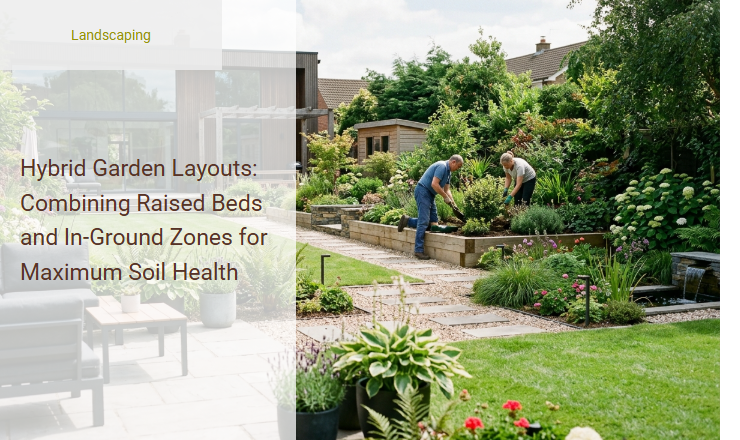
Many gardeners face a frustrating dilemma: choosing between the superior drainage of raised beds and the expansive root-run of traditional in-ground planting. Committing to a single method often forces costly compromises on soil quality and crop vitality. Before investing in materials, it is essential to realize that rigid adherence to one system ignores the diverse biological needs of different vegetable families.
A hybrid garden layout resolves this by granting you localized control over soil chemistry and aeration where it matters most. While this integrated approach stipulates careful planning regarding irrigation placement and path maintenance, the results are highly rewarding. For example, deep-rooting winter squash can tap into the natural moisture of in-ground zones, while tender carrots thrive in the loose, stone-free soil of an adjacent raised bed.
In this article, we will outline the steps to design your hybrid space, manage soil transition zones, and establish a balanced watering system for maximum soil health.
Read also: Raised Beds vs In-Ground for Backyard Gardening
Introduction to Hybrid Gardening
Modern gardening requires adaptability, efficiency, and a deep understanding of plant needs. By implementing a hybrid gardening layout, growers can merge the precision of raised beds with the natural depth of in-ground planting. This dual-system approach allows you to optimize soil health, manage water efficiently, and maximize your overall harvest yield.
The Science of Soil Health in Hybrid Systems
Combining raised beds and in-ground zones creates a diverse soil ecosystem. Raised beds provide rapid drainage and quick spring warming, while in-ground soil acts as a moisture-retaining thermal mass that supports deep biological networks.
"The true magic happens when the undisturbed soil layers of in-ground zones connect with the nutrient-rich micro-environments of raised beds, allowing mycorrhizal networks to shuttle vital minerals and hydration across both zones." - Dr. Helen Vance, Soil Biologist
Designing the Layout: Mapping Your Zones
To design a successful hybrid garden, start by analyzing your plot's sun exposure, slope, and traffic patterns. Position elevated structures where they will not cast unwanted shadows on in-ground crops, and ensure footpaths remain wide enough for easy wheelbarrow access.

Best Crops for Raised Beds
Raised beds offer loose, crumbly soil that is perfect for root crops and plants that demand exceptional drainage and intensive spacing.
- Carrots (for straight, unobstructed growth)
- Radishes and Beets
- Salad Greens (spinach, arugula, and loose-leaf lettuce)
- Culinary Herbs (basil, thyme, and oregano)
Best Crops for In-Ground Zones
In-ground zones excel at supporting deep-rooted plants, heavy feeders, and sprawling vines that benefit from the natural moisture-retaining capacity of native earth.
- Winter Squash and Pumpkins (sprawling vines)
- Sweet Corn (heavy feeders requiring extensive root stability)
- Melons and Watermelons
- Potatoes and Sweet Potatoes (requiring deep digging space)
Crop Rotation Across Zones
Rotating your crops across different zones breaks pest life cycles and prevents nutrient depletion in specific areas. A dynamic rotation plan moves demanding feeders from raised beds to the broader in-ground expanses over a three-year cycle.
| Zone Type | Year 1 | Year 2 | Year 3 |
|---|---|---|---|
| Raised Beds | Nightshades (Tomatoes, Peppers) | Root Vegetables (Carrots, Beets) | Legumes (Beans, Peas) |
| In-Ground | Brassicas (Cabbage, Broccoli) | Squash & Melons | Cover Crops (Clover, Rye) |
Dual-Zone Irrigation Strategies
Raised beds dry out quickly due to evaporation and gravity, while in-ground plots retain moisture for longer periods. Setting up a split-valve drip irrigation system allows you to tailor watering schedules to match these disparate requirements.
Composting and Nutrient Cycling
Establishing a closed-loop system ensures that nutrients from both zones are recycled back into the soil. Utilizing waste from one area to nourish another builds a self-sustaining cycle.
- Collect spent plant residues and kitchen scraps to build a central compost bin.
- Apply finished compost to raised beds in early spring to replenish intensive growing spaces.
- Sow cover crops in empty in-ground zones during late autumn to fix nitrogen and prevent erosion.
Managing Microclimates
The physical structure of raised beds introduces unique microclimates to your garden. Wood or stone retaining walls act as thermal masses, absorbing heat during the day and radiating it back to nearby in-ground crops at night, which can help protect tender plants from early frost.
Seasonal Maintenance and Transitioning
Proper maintenance ensures that both zones transition smoothly between seasons, maximizing soil health and preparing the garden for future abundance.
- Autumn Transition: Clear dead crops, sow winter cover crops in-ground, and top raised beds with compost.
- Spring Preparation: Remove winter mulches, aerate raised bed soil with a broadfork, and test native soil pH before planting.
Summary
The article "Hybrid Garden Layouts: Combining Raised Beds and In-Ground Zones for Maximum Soil Health" explores the innovative approach of merging raised beds with traditional in-ground planting to optimize garden efficiency and soil vitality. By integrating both systems, gardeners can leverage the unique advantages of each method.
Raised beds offer superior drainage, rapid spring warming, and precise control over soil composition, making them ideal for intensive planting and delicate crops. In contrast, in-ground zones accommodate deep-rooted, sprawling, or heavy-feeding plants, utilizing natural moisture retention and reducing setup costs.
Combining these zones allows for strategic crop rotation, which disrupts pest cycles and prevents nutrient depletion. Ultimately, a hybrid layout cultivates a highly resilient, biodiverse soil ecosystem, offering a sustainable and versatile solution for maximizing backyard harvests.
Leave a comment