
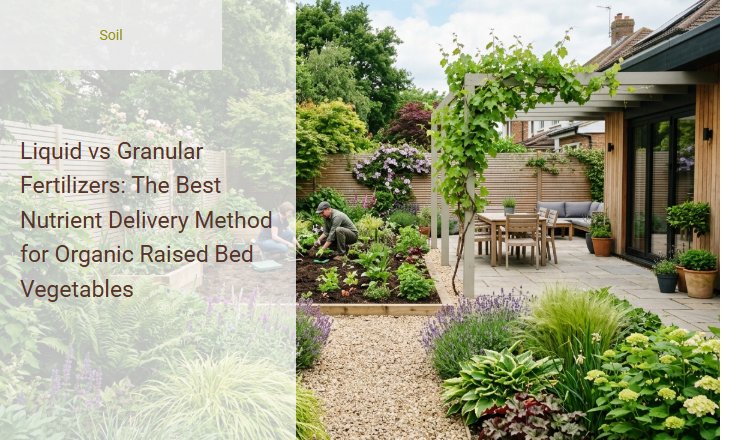
Watching your raised bed vegetables struggle with stunted growth or pale leaves can be incredibly frustrating, especially when you have invested time and premium organic soil. Before rushing to buy the first fertilizer you see, it is crucial to understand that raised beds function as isolated ecosystems, where nutrient delivery depends entirely on the delicate relationship between root systems and soil biology.
Mastering this delivery method is the key to unlocking vibrant, high-yielding crops. However, a vital stipulation remains: success is not about finding a single "miracle" product, but rather matching the fertilizer's physical form to your soil's temperature and microbial activity. For instance, fast-acting liquid fish emulsion serves a vastly different biological purpose than slow-release granular bone meal.
This comprehensive analysis compares liquid and granular organic fertilizers, evaluating their absorption rates, longevity, and overall impact on raised bed soil structure to help you determine the optimal nutrition strategy for your garden.
Read also: Liquid Fertilizer vs Granular Fertilizer for Quick Uptake
Introduction: The Quest for the Perfect Raised Bed Fertilizer
Organic raised bed vegetable gardening offers control over soil structure and drainage. However, the secret to abundant harvests lies in how we feed our crops. The choice between liquid and granular delivery systems shapes everything from immediate crop vigor to long-term soil health. Choosing the right nutrient delivery method is a critical decision for every organic gardener. We must evaluate whether fast-acting liquids or steady, slow-release granular options yield the healthiest vegetables and the most resilient soil ecosystems.
Demystifying Liquid Fertilizers: Immediate Nutrition for Hungry Crops
Organic liquid fertilizers are water-soluble nutrient solutions derived from natural sources like fish emulsion, kelp, or fermented plant extracts. When applied, these liquids provide immediate bioavailability because the nutrients are already dissolved and ready for plant absorption.
They work primarily through two main pathways:
- Foliar feeding: Spraying the solution directly onto leaves where nutrients are absorbed through the stomata.
- Root drenching: Pouring the liquid around the root zone for rapid root uptake.
This instant accessibility makes liquid fertilizers highly popular for treating quick-fix nutrient deficiencies, giving struggling crops an almost immediate boost.
The Pros and Cons of Going Liquid in Raised Beds
Liquid fertilizers offer remarkable speed and precision, but they also come with distinct drawbacks in a raised bed environment.
The advantages are clear: they act rapidly to correct yellowing leaves, and application is as simple as watering your beds.
"Using liquid nutrients allows growers to bypass soil conversion processes, delivering emergency rations directly to stressed vegetable crops."
However, the downsides include the need for frequent applications because these soluble nutrients do not linger in the soil. There is also a significant risk of leaching, where valuable plant food washes out of the bottom of the root zone before crops can use it.
Understanding Granular Fertilizers: The Slow-Release Soil Builders
Organic granular fertilizers are dry, solid pellets or powders made from raw materials like bone meal, feather meal, and rock phosphate. Unlike liquids, these nutrients are not immediately available to plants and must undergo a biological transformation.
The slow-release breakdown process occurs in several stages:
- Water dissolves the outer binding agents of the granules.
- Soil microbes, fungi, and bacteria begin digesting the organic matter.
- Microbial activity converts complex organic compounds into simple, plant-available ions.
This methodical decomposition plays a vital role in building long-term soil structure and fertility, turning your raised beds into self-sustaining nutrient reservoirs.
The Pros and Cons of Granular Nutrients for Vegetables
Incorporating granular nutrients into your vegetable garden is a foundational practice, but understanding its limitations is key to success.
The benefits of granular formulas: they are incredibly long-lasting, requiring only a few applications per season, and are highly cost-effective. Because they feed soil microbes first, they naturally foster a thriving underground ecosystem.
Conversely, the drawbacks include a slow response time, meaning they cannot save a severely nutrient-deficient plant overnight. Additionally, their breakdown is highly temperature-dependent, as soil microbes become inactive in cold spring soils.
The Soil Food Web: How Fertilizer Types Impact Microorganisms
The soil food web is the biological engine of organic raised bed gardening. How we apply fertilizer deeply influences the activity of these vital microorganisms.
Granular fertilizers serve as a direct food source for beneficial fungi and bacteria, encouraging them to multiply and create healthy soil aggregates. Liquid fertilizers, while helpful, can sometimes bypass this web entirely, leading to a lazy microbial population if used exclusively.
"A healthy soil food web acts as a natural defense system, suppressing pathogens while unlocking locked-up minerals for vegetable roots."
Fostering strong microbial activity is the cornerstone of sustainable gardening. Relying too heavily on synthetic-style quick feeds can diminish this natural biological synergy over time.
Water Dynamics and Nutrient Leaching in Raised Bed Systems
Raised beds are celebrated for their superb drainage, but this rapid water movement presents unique challenges for nutrient retention. Because raised bed soil mixes are typically loose and porous, they drain far more quickly than traditional in-ground clay soils.
This high-drainage dynamic directly impacts how long nutrients remain in the root zone. Soluble liquid fertilizers are highly susceptible to leaching during heavy rains or routine watering, sending valuable minerals deep into the ground or causing environmental runoff. Granular fertilizers, bound to organic matter, resist this flushing action and remain stable within the raised bed environment.
Tailoring Your Approach: Vegetable Needs and Fertilizer Types
Different vegetables have distinct nutritional requirements and growth rates. Matching the correct fertilizer delivery method to your specific crops ensures optimal growth and resource efficiency.
| Vegetable Category | Nutrient Requirement | Best Fertilizer Method |
|---|---|---|
| Leafy Greens (Spinach, Lettuce) | High Nitrogen, fast growth | Liquid (for rapid leaf development) |
| Heavy Feeders (Tomatoes, Peppers) | Continuous balanced feeding | Granular (base) + Liquid (peak bloom) |
| Root Crops (Carrots, Radishes) | Moderate Phosphorus/Potassium | Granular (to avoid nitrogen burn) |
The Hybrid Strategy: Combining Liquid and Granular for Best Results
Rather than choosing one delivery method over the other, the most successful organic gardeners employ a dual-action system. Combining the long-term stamina of granular feeds with the targeted speed of liquids maximizes vegetable production.
Follow this simple hybrid fertilization plan for your raised beds:
- Prepare the beds: Mix a balanced organic granular fertilizer into the soil at planting time to establish a baseline of slow-release nutrients.
- Monitor early growth: Allow the plants to establish strong root systems relying on the breaking-down granules.
- Boost during peak phases: Apply a diluted liquid fertilizer when plants begin flowering, fruiting, or during periods of mid-season growth spurts.
Conclusion: Choosing the Right Fertilizer Strategy for Your Raised Beds
Navigating the choice between liquid and granular organic fertilizers does not have to be a rigid decision. Granular fertilizers excel at building lasting soil structure and providing a steady, low-maintenance nutrient supply. Liquid fertilizers offer unparalleled control and instant relief for fast-growing, hungry crops.
Your choice should depend on your available gardening time, overall budget, and the specific growth stages of your vegetables. By balancing the immediate bioavailability of liquids with the steady soil-building power of granular formulas, you can cultivate a thriving, highly productive raised bed garden.
Summary
Choosing between liquid and granular fertilizers is essential for maximizing the productivity of organic raised bed vegetable gardens. Granular fertilizers are slow-release, making them ideal for pre-planting soil preparation. They break down gradually, feeding soil microbes and providing sustained nutrition over several months. Conversely, liquid fertilizers offer immediate nutrient availability, acting as a quick boost for plants during critical growth stages or when correcting nutrient deficiencies.
For organic raised beds, which have limited soil volume and can leach nutrients faster than in-ground plots, a combined approach often yields the best results. Amending the soil with organic granular fertilizer at the start of the season establishes a strong nutritional foundation. Supplementing with liquid organic feeds, like fish emulsion or compost tea, during active flowering and fruiting ensures peak vegetable yields. Ultimately, balancing both delivery methods optimizes both long-term soil health and immediate plant vitality.
Leave a comment