
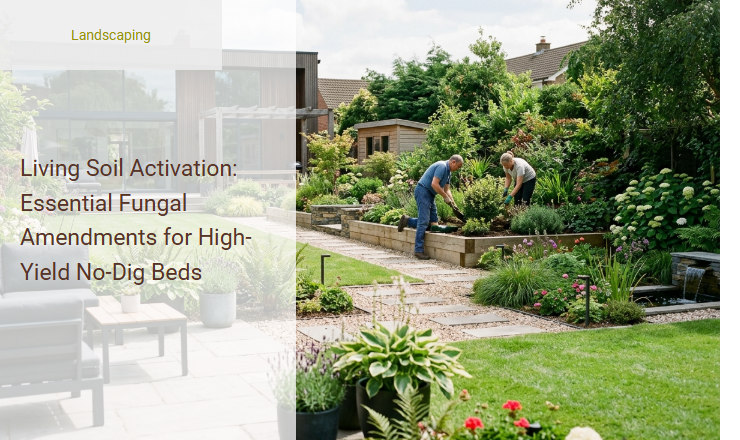
Many no-dig growers find that despite heavy annual applications of compost, their bed productivity eventually plateaus, leaving crops vulnerable to pests and nutrient deficiencies. While traditional management focuses heavily on direct NPK fertilization first, sustainable high yields actually rely on a structured, biological soil matrix. Activating this living network grants plants unparalleled access to deep-soil nutrients and moisture, drastically reducing the need for external inputs.
However, successful soil activation is not an overnight chemical quick-fix; establishing a robust soil food web requires specific soil conditions and time for fungal hyphae to colonize. Integrating proven biological catalysts-such as endomycorrhizal fungi (like Glomus intraradices) and beneficial Trichoderma species-provides the necessary biological foundation to transform inert organic matter into plant-available nutrition.
This article will detail the essential fungal amendments for no-dig systems, explain the science of mycelial establishment, and provide a step-by-step blueprint for maximizing your soil's biological potential.
Read also: Compost vs Topsoil for Planting Beds
Introduction to Living Soil and the Fungal Network
In the realm of regenerative agriculture, the soil beneath our feet is far more than an anchor for plant roots; it is a thriving, biodiverse ecosystem. At the heart of this subterranean world lies the mycelium, a vast branching network of fungal threads that serves as the biological highway for high-yield vegetable crops. By utilizing a no-dig gardening philosophy, we preserve these fragile structures, allowing them to form intimate, symbiotic relationships with plant roots.
This underground internet enables plants to communicate, share resources, and access deep-seated pools of moisture and nutrition that would otherwise remain completely out of reach. Embracing living soil means shifting our focus from feeding the plant to nourishing the complex web of life that sustains it.
The Role of Fungi in Soil Structure and Water Retention
Tilling the soil shatters the delicate architecture built by subterranean organisms, resetting the biological clock of your garden bed. When left undisturbed, fungal hyphae weave through the earth, physically binding loose soil particles together to create stable micro-aggregates. This structural matrix dramatically improves soil aeration, allowing oxygen to reach root zones while simultaneously boosting the soil's natural water-holding capacity.
A key driver of this process is glomalin production, a sticky glycoprotein secreted by arbuscular mycorrhizal fungi. This biological glue stabilizes the soil against erosion, creates channels for water infiltration, and secures carbon deep within the earth, turning your no-dig beds into resilient sponges capable of weathering drought and heavy rains alike.
Endomycorrhizae vs. Ectomycorrhizae: Choosing the Right Inoculant
To unlock the full potential of your living soil, you must match the correct fungal inoculant to the specific vegetable crops you intend to grow. Mycorrhizal fungi are generally categorized into two main groups based on how they interact with plant roots: endomycorrhizae, which penetrate the cell walls of the root cortex, and ectomycorrhizae, which wrap around the outer root structure. Selecting the appropriate strain ensures your plants establish immediate and effective symbiotic pipelines.
- Endomycorrhizae (Arbuscular Mycorrhizal Fungi - AMF): Essential for the vast majority of garden vegetables, including Alliums (onions, garlic), Solanaceae (tomatoes, peppers, eggplants), Cucurbits (squash, cucumbers), and Legumes (beans, peas).
- Ectomycorrhizae: Primarily associate with woody perennials, shrubs, and specific tree species (like oaks, pines, and birches), making them less critical for annual vegetable beds but vital for food forests.
Saprophytic Fungi: The Ultimate Decomposers
While mycorrhizal fungi partner directly with living plants, saprophytic fungi are the tireless cleanup crews of the soil ecosystem. These organisms specialize in digesting dead organic matter, deploying powerful enzymes to break down tough, carbon-rich materials like wood chips, straw, fall leaves, and heavy mulches. Without their decomposing action, these raw materials would accumulate and lock away precious nutrients indefinitely.
As saprophytic fungi consume the carbon, they systematically convert complex organic compounds into simple, bioavailable nutrients. This steady decomposition process releases a slow, continuous stream of nitrogen, phosphorus, and trace minerals directly into the root zone, fueling the long-term fertility of no-dig beds without the need for synthetic chemical fertilizers.
Trichoderma: The Natural Shield Against Root Pathogens
An active living soil does not merely feed your crops; it actively defends them. Trichoderma species are highly aggressive, beneficial fungi that establish themselves rapidly in the rhizosphere. They serve as a natural biological shield by actively parasitizing harmful, disease-causing soil pathogens such as Pythium, Rhizoctonia, and Fusarium before they can attack vulnerable plant roots.
"Trichoderma fungi secrete specialized enzymes that dissolve the cell walls of pathogens, effectively neutralizing root rot threats while releasing chemical signals that trigger the plant's own systemic acquired resistance (SAR)."
This biological defense mechanism primes the plant's immune system, making it far more resilient against environmental stressors and airborne diseases, securing high-yield harvests naturally.
Essential Fungal Amendments for Bed Initialization
Setting up a new no-dig bed requires an intentional introduction of diverse fungal species to kickstart the biological engine. Because depleted or urban soils often lack native fungal populations, introducing high-quality inoculants during the building phase ensures rapid colonization. Here are the essential fungal amendments to integrate into your bed initialization routine:
- Granular Mycorrhizal Inoculants: Best applied directly to the root zone or transplant hole to ensure direct physical contact with plant roots.
- Liquid Spore Suspensions: Ideal for drenching newly prepped beds, allowing microscopic spores to wash deep into the lower organic layers.
- Actively Aerated Compost Teas (AACT): A liquid brew rich in diverse fungal strains, humic acids, and kelp, used to saturate the mulch layer and jumpstart microbial activity.
Inoculation Methods for High-Yield No-Dig Beds
To maximize the colonization rate of your fungal networks, timing and application methods must be precise. Fungal spores are living organisms that require direct contact with plant roots or moisture-rich organic materials to activate and thrive. Below is an optimal application protocol to integrate these beneficial organisms during different stages of the growing cycle.
[Step 1: Seed Sowing]  -> Dust seeds with granular endomycorrhizae prior to planting.
[Step 2: Transplant]    -> Place 1 tablespoon of granular inoculant directly in the planting hole.
[Step 3: Mulching]      -> Apply liquid spore suspension or compost tea over the raw compost layer.
[Step 4: Top-Dressing]  -> Scratch humic acids and fungal compost under wood chips or straw annually.
Carbon-to-Nitrogen Ratios for Fungal Dominance
Fungi and bacteria both play critical roles in the soil, but their populations are heavily influenced by the food sources available to them. Bacteria thrive on simple sugars and green, nitrogen-rich materials, whereas fungi prefer complex carbons like lignin and cellulose. To foster a fungal-dominated soil structure, aim for a high Carbon-to-Nitrogen (C:N) ratio in your surface mulches, utilizing materials like arborists' wood chips, shredded bark, and clean straw.
Comparing Fungal vs. Bacterial Dominated Soils
Different plant families have evolved to thrive in specific biological niches. Early successional plants, such as brassicas and weeds, are adapted to highly disturbed, bacterial-dominated soils. Conversely, perennial plants and many heavy-feeding annual crops prefer soils with a higher ratio of fungal biomass. By shifting away from tillage and toward organic surface mulches, no-dig gardeners naturally tip the ecological balance toward fungal dominance.
| Soil Dominance Type | Preferred Crop Families | Soil Characteristics & Management |
|---|---|---|
| Bacterial Dominated | Brassicas (kale, broccoli), Chenopods (spinach, beets), annual weeds | High nitrates, frequent tillage, low carbon inputs, fast nutrient cycling. |
| Fungal Dominated | Solanaceae (tomatoes, peppers), Cucurbitaceae (squash), berries, woody perennials | High ammonium, undisturbed structures, thick carbon mulches, stable aggregates. |
Long-Term Maintenance of a Living Fungal Network
Establishing a robust fungal highway is only the first step; maintaining its health across seasons is key to long-term soil fertility and outstanding yields. Because fungal hyphae are physically disrupted by soil disturbance, avoiding all forms of tillage is paramount. Additionally, keeping living roots in the ground year-round through cover cropping ensures that mycorrhizal networks always have a photosynthetic partner to feed them carbon exudates during the off-season.
Protecting your beds from synthetic chemical inputs, maintaining consistent soil moisture, and replenishing the organic mulch layer annually will sustain these invaluable microbial allies. Preserving these interconnected networks ensures a self-sustaining garden ecosystem that feeds your crops, improves water efficiency, and builds deep, fertile soil for generations to come.
Summary
This article explores the critical role of fungal networks in optimizing no-dig garden beds for maximum yield. Unlike traditional tilled systems, no-dig gardening relies on an undisturbed soil food web where beneficial fungi-such as mycorrhizae and saprophytic species-act as the primary drivers of nutrient cycling and soil structure. By establishing symbiotic relationships with plant roots, these fungi significantly enhance water retention, disease resistance, and mineral uptake.
To transition to a high-yielding living soil system, gardeners must actively introduce and support these organisms. The guide details essential fungal amendments, including mycorrhizal inoculants, fungal-dominated compost, wood chips, and humic substances. Implementing these natural activators accelerates soil colonization, transforming stagnant dirt into a thriving, self-sustaining ecosystem that supports robust plant growth and bountiful harvests season after season without the need for synthetic fertilizers.
Leave a comment