
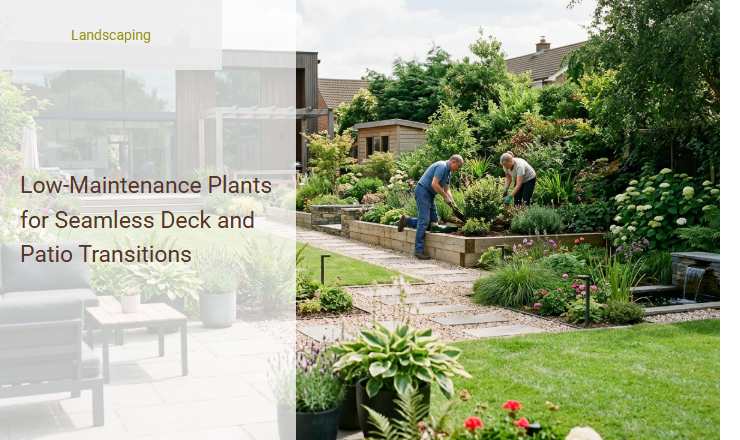
Many homeowners struggle to bridge the visual gap between rigid deck structures and the natural lawn, often resulting in jarring transitions or high-maintenance gardening chores that drain weekend leisure time. Successful landscape integration relies on fluid spatial flow; before introducing greenery, one must first analyze how the hardscaping interacts with the surrounding terrain.
Thoughtfully selected transition plants grant an immediate aesthetic elevation, offering a lush, cohesive look that enhances property value with minimal physical effort. However, a key stipulation remains: "low-maintenance" does not mean "zero-maintenance," as long-term success still depends on matching species to your patio's specific sun exposure and drainage.
Incorporating resilient, forgiving varieties like dwarf fountain grass and hardy hostas serves as concrete proof that you can soften sharp architectural lines without constant watering or pruning. In this guide, we will explore the top low-effort plant selections, placement strategies, and essential soil considerations to help you achieve a seamless outdoor transition.
Read also: Decks vs Patios for Backyard Living
Blurring the Lines Between Indoors and Out
Modern home design thrives on connection, and nothing achieves this quite like a seamless transition between your indoor living space and the natural world. By harmonizing your deck or patio with the surrounding garden, you extend your floor plan outward, creating an expansive environment for relaxation. A well-designed transition area dissolves structural boundaries, making your yard feel like a natural, inviting extension of your living room.
The Appeal of Low-Maintenance Greenery
High-traffic transition zones like steps, walkways, and patio borders require plants that can withstand occasional foot traffic, pet activity, and changing weather conditions without constant upkeep. Choosing low-maintenance flora ensures your entryway remains pristine and welcoming year-round. By selecting resilient, self-sustaining species, you save valuable time that is far better spent enjoying your outdoor sanctuary rather than constantly maintaining it.
Ornamental Grasses for Softening Hard Borders
The stark, straight lines of wooden decking and concrete pavers can sometimes feel harsh against a natural backdrop. Architectural grasses serve as the perfect organic buffer, swaying gently in the breeze to bring motion and texture to structural edges.
- Feather Reed Grass: Offers tall, upright stalks that create a soft screen and seasonal interest.
- Blue Fescue: Provides compact, icy-blue tufts that neatly cushion stone borders.
- Japanese Forest Grass: Spills gracefully over patio steps, mimicking cascading water.
Hardy Perennials for Season-Long Color
To bridge the physical gap between hard paved surfaces and lush lawns, hardy flowering perennials are an excellent choice. These tough, drought-tolerant plants thrive in the heat radiated by stone or concrete, providing vibrant color transitions year after year.

Container Gardening for Flexible Layouts
Steps and ledges represent the physical descent from the home to the garden, making them ideal stages for container gardening. Strategic placement of potted succulents and hardy evergreens on deck steps guides the eye naturally downward, drawing visitors toward the wider yard. Using containers allows you to easily rearrange your layout as seasons change, keeping the transition dynamic and visually engaging.
Scented Pathways with Resilient Herbs
A transition zone should appeal to more than just the eyes; a sensory journey elevates the entire outdoor experience. Planting step-resistant herbs along your patio edges ensures that every footstep releases a pleasant, calming aroma. Crushing the leaves of Creeping Thyme or brushing past a Rosemary bush fills the air with natural fragrance, creating an unforgettable sensory welcome for guests.
Shady Transitions Under Pergolas and Overhangs
Many transition zones sit partially under architectural structures like pergolas, roof overhangs, or mature tree canopies, resulting in damp or shaded ground. Embracing these microclimates with low-care, shade-loving foliage keeps these sheltered spots looking lush and deliberate.
- Hostas: Known for broad, variegated leaves that instantly brighten dim corners.
- Coral Bells: Offers striking, ruffled foliage in shades of amber, plum, and lime green.
- Astilbe: Features feathery, colorful plumes that thrive in dappled sunlight.
Vertical Greenery for Privacy and Height
Framing the transition zone vertically draws the eye upward, adding depth and a sense of enclosure to your patio. Easy-climbing vines grown on minimalist trellises or posts create organic green walls that provide natural privacy from neighbors. Vines like Clematis or Trumpet Vine establish a living canopy, making the outdoor space feel secluded, cozy, and thoroughly integrated with the surrounding landscape.
Living Carpets to Fill the Gaps
The small spaces between stepping stones, pavers, or flagstones are prime targets for unwanted weeds. By intentionally planting low-growing, step-tolerant groundcovers in these crevices, you establish a living carpet that crowds out weeds while softening the hardscape. This naturalized look blends stone and soil beautifully, making your hardscaped walkways appear as if they grew organically out of the earth.
Curating Your Effortless Outdoor Oasis
Thoughtfully combining hardy grasses, fragrant herbs, structured containers, and climbing vines allows you to craft a cohesive, low-effort transition zone. By selecting plants that look beautiful with minimal intervention, you establish a harmonious path from your back door to the open grass. This deliberate design choices ensure your deck or patio serves as a peaceful, relaxing gateway to nature for years to come.
Summary
Creating a seamless and visually appealing transition between your indoor living areas and outdoor spaces, like decks or patios, does not require hours of grueling yard work. The key to achieving this effortless flow lies in selecting hardy, low-maintenance plants that soften the stark lines of hardscaping while blending beautifully with the surrounding natural landscape.
Integrating resilient perennials such as lavender, ornamental grasses, and shade-loving hostas creates a lush, welcoming boundary that thrives with minimal watering and pruning. Additionally, utilizing potted succulents or dwarf evergreen shrubs in containers offers both design flexibility and year-round structure. These strategic, fuss-free botanical choices bridge the gap between built structures and nature, establishing a cohesive and relaxing outdoor retreat. By prioritizing durable, self-sufficient varieties, homeowners can enjoy a stunning, green transition zone that remains beautiful and stress-free throughout every season.
Leave a comment