
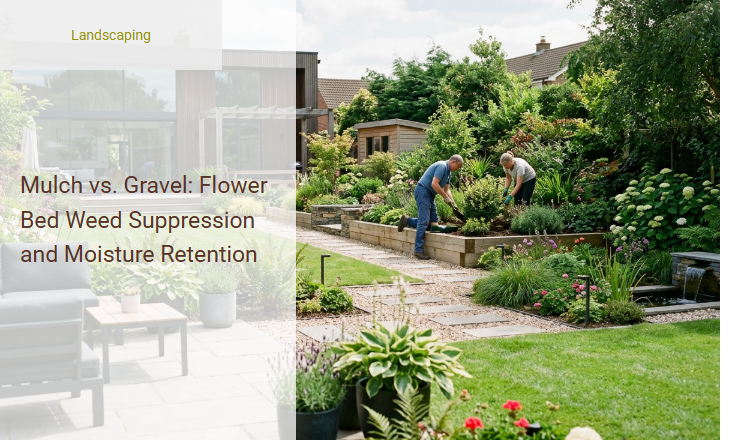
Keeping flower beds weed-free and properly hydrated often feels like an endless, frustrating cycle of backbreaking labor for homeowners. Before selecting a ground cover, however, one must consider how local soil biology and evaporation rates interact to affect root health. Making the correct choice grants you a vibrant, low-maintenance landscape that thrives with minimal intervention.
To manage expectations, we must stipulate that neither option offers a 100% weed-proof barrier; airborne seeds will eventually germinate on any surface. For example, while organic cedar mulch decomposes to enrich the soil, river gravel excels at preventing erosion and blocking sunlight. In this guide, we will directly compare mulch and gravel across key performance metrics-including weed suppression efficiency, moisture retention capabilities, and long-term costs-to help you make the optimal decision for your garden.
Introduction: The Great Ground Cover Debate
Every passionate gardener eventually faces a crucial decision when designing a thriving flower bed: should they lay down organic mulch or spread a layer of decorative gravel? This choice is far more than a simple aesthetic preference. The material you select acts as the primary interface between the atmosphere and the soil, directly influencing the survival of your plants. Selecting the right ground cover requires balancing three critical pillars of garden health: weed control, moisture retention, and the overall physiological well-being of your plants.
Weed Suppression: The Organic Shield of Mulch
Organic mulch, such as shredded bark or wood chips, acts as a physical barrier that interrupts the lifecycle of opportunistic weeds. By creating a dense, opaque blanket over the soil, it effectively blocks sunlight from reaching dormant weed seeds buried in the earth. Without light, these seeds cannot photosynthesize and sprout. Over time, however, this organic shield undergoes a natural process of decomposition. As the fibers break down, they turn into rich compost, which can paradoxically create a fertile seedbed for wind-borne weed seeds to take root if the mulch layer is not periodically replenished.
Weed Suppression: The Inorganic Barrier of Gravel
In contrast to organic options, gravel offers a heavy, inorganic shield that does not degrade. To achieve true weed suppression with stones, however, the installation of a high-quality landscape fabric underneath is absolutely essential. Without this barrier, heavy stones will sink into the mud, and weeds will easily push up through the gaps.
"While gravel itself does not support weed growth, organic matter will eventually accumulate between the stones, creating a fertile zone for airborne seeds."
Over several seasons, dust, leaves, and soil particles settle into the crevices of the gravel. This accumulation of debris provides a perfect medium for wind-blown seeds to germinate right on top of the landscape fabric, occasionally making weed removal more difficult as roots entangle with the underlying barrier.
Moisture Retention: How Mulch Hydrates the Soil
Mulch excels at conserving soil moisture through physical and biological mechanisms. When rain falls, the sponge-like fibers of organic mulch absorb the initial deluge, preventing rapid runoff. It then slowly releases this water down into the root zone while acting as a shade cloth that shields the damp soil from the drying effects of the sun and wind. This process dramatically reduces evaporation rates, keeping the soil consistently moist and cool.
- Absorbs heavy rainfall to prevent soil compaction and erosion.
- Saves water by reducing the frequency of irrigation cycles.
- Creates a stable, humid microenvironment right at the soil surface.
Moisture Retention: Gravel's Drainage and Heat Challenges
Gravel interacts with water in a completely different manner. Because stones do not absorb moisture, rainwater passes through them almost instantly, draining deep into the earth. While this is excellent for preventing waterlogged conditions, gravel presents distinct challenges during hot summer months. The stone layer acts as a heat sink, absorbing intense solar radiation during the day. This stored thermal energy is transferred directly to the soil below, which can accelerate the evaporation of subterranean water and leave plant roots dry.
- Promotes rapid drainage, reducing the risk of root rot.
- Fails to absorb water, leaving the soil reliant on immediate sub-surface retention.
- Increases soil temperature, leading to faster evaporation of deep moisture.
Soil Biology: Feeding the Earth vs. Keeping It Inert
The Living Soil under Mulch
The primary advantage of organic mulch is its active contribution to the soil food web. As fungi and bacteria break down the wood fibers, they deposit vital nutrients back into the earth. This process feeds beneficial earthworms and microbes, creating a loose, well-aerated, and highly fertile soil structure. A healthy soil biology is the foundation of robust plant growth.
The Inert Environment of Gravel
Decorative gravel is completely inert and does not decompose. While it keeps the surface of your flower beds looking clean and uniform, it contributes zero nutrients to the biological community beneath. Over time, soil under gravel and landscape fabric can become compacted, sterile, and starved of organic replenishment, making it harder for earthworms and soil microbes to thrive.
Microclimate and Thermal Effects on Sensitive Flowers
The choice of ground cover heavily influences the microclimate surrounding your flowers. Organic mulch acts as an outstanding insulator, buffering the soil from rapid temperature swings. In the spring, it keeps the soil cool, preventing plants from leafing out too early during a temporary warm spell, and in winter, it protects sensitive root systems from hard freezes. Conversely, gravel has a high thermal mass. It absorbs solar heat all day long and continually radiates that heat back outward during the evening. This constant heat radiation can scorch the delicate foliage of sensitive, shade-loving flowers and increase their overall transpirational stress.
Durability and Maintenance: Short-Term Effort vs. Long-Term Investment
Maintenance schedules vary wildly between these two materials, representing a classic trade-off between short-term effort and long-term investment. Mulch requires continuous, active management, while gravel demands a more intense initial setup followed by a different kind of long-term upkeep.
- Mulch requires annual or biennial replenishment as the material decomposes, incurring recurring costs and physical labor every spring.
- Gravel remains physically intact for decades, but cleaning out fallen leaves, twigs, and dirt from between the stones is highly labor-intensive.
Tailoring the Choice to Your Specific Plant Palette
Ground Cover for Moisture-Loving Plants
Lush, moisture-loving annuals and soft-stemmed perennials thrive under a blanket of organic mulch. This material mirrors the natural forest floor, keeping their shallow root systems cool and hydrated throughout the peak of summer.
- Ideal for hydrangeas, hostas, and ferns.
- Protects delicate stems from the abrasive texture of stone.
Ground Cover for Drought-Tolerant Species
Drought-tolerant perennials, Mediterranean herbs, and desert succulents perform exceptionally well when surrounded by gravel. The quick-draining nature of stone prevents moisture from pooling around the crown of the plant, which is the primary cause of rot in these species.
- Ideal for lavender, rosemary, and sedum.
- Reflects warmth that sun-loving plants crave.
Conclusion: Designing a Beautiful, Low-Maintenance Garden
Choosing between mulch and gravel is not about finding a universally superior material, but about identifying the right fit for your landscape goals. Organic mulch is the premier choice for gardeners focused on building rich soil biology and supporting water-thirsty plants, though it demands annual physical effort. On the other hand, gravel serves as an excellent, highly durable design element for modern, dry, or rock gardens where drainage is paramount.
By assessing your local climate, your plant selections, and your willingness to perform seasonal upkeep, you can select the ground cover that ensures a vibrant and healthy garden. Your decision shapes the ecosystem of your soil for years to come, making a thoughtful choice the essential foundation of gardening success.
| Feature | Organic Mulch | Gravel / Stone |
|---|---|---|
| Initial Cost | Low (Budget-friendly per square foot) | High (Expensive materials and delivery) |
| Lifespan | Short (Decomposes; requires annual replacement) | Permanent (Does not decay; lasts indefinitely) |
| Soil Health | Improves soil structure and adds nutrients | No nutritional value; can compact soil |
| Moisture Retention | High (Reduces evaporation, keeps soil cool) | Moderate (Absorbs and radiates heat to soil) |
| Weed Control | Good (Blocks light; weeds are easy to pull) | Excellent initially (Requires underlayment fabric) |
| Maintenance | Medium (Needs regular top-offs) | Low (Needs occasional debris and leaf blowing) |
Leave a comment