
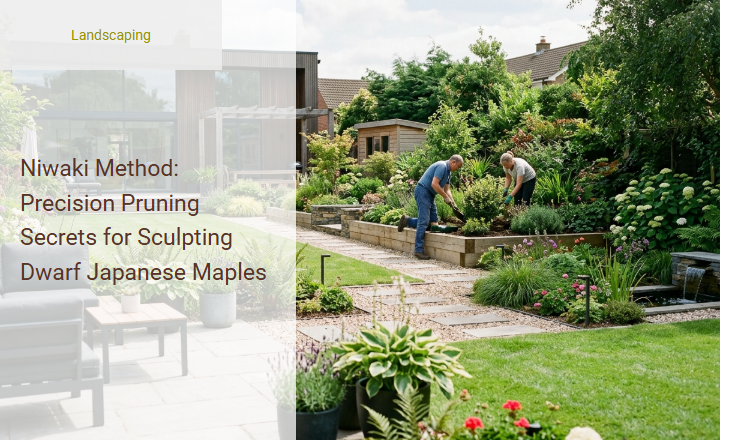
For many horticulturists, approaching a prized dwarf Japanese maple with pruning shears induces a distinct sense of anxiety. A single incorrect cut can ruin years of slow, meticulous growth, transforming a delicate specimen into a chaotic tangle. To overcome this hesitation, we must first look to the ancient Japanese philosophy of Niwaki-the art of training garden trees to reflect their grandest, most mature natural forms in miniature.
Mastering this approach grants you the artistic agency to transform an overgrown shrub into a breathtaking focal point of balance and negative space. However, we must stipulate that Niwaki is not a rapid weekend project; it is a patient, multi-season discipline. By learning to identify the dominant structural limbs and selectively thinning congested branch pads on specific cultivars like 'Kiyohime' or 'Ryusen', you can safely guide the tree's energy without compromising its health.
Ahead, we will demystify the essential skeletal cuts, branch-placement rules, and seasonal timing required to master this timeless pruning methodology.
Read also: Hand Pruners vs Loppers for Shrub Maintenance
Introduction to Niwaki and the Dwarf Japanese Maple
The Japanese art of Niwaki-translating literally to "garden trees"-is the profound practice of sculpting trees to express their most essential, dramatic, and poetic forms. Unlike Western topiary, which imposes geometric shapes upon nature, this ancient discipline seeks to amplify the natural essence of the tree. When applied to dwarf Japanese maples (Acer palmatum), the principles of scale, age, and character harmonize beautifully.
By carefully guiding the growth of a dwarf maple, you can evoke the spirit of a mature, wind-swept giant clinging to a mountain cliff, all within a compact garden space. Through this artistic lens, we do not merely prune; we reveal the ancient soul of a miniature tree, capturing the fleeting beauty of the changing seasons in its delicate, layered canopy.
The Niwaki Toolkit: Instruments of Precision
To sculpt a dwarf Japanese maple without causing stress or inviting disease, you must use highly specialized, sharp instruments. Clean, deliberate cuts preserve the health of the tree's delicate bark and thin branches.
- Bypass Pruning Shears: Used for clean, close cuts on medium-sized structural branches, preventing the tearing of bark.
- Long-Handled Shears: Ideal for reaching deep into the interior canopy to make precise cuts with excellent leverage.
- Fine-Point Tweezers: Essential for delicate tasks like pinching out tiny spring buds and removing unwanted growth in tight branch junctions.
Decoding the Tree: Analyzing Branch Structure
Before making your first cut, you must step back and read the unique story written in the limbs of your dwarf maple. Understanding its inherent architecture ensures your interventions enhance, rather than fight, its natural form.
Identifying the Trunk Line
Locate the primary trunk line that anchors the tree. Look for natural curves, bends, and a sense of movement. This central pillar dictates the flow of the entire design and guides your eye from the root flare up to the crown.
Assessing Branch Asymmetry
Examine how the primary structural branches emerge from the trunk. Niwaki thrives on asymmetry and staggered spacing. Identify which branches can serve as major horizontal anchors and which ones can be thinned to accentuate the negative space around them.
Core Principles of Niwaki Balance and Asymmetry
The visual harmony of a Niwaki-styled dwarf maple relies on ancient aesthetic guidelines. Rather than seeking perfect symmetry, the practitioner crafts a dynamic balance that mirrors the wild, imperfect beauty of nature. One of the primary guidelines is the "triangle rule," where branch tips and foliage pads form scalene triangles to suggest depth and natural perspective.
"Ma"-the concept of negative space-is the empty air between foliage pads. It is not merely empty space, but a vital element that allows light to penetrate, air to circulate, and the viewer's eye to rest.
By avoiding parallel branches and crossing lines, you ensure that every limb has its own distinct plane, creating a sense of clarity and breathability within the canopy.
Structural Pruning: Establishing the Main Framework
- Prune during the dormant winter season when the tree's silhouette is fully visible and the sap flow has slowed.
- Remove any dead, diseased, or damaged wood to ensure the overall health of the maple.
- Eliminate co-dominant leaders, choosing one main trunk line to establish a strong, singular focal path.
- Cut away crossing or rubbing branches that disrupt the clean, outward-growing skeleton of the tree.
- Remove weak, downward-pointing shoots to lift the canopy and define the clean undersides of the primary branches.
Sculpting the Canopy: Thinning and Cloud-Pruning
Once the primary framework is established, the focus shifts to creating the signature floating foliage pads, often referred to as clouds. On dwarf Japanese maples, this involves thinning out the dense outer growth of leaves while preserving the delicate, fan-like horizontal layers that make the cultivars so prized.
By carefully snipping away vertical shoots and leaving lateral branches, you encourage flat, plate-like structures. This deliberate thinning allows sunlight to filter through the canopy, illuminating the inner structure and creating beautiful patterns of light and shadow on the ground below.
Refinement: Bud Pinching and Leaf Plucking
True mastery of the Niwaki form is achieved through micro-maintenance, which refines the foliage density and scale over time.
Spring Bud Pinching
As new growth emerges in spring, use your fingers or fine-point tweezers to pinch out the center bud of strong shoots. This halts upward extension, redirects energy to lateral buds, and produces smaller leaves and tighter ramification.
Summer Leaf Plucking
In mid-summer, selectively pluck larger, older leaves that block sunlight from reaching the inner branches. This practice balances the tree's vigor and encourages a second flush of smaller, more delicate foliage that enhances the miniature scale of the design.
Seasonal Timing: When to Cut for Optimal Health
Timing your interventions is critical for preventing excessive sap bleeding, minimizing stress, and avoiding fungal infections in your dwarf Japanese maple.
| Season | Pruning Type | Primary Goal |
|---|---|---|
| Late Winter | Heavy Structural | Establish framework, remove major limbs, define trunk lines. |
| Mid-Spring | Bud Pinching | Control vigor, reduce internode length, refine foliage density. |
| Mid-Summer | Light Thinning & Defoliation | Enhance air circulation, reduce leaf size, define negative space. |
| Autumn | Minimal Cleanup | Remove deadwood, prepare the tree for winter rest. |
Post-Pruning Care and Wound Recovery
After an intensive styling session, your dwarf Japanese maple requires careful attention to recover and thrive. Apply a thin layer of high-quality Japanese wound sealant to any cuts larger than a pencil's width to keep pathogens out and prevent the wood from drying out. Ensure the tree receives deep, consistent watering, keeping the soil moist but never waterlogged, as Acer palmatum is highly sensitive to root rot.
If you have thinned the canopy significantly, newly exposed branches can be susceptible to sunscald. Provide temporary dappled shade during the hottest parts of the day. Avoid heavy fertilization immediately after pruning; instead, wait for the tree to stabilize before applying a mild, balanced, slow-release organic fertilizer to encourage steady, controlled recovery.
The Living Sculpture: Long-Term Vision and Patience
Creating a Niwaki-style dwarf Japanese maple is not a single weekend project, but a lifelong conversation with a living organism. It requires a shift in perspective, moving away from quick results toward a state of quiet observation and artistic patience. As the seasons cycle, each careful cut you make shapes the tree's future, while the tree itself teaches you to appreciate the slow, deliberate pace of nature.
Over the years, your dwarf maple will develop a deeply textured bark, a mature character, and a striking presence that anchors your garden. This slow evolution turns your gardening practice into a form of active meditation, resulting in an exquisite living sculpture that tells a story of wind, time, and human care.
Summary
The Niwaki method, a traditional Japanese art of tree sculpting, offers a transformative approach to styling dwarf Japanese maples (Acer palmatum). This pruning philosophy focuses on coaxing out a tree's essence, making young specimens appear ancient, weathered, and naturally wind-swept. Unlike standard shearing, Niwaki relies on precision techniques such as selective branch thinning, structural alignment, and "cloud" pruning to create distinct, floating foliage pads.
For dwarf maples, this method emphasizes preserving the delicate, weeping or upright growth habits while enhancing light penetration and air circulation. Key secrets include identifying the "heaven branch" (the main leader), establishing asymmetry, and meticulously removing overlapping branches to reveal the intricate bark and trunk structure. By mastering these deliberate cuts, gardeners can transform a simple garden shrub into a living, sculptural masterpiece that anchors the landscape with serene, timeless beauty.
Leave a comment