
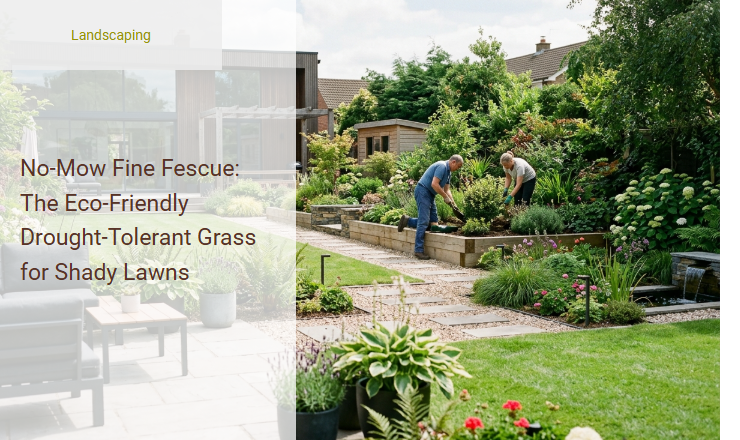
For homeowners with shaded yards, maintaining a vibrant lawn often feels like an endless, frustrating battle. Traditional turfgrasses simply cannot thrive under dense tree canopies, leaving property owners trapped in a cycle of constant watering, reseeding, and mowing patchy, stressed grass.
To break this cycle, we must look beyond standard turf varieties and consider how natural ecosystems adapt to low-light conditions. Shifting to specialized cool-season grasses grants you a lush, flowing green carpet that drastically reduces your water bills and eliminates the need for weekly mowing.
However, successful adoption requires a realistic approach: "no-mow" does not mean zero maintenance, as these grasses still require thoughtful soil preparation and occasional seasonal trimming. Utilizing resilient, slow-growing varieties like Hard Fescue and Creeping Red Fescue ensures a hardy, drought-tolerant cover in problematic microclimates.
Below, we will explore the science behind fine fescues, outline the step-by-step installation process, and share professional tips for managing your new low-input lawn.
Read also: Fine Fescue vs Kentucky Bluegrass for Shady Lawns
Introduction: Rethinking the Traditional Lawn
The classic American green lawn comes with a hidden, heavy ecological price tag. Traditional turfgrasses demand an unsustainable cycle of constant mowing, chemical fertilizers, and millions of gallons of supplemental water. Fortunately, a beautiful and eco-friendly alternative exists: No-Mow Fine Fescue. This specialized grass blend offers a gorgeous, low-maintenance, and shade-loving solution that allows homeowners to reduce their environmental footprint while enjoying a lush, natural landscape.
What is No-Mow Fine Fescue?
No-Mow Fine Fescue is not a single species of grass, but rather a carefully curated blend of cool-season turfgrasses known for their exceptionally slow growth rates and fine textures. These grasses grow closely together to form a soft, flowing carpet of green. The typical botanical composition of this blend includes:
- Hard Fescue (Festuca brevipila): Known for its outstanding drought resistance and ability to thrive in poor soils.
- Sheep Fescue (Festuca ovina): A highly resilient, bunch-forming grass that requires virtually no supplemental nutrients.
- Creeping Red Fescue (Festuca rubra): Provides excellent shade tolerance and spreads gently via rhizomes to fill in empty gaps.
- Chewings Fescue (Festuca rubra subsp. commutata): Offers a dense growth habit that naturally crowds out competing weeds.
The Ultimate Shade-Tolerant Grass Solution
While traditional Kentucky Bluegrass requires hours of direct sunlight to survive, No-Mow Fine Fescue is engineered by nature to thrive in deep and partial shade. It succeeds where other grasses fail because of its unique physiological adaptations. The fine, needle-like blades of these fescues have a highly efficient chlorophyll distribution, allowing them to maximize photosynthesis even under a dense forest canopy. This means you can finally achieve a green, uniform ground cover under mature trees and along shaded side-yards without watching the grass wither away season after season.
Eco-Friendly and Drought-Tolerant Benefits
One of the most compelling reasons to choose this grass blend is its profound contribution to environmental conservation. Once established, No-Mow Fine Fescue develops a remarkably deep and complex root system that reaches far down into the subsoil. This extensive underground network allows the grass to tap into deep moisture reserves, giving it extreme drought tolerance and eliminating the need for constant, wasteful sprinkler irrigation.
The Reality of the No-Mow Lifestyle
The term "no-mow" is highly accurate, but it also offers flexibility depending on the aesthetic you wish to achieve for your property. If left completely unmowed, the grass will grow to a height of about six to ten inches, gracefully cascading over itself to create a flowing, meadow-like look that ripples beautifully in the wind.
"For those who prefer a slightly more manicured appearance, the lawn only needs to be mowed once or twice a year-typically once in the late spring to remove seed heads, and once in the autumn to keep the height tidy before winter."
Ideal Soil and Site Conditions
To successfully grow a No-Mow Fine Fescue lawn, it is crucial to understand the soil conditions where this grass naturally excels. Unlike standard turf, this blend actually prefers less-than-ideal growing mediums:
- Poor, sandy, or rocky soils: Fine fescues naturally adapt to nutrient-poor environments where other plants struggle.
- Well-draining locations: Good drainage is essential, as the roots do not tolerate sitting in prolonged moisture.
- Low-fertility zones: High levels of nitrogen and organic matter will actually weaken the grass, making it flop over and become susceptible to disease. Heavy clay soils should be amended to improve aeration before planting.
How to Plant and Establish Your Fescue Lawn
Establishing your new lawn from seed requires patience and proper preparation, but the long-term payoff is well worth the initial effort. Follow these essential steps for a successful installation:
- Prepare the Site: Remove all existing vegetation, weeds, and debris. Gently rake the top layer of soil to create a fine, loose seedbed without over-tilling.
- Sow the Seed: Apply the seed mix at a rate of 4 to 5 pounds per 1,000 square feet. Use a drop spreader for even distribution, and lightly rake the seeds into the top quarter-inch of soil.
- Keep Damp: Water gently and frequently to keep the soil surface consistently moist during the germination period, which typically takes 10 to 21 days.
- Choose the Right Season: Plant during the cool seasons of early autumn or early spring when natural rainfall is abundant and temperatures are moderate.
Long-Term Maintenance and Weed Management
In the initial months after planting, manual weeding is necessary to protect the young fescue seedlings from being crowded out by aggressive broadleaf invaders. However, as the lawn matures, the grass blades intertwine to form a dense, living mat that naturally chokes out weeds by blocking sunlight from reaching weed seeds in the soil. If persistent weeds do emerge, they can be easily spot-treated with targeted organic herbicides or pulled by hand, avoiding the need for broadcast chemical spraying across your entire yard.
Important Considerations and Limitations
While No-Mow Fine Fescue is an exceptional alternative to traditional lawns, it does have specific limitations that homeowners must consider before planting:
- Low foot traffic tolerance: This grass is designed for visual beauty and low maintenance; it will get damaged under heavy, daily recreational activities or frequent sports.
- Pet damage: Concentrated pet waste can cause yellowing, and heavy canine running paths will wear down the delicate blades.
- Summer heat stress: In areas with extreme, prolonged summer heat, the grass may enter a semi-dormant brown state to protect itself, greening up again once cooler weather returns.
Embracing a Greener, Low-Maintenance Future
Transitioning away from a high-maintenance turfgrass to No-Mow Fine Fescue is a powerful step toward a more sustainable lifestyle. By reducing your water bills, eliminating noisy lawnmowers, and restoring natural biodiversity to your soil, you save valuable time, money, and natural resources. Making the switch allows you to reclaim your weekends and enjoy a peaceful, self-sustaining landscape that works in harmony with nature rather than against it.
Summary
No-Mow Fine Fescue is rapidly becoming the premier eco-friendly alternative for homeowners seeking a lush, low-maintenance lawn. This specialized blend of cool-season grasses is uniquely adapted to thrive in shaded areas where traditional turfgrasses fail. Beyond its shade tolerance, Fine Fescue is highly drought-resistant, requiring minimal watering and virtually no supplemental fertilizer once established, which dramatically reduces resource consumption and chemical runoff.
Its deep root system also aids in soil stabilization and naturally suppresses weed growth, eliminating the need for harmful herbicides. Homeowners can let the grass grow freely to achieve a soft, flowing, meadow-like aesthetic, or mow it just a few times a year for a traditional look. Ultimately, No-Mow Fine Fescue offers a sustainable, cost-effective landscaping solution that conserves water, reduces carbon emissions, and significantly cuts down on weekly yard chores.
Leave a comment