
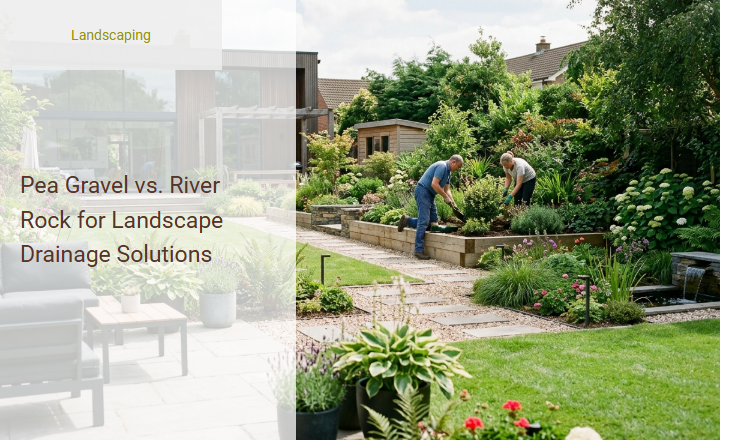
Dealing with a soggy lawn, pooling water, or eroded garden beds after a heavy rain is a frustrating challenge for any homeowner. Before diving into corrective measures, however, it is essential to analyze your property's slope and soil dynamics to understand how water naturally flows.
Investing in the right ground cover does more than just redirect runoff; it transforms a functional necessity into a striking design feature that boosts curb appeal. However, a key stipulation remains: even the best drainage materials will fail without proper site grading and underlying geotextile fabric. For example, the high-flow demands of a French drain require a vastly different aggregate structure than a decorative, slow-draining dry creek bed.
To help you make an informed decision, this comparison evaluates pea gravel and river rock across critical performance factors, installation costs, and long-term maintenance requirements.
Introduction to Landscape Drainage and Aggregate Solutions
Proper landscape drainage is a critical component of home maintenance that is often overlooked until heavy rains arrive. Without an effective system to channel water away from your property, standing water can pool in your yard, causing soil erosion, ruining pristine lawns, and even undermining home foundations. Implementing strategic drainage solutions protects your landscape investment and prevents costly structural issues.
When designing these systems, selecting the right aggregate material is essential. Pea gravel and river rock stand out as the two leading choices for homeowners and landscape designers alike. Both materials offer functional benefits and distinct visual styles, allowing you to tailor your drainage systems to meet both your environmental demands and your aesthetic preferences.
What is Pea Gravel? Characteristics and Sizing
The Basics of Pea Gravel
Pea gravel is a popular and versatile landscaping stone known for its small size and smooth texture. Derived from natural weathering processes, this aggregate is highly sought after for both functional and decorative applications.
- Sizing: Typically ranges from 1/4 inch to 3/8 inch in diameter.
- Texture: Extremely smooth and rounded, making it comfortable to walk on.
- Color Variations: Features a diverse palette of neutral tones, including grays, whites, tans, and deep browns.
- Shape and Permeability: The uniform, rounded shape prevents tight compaction, leaving small natural gaps that allow water to filter through quickly and evenly.
What is River Rock? Properties and Visual Appeal
An Overview of River Rock
River rock consists of larger, naturally smoothed stones that are harvested from riverbeds and ancient waterways. Because of their size and weight, these stones provide a substantial, rustic presence in any landscape design.
- Sizing: Typically ranges from 1 inch to 3 inches or even larger for custom applications.
- Aesthetics: Highly decorative, showcasing an array of earthy tones, including deep grays, rich blues, warm burgundies, and golden yellows.
- Weight and Origin: Being naturally heavy and water-worn, these rocks stay firmly in place, even when subjected to substantial rushing water.
Permeability and Water Flow: How They Compare
When assessing hydrological performance, the size of the void spaces between individual stones plays a defining role in water flow rate, sediment buildup, and overall drainage efficiency. While pea gravel provides rapid, uniform micro-filtration, river rock manages large volumes of fast-moving water due to the massive gaps between the larger stones.
| Feature | Pea Gravel | River Rock |
|---|---|---|
| Water Flow Rate | Moderate to High (Micro-filtration) | Extremely High (Rapid dispersion) |
| Void Space Size | Small, uniform spaces | Large, irregular spaces |
| Sediment Buildup Risk | Low (tight packing filters out debris) | Moderate (debris can settle between stones) |
| Erosion Control | Best for gentle slopes and flat zones | Excellent for steep slopes and high-velocity runoff |
Best Drainage Projects for Pea Gravel
Where Small-Scale Aggregates Excel
Because of its uniform shape and easy handling, pea gravel is the preferred material for several precise residential drainage systems. It settles easily into tight spaces, creating a stable but highly permeable channel.
- French Drains: It surrounds the perforated pipe perfectly, preventing soil intrusion while letting water enter the drain freely.
- Window Wells: Placing pea gravel at the base of basement window wells ensures rapid runoff absorption, keeping moisture away from window frames.
- Utility Pipe Bedding: Its soft, rounded edges protect buried pipes and cables from punctures while maintaining great drainage.
- Weep Holes: Used behind retaining walls to allow built-up hydrostatic pressure to escape without washing away the soil.
Ideal Uses for River Rock in Controlling Runoff
Managing Heavy Hydrological Loads
For areas that experience heavy storms or rapid water movement, the sheer mass and size of river rock make it an invaluable tool. It redirects high-velocity runoff without washing away.
- Dry Creek Beds: Creates a beautiful, functional landscape feature that channels storm water safely away from structures.
- Downspout Splash Blocks: Placed at the base of gutters to disperse the impact of concentrated water falling from the roof, preventing lawn divots.
- Steep Slopes: Acts as natural armor against soil erosion, locking into place despite gravity and fast-moving sheet flow.
- Rain Gardens: Serves as a decorative and structural base to slow down water entry and facilitate deep soil infiltration.
Maintenance, Shifting, and Longevity
Understanding the long-term maintenance differences between these two aggregates will save you considerable time and effort. Pea gravel is lightweight and prone to shifting. Without strong, permanent edging, individual stones will migrate into your lawn or flower beds, posing a hazard to lawn mowers and creating a messy appearance. Regular raking and topping up are often required to keep pea gravel beds looking clean and full.
In contrast, river rock stays securely in place due to its substantial weight. It rarely requires containment borders to remain in its designated area. However, the larger gaps between the stones act as traps for fallen leaves, twigs, and dirt. Over time, this accumulated organic material can decay, creating a prime environment for weed growth. You will need to periodically clear out debris with a leaf blower or hose down the rocks to maintain their clean, decorative appeal.
Cost and Budget Considerations
Budgetary requirements often dictate the scale and scope of aggregate selection. For large-scale projects, buying in bulk is far more economical than purchasing individual bags. Bulk pricing is calculated by the ton or cubic yard, and delivery fees will apply depending on your distance from the quarry or landscape supply yard.
Pea gravel is typically the more budget-friendly option, averaging around $30 to $50 per ton. River rock, due to its specialized harvesting process and significant shipping weight, commands a higher price, often ranging from $50 to $130 per ton depending on the specific color, size, and source.
When calculating your budget, remember to account for the depth of coverage needed. Pea gravel requires a shallower depth for effective drainage cover compared to the multiple layers of larger river rocks, which means you may need to purchase a significantly greater volume of river rock to achieve the same coverage area.
Aesthetic Harmony with Your Garden Design
Beyond utility, your choice of stone heavily influences the architectural mood of your outdoor space. Pea gravel offers a highly manicured, modern, and uniform appearance. Its small, consistent texture coordinates beautifully with clean-lined hardscaping, geometric paving stones, contemporary patios, and formal garden designs.
On the other hand, river rock brings a rugged, organic, and rustic charm to the property. It mimics natural aquatic environments, making it the perfect visual match for woodland gardens, informal native plantings, and water features. Mixing different sizes of river rock can emphasize a wild, natural aesthetic, turning a functional drainage channel into a stunning artistic focal point in your yard.
The Verdict: Choosing the Right Stone for Your Drainage Needs
Both materials offer excellent performance when installed correctly, but your final selection depends on your site's physical conditions, your budget, and how much time you want to spend on yard upkeep.
- Choose Pea Gravel if: You are installing a sub-surface French drain, working with a tight budget, prefer a smooth surface for walking, or want a neat, contemporary look.
- Choose River Rock if: You need to control high-velocity surface runoff, want to construct a decorative dry creek bed, have steep slopes prone to erosion, or prefer a rugged, natural garden style.
- Maintenance Willingness: Opt for pea gravel if you do not mind raking and maintaining borders; choose river rock if you prefer stones that stay in place but do not mind occasionally blowing out leaves and weeding.
- Project Scale: Consider blending both stones to gain the micro-filtration benefits of pea gravel at the base layer with the heavy weight and visual appeal of river rock on top.
| Feature | Pea Gravel | River Rock |
|---|---|---|
| Size & Shape | Small (1/8” to 3/8”), smooth, uniform rounded pebbles. | Larger (1” to 5”+), smooth, varied rounded stones. |
| Water Flow Rate | Moderate; tight packing slows heavy, rapid runoff. | High; large gaps between stones allow rapid, high-volume flow. |
| Erosion Resistance | Low; lightweight stones easily wash away in heavy rain. | High; heavy weight prevents displacement by rushing water. |
| Maintenance | High; prone to shifting, requires weeding and containment borders. | Low; stays in place, though debris may settle in gaps over time. |
| Best Drainage Use | Subsurface systems (French drains, pipe bedding, trench lining). | Surface systems (Dry creek beds, swales, downspout runoff). |
Leave a comment