
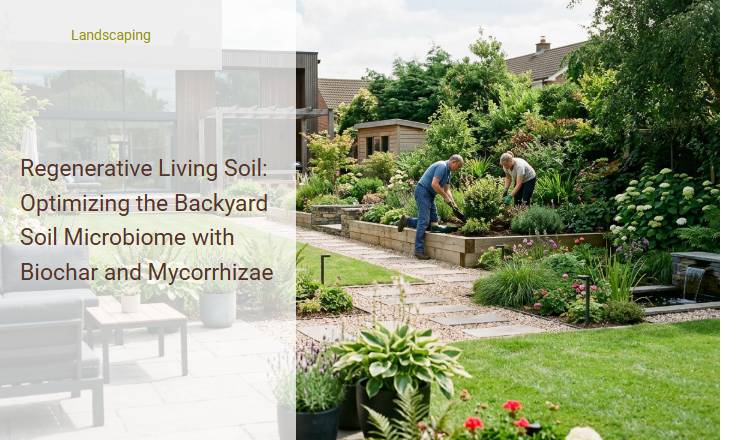
Many backyard gardeners invest heavily in premium fertilizers and compost, only to watch their vegetables succumb to pests, drought, and stagnant growth. This frustration rarely stems from a lack of soil nutrients, but rather from a degraded soil food web that cannot effectively process and deliver those elements to the plant.
Transitioning to a regenerative living soil framework unlocks a self-sustaining ecosystem that drastically reduces water requirements while naturally suppressing soil-borne pathogens. However, true soil regeneration is not an overnight chemical quick-fix; it requires a deliberate shift toward cultivating a complex, biologically active underworld. For example, synergizing porous biochar with symbiotic mycorrhizal fungi has been shown to double root surface area and dramatically boost yields in crops like heirloom tomatoes.
In this guide, we will examine the science behind these two biological powerhouses and outline a practical, step-by-step blueprint to optimize your backyard soil microbiome for long-term fertility.
Read also: Till vs No-Till for Vegetable Plots
Introduction: The Living Soil Beneath Your Feet
Many backyard gardeners view soil as mere dirt-a sterile medium designed to hold plants upright while synthetic fertilizers do the heavy lifting. In reality, healthy earth is a thriving, dynamic ecosystem known as the soil food web. Transitioning from chemical-based gardening to nurturing a living microbiome allows you to work with nature rather than against it. By fostering these microscopic alliances, you can unlock unprecedented plant vitality and build a self-sustaining garden paradise right in your backyard.
Understanding the Backyard Soil Microbiome
The soil microbiome is a bustling subterranean community where microscopic organisms interact with plant roots in a continuous cycle of life and decay. Rather than relying on synthetic additives, plants rely on these organisms to unlock and deliver essential elements.
- Bacteria act as the primary decomposers, breaking down simple sugars and organic matter while locking nutrients in their cellular bodies.
- Fungi extend long threads to decompose complex organic compounds and help aggregate soil particles into a crumbly, breathable structure.
- Protozoa hunt bacteria, excreting excess nitrogen directly into the root zone in a form that plants can easily absorb.
- Nematodes consume bacteria, fungi, and other microbes, further accelerating the nutrient-cycling process.
What is Biochar and How Does It Work?
Biochar is a specialized form of charcoal created through pyrolysis, which is the thermal decomposition of organic material in an oxygen-depleted environment. This process leaves behind a highly stable, pure carbon skeleton that resists decay for hundreds of years. At a microscopic level, biochar is incredibly porous, resembling a solid sponge with millions of tiny chambers.
These microscopic cavities absorb water, hold onto plant-available nutrients, and prevent valuable minerals from washing away during heavy rains, creating a permanent reservoir of fertility.
Charging the Sponge: How to Inoculate Biochar
Because raw biochar is an incredibly powerful absorbent, applying it directly to your garden can actually stunt plant growth. Raw biochar will pull moisture and nutrients out of the surrounding soil to fill its empty pores. To avoid this nutrient depletion, you must first inoculate or "charge" your biochar with life and nutrients before application.
- Blend: Mix one part raw biochar with active, nutrient-rich compost or worm castings.
- Moisten: Add liquid seaweed, compost tea, or water to bring the mixture to a damp, sponge-like consistency.
- Age: Allow the mixture to sit in a warm place for two to four weeks, stirring occasionally.
- Incorporate: Apply the fully charged biochar directly to your garden beds or potting mixes.
Mycorrhizal Fungi: The Underground Internet
Mycorrhizal fungi form a profound symbiotic relationship with the vast majority of terrestrial plants. They attach to plant roots and spin an expansive underground web of microscopic threads called hyphae, effectively acting as an extension of the plant's own root system.
- Endomycorrhizae penetrate the cell walls of host plant roots, exchanging nutrients directly inside the root tissue of most vegetables, herbs, and flowers.
- Ectomycorrhizae form a protective sheath around the outer surface of root tips, primarily associating with woody trees and shrubs.
This fungal network explores microscopic soil pores that plant roots could never reach, unlocking tightly bound phosphorus and channeling distant water resources directly back to the host plant.
The Perfect Union: Biochar and Mycorrhizae Synergy
When you combine biochar with mycorrhizal fungi, you create a powerful ecological synergy. Biochar provides a physical sanctuary for the delicate fungal hyphae, shielding them from soil compaction and predatory organisms.
"The porous architecture of biochar acts as a protective nursery, allowing mycorrhizal networks to establish rapidly and expand their reach across the entire garden bed."
This physical protection accelerates fungal colonization, ensuring your plants establish stronger root systems and experience less stress during periods of environmental fluctuation.
Step-by-Step: Implementing Biochar and Mycorrhizae in Your Garden
Integrating these powerful biological tools into your routine is straightforward and highly effective when applied directly to the active root zones.
- For Transplants: Dust the root ball of your vegetable starts directly with mycorrhizal inoculant, then mix a handful of charged biochar into the planting hole.
- For Garden Beds: Spread a one-inch layer of charged biochar over your beds and gently scratch it into the top two inches of topsoil.
- For Potted Plants: Blend charged biochar into your potting soil at a ratio of 10% biochar to 90% soil mix, ensuring even distribution.
Feeding the Web: Supporting Regenerative Practices
Applying biological inputs is only the first step; you must also maintain an environment that allows your living soil microbiome to thrive over time.
- Implement no-till methods to keep the delicate networks of mycorrhizal fungi from being physically shredded and destroyed.
- Grow diverse cover crops during the off-season to provide continuous root exudates that feed beneficial soil bacteria.
- Apply organic mulch like straw or wood chips to regulate soil temperature, retain moisture, and provide a steady source of decomposing organic matter.
Pitfalls to Avoid in Regenerative Soil Management
Transitioning to a living soil system requires a shift in mindset, and avoiding common mistakes will prevent setbacks in your garden's health.
- Using uninoculated biochar: Applying raw biochar directly to your soil will lock up nutrients and temporarily stunt plant growth.
- Over-tilling the earth: Rototilling breaks apart fungal hyphae and collapses the natural air channels created by earthworms.
- Applying synthetic chemical inputs: Chemical fertilizers and fungicides kill beneficial microbes, forcing plants to rely on artificial feeding cycles.
The Long-Term Rewards of a Living Soil System
Nurturing a living soil system brings profound transformations to your backyard garden. Over time, your soil develops superior structure, allowing it to hold vast amounts of water and reduce your overall irrigation needs. Plants grown in this biologically rich environment possess robust natural defenses against pests and diseases, translating to higher yields of nutrient-dense produce. By stepping back from chemical interventions and embracing regenerative practices, you cultivate a resilient, self-sustaining ecosystem that thrives year after year.
Summary
The article "Regenerative Living Soil: Optimizing the Backyard Soil Microbiome with Biochar and Mycorrhizae" explores sustainable gardening practices aimed at restoring soil health on a household scale. It highlights the powerful synergy between biochar-a highly porous, carbon-rich soil amendment-and mycorrhizal fungi. Together, these components foster a thriving "living soil" ecosystem.
Biochar serves as a permanent physical sanctuary for beneficial microbes while retaining moisture and essential nutrients. Concurrently, mycorrhizal networks extend plant root systems, dramatically improving nutrient and water uptake. By moving away from synthetic chemical fertilizers and adopting these regenerative techniques, home gardeners can cultivate a resilient underground microbiome. This biological collaboration not only boosts plant immunity and crop yields but also sequesters carbon, transforming backyard gardens into vital hubs for ecological restoration and long-term soil sustainability.
Leave a comment